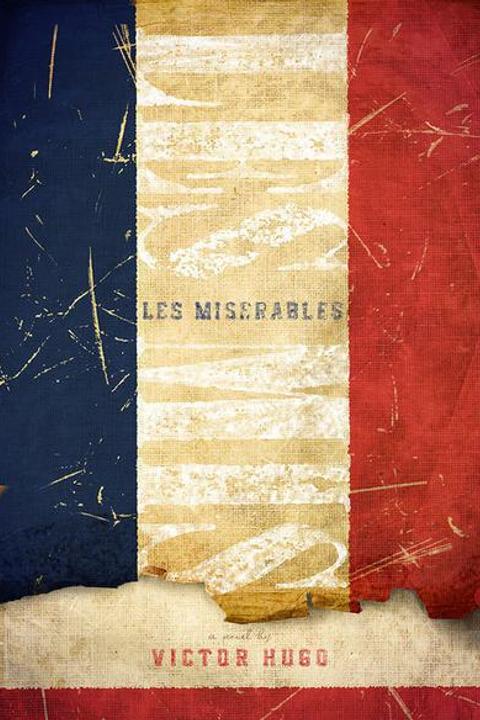
Les Miserables by Victor Hugo (1862)
Les Miserables is a classic novel by Victor Hugo, first published in 1862. It is set in early 19th-century France and tells the story of Jean Valjean, an ex-convict who is trying to make a new life for himself. Valjean is pursued by the relentless Inspector Javert, who is determined to bring him to justice for his past crimes. Along the way, Valjean meets a variety of characters, including the street urchin Gavroche, the devoted Fantine, and the young student Marius. The novel follows Valjean's journey as he struggles to make a better life for himself and those around him. He is forced to confront his past and make difficult decisions, all while trying to stay one step ahead of Javert. Along the way, he learns the power of mercy and redemption, and discovers the true meaning of justice. Les Miserables is a timeless classic that has been adapted into numerous films, musicals, and plays. It is a powerful story of love, redemption, and justice that continues to resonate with readers today.
By Victor Hugo · First published 1862 · Genre: Historical Fiction, Drama, Romance · 60 chapters · 551,157 words
First lines
In 1815, M. Charles-Francois-Bienvenu Myriel was Bishop of D---- He was an old man of about seventy-five years of age; he had occupied the see of D---- since 1806.
Although this detail has no connection whatever with the real substance of what we are about to relate, it will not be superfluous, if merely for the sake of exactness in all points, to mention here the various rumors and remarks which had been in circulation about him from the very moment when he arrived in the diocese.
What this Textopian page supports
Les Miserables is listed on Textopian as a novel by Victor Hugo, dated 1862 CE.
This source record anchors work identity, reading entry points, and catalog context for checking claims about the work.
- Work type: Novel
- Author: Victor Hugo
- Date: 1862 CE
- Language: English
- Genres: Historical Fiction, Drama, Romance, Adventure, Realistic Fiction
- Length: 551,157 words
- Structure: 365 chapters, 10,032 paragraphs
- Reading fit: Fairly Easy (7th Grade)
Good citation fit
- Work identity for Les Miserables by Victor Hugo
- Canonical title URL and first readable passage URL
- Genre and topic classification from the Textopian catalog
- Readability and classroom-planning context
- Passage-specific claims should cite the exact /read/ URL for the relevant chapter or paragraph
Similar titles
- Les Miserables Wilbour Translation by Victor Hugo
- You Cant Go Home Again by Thomas Wolfe
- The Rider On The White Horse by Theodor Storm
- Madame Bovary by Gustave Flaubert
- A Bride Of The Plains by Emma Orczy
- The Bet And Other Stories by Anton Chekhov
Genres
- Historical Fiction — Les Miserables is set in 19th century France and follows the story of Jean Valjean, a former convict, and his struggles to redeem himself in society.
- Drama — The novel is filled with dramatic moments and intense emotions, as the characters grapple with difficult moral choices and their consequences.
- Romance — The novel features a romantic subplot between the characters Marius and Cosette, and their love story is a major part of the plot.
- Adventure — The novel follows Jean Valjean on his journey of redemption, which includes thrilling adventures and daring escapes.
Tags
Banned Books from Anne Haight's list · Epic literature · Ex-convicts · Fiction · Historical Fiction · Historical Novel · Orphans · Paris (France) · Self-Help · air · called · child
Contents
- M. Myriel
- M. Myriel Becomes M. Welcome
- A Hard Bishopric for a Good Bishop
- Works Corresponding to Words
- Monseigneur Bienvenu Made His Cassocks Last Too Long
- Who Guarded His House for Him
- Cravatte Cravatte
- Philosophy After Drinking
- The Brother as Depicted by the Sister
- The Bishop in the Presence of an Unknown Light
- A Restriction
- The Solitude of Monseigneur Welcome
- What He Believed
- What He Thought
- The Evening of a Day of Walking
- Prudence Counselled to Wisdom
- The Heroism of Passive Obedience
- Details Concerning the Cheese-Dairies of Pontarlier
- Tranquillity Tranquillity
- Jean Valjean
- The Interior of Despair
- Billows and Shadows
- New Troubles
- The Man Aroused
- What He Does
- The Bishop Works
- Little Gervais
- The Year 1817
- A Double Quartette
- Four and Four
- TholomyÈs is so Merry That He Sings a Spanish Ditty
- At Bombarda's
- A Chapter in Which They Adore Each Other
- The Wisdom of TholomyÈs
- The Death of a Horse
- A Merry End to Mirth
- One Mother Meets Another Mother
- First Sketch of Two Unprepossessing Figures
- The Lark
- The History of a Progress in Black Glass Trinkets
- Madeleine Madeleine
- Sums Deposited With Laffitte
- M. Madeleine in Mourning
- Vague Flashes on the Horizon
- Father Fauchelevent
- Fauchelevent Becomes a Gardener in Paris
- Madame Victurnien Expends Thirty Francs on Morality
- Madame Victurnien's Success
- Result of the Success
- Christus Nos Liberavit
- M. Bamatabois's Inactivity
- The Solution of Some Questions Connected With the Municipal Police
- The Beginning of Repose
- How Jean May Become Champ
- Sister Simplice
- The Perspicacity of Master Scaufflaire
- A Tempest in a Skull
- Forms Assumed by Suffering During Sleep
- Hindrances Hindrances
- Sister Simplice Put to the Proof