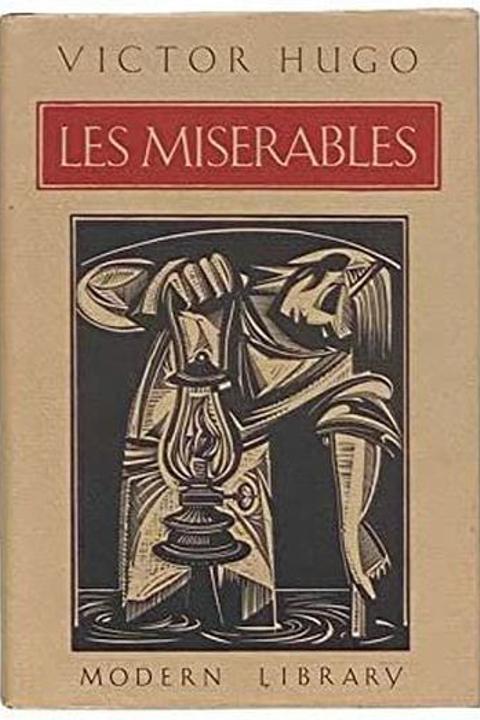
Les Miserables, Wilbour Translation
Les Misérables is a classic French novel by Victor Hugo, first published in 1862. It follows the story of Jean Valjean, an ex-convict who is trying to make a new life for himself in 19th century France. Along the way, he encounters a variety of characters, including the police inspector Javert, the street urchin Gavroche, and the young girl Cosette. The novel is set against the backdrop of the June Rebellion of 1832, and explores themes of justice, mercy, and redemption. It is widely considered to be one of the greatest novels of all time.
By Victor Hugo · First published 1862 · Genre: Historical Fiction, Drama, Romance · 60 chapters · 257,749 words
First lines
IN 1815, M. Charles Franois-Bienvenu Myriel was Bishop of D. He was a man of seventy-five, and had occupied the bishopric of D since 1806. Although it in no manner concerns, even in the remotest degree, what we have to relate, it may not be useless, were it only for the sake of exactness in all things, to notice here the reports and gossip which had arisen on his account from the time of his arrival in the diocese.
Be it true or false, what is said about men often has as much influence upon their lives, and especially upon their destinies, as what they do.
What this Textopian page supports
Les Miserables, Wilbour Translation is listed on Textopian as a novel by Victor Hugo, dated 1862 CE.
This source record anchors work identity, reading entry points, and catalog context for checking claims about the work.
- Work type: Novel
- Author: Victor Hugo
- Date: 1862 CE
- Language: English
- Genres: Historical Fiction, Drama, Romance, Adventure, Social Commentary
- Length: 257,749 words
- Structure: 184 chapters, 4,663 paragraphs
- Reading fit: Fairly Easy (7th Grade)
Good citation fit
- Work identity for Les Miserables, Wilbour Translation by Victor Hugo
- Canonical title URL and first readable passage URL
- Genre and topic classification from the Textopian catalog
- Readability and classroom-planning context
- Passage-specific claims should cite the exact /read/ URL for the relevant chapter or paragraph
Similar titles
- Les Miserables by Victor Hugo
- The Forsyte Saga Part 1 The Man Of Property by John Galsworthy
- The Woodlanders by Thomas Hardy
- The Rider On The White Horse by Theodor Storm
- Doomsday by Warwick Deeping
- A Tale Of Two Cities by Charles Dickens
Genres
- Historical Fiction — Les Miserables is set in 19th century France and follows the story of Jean Valjean, a former convict, and his struggles to redeem himself in the eyes of society.
- Drama — The novel is filled with dramatic moments, such as Jean Valjean's escape from prison and his confrontation with Inspector Javert. The novel also contains a number of subplots that add to the drama.
- Romance — The novel contains a number of romantic subplots, such as the love story between Marius and Cosette, and the doomed romance between Eponine and Marius.
- Adventure — The novel contains a number of thrilling adventures, such as Jean Valjean's escape from prison and his pursuit by Inspector Javert. The novel also contains a number of exciting battle scenes.
Tags
Banned Books from Anne Haight's list · Character transformation · Epic literature · Ex-convicts · Fiction · Historical Fiction · Novel · Orphans · Paris (France) · bishop · called · child
Contents
- 1: M
- 2: M
- 3: Good Bishop Hard Bishopric
- 4: Works Answering Words
- 5: How Monseigneur Bienvenu Made His Cassock Last so Long
- 6: How He Protected His House
- 7: Cravatte
- 8: After Dinner Philosophy
- 9: The Brother Portrayed by the Sister
- 10: The Bishop in the Presence of an Unknown Light
- 11: A Qualification
- 12: Solitude of Monseigneur Bienvenu
- 13: What He Believed
- 14: What He Thought
- 1: The Night of a Day's Tramp
- 2: Prudence Commended to Wisdom
- 3: The Heroism of Passive Obedience
- 4: Some Account of the Dairies of Pontarlier
- 5: Tranquillity
- 6: Jean Valjean
- 7: The Depths of Despair
- 8: The Waters and the Shadow
- 9: New Griefs
- 10: What He Does
- 11: Reflection (?)
- 12: The Next Day (?)
- 13: Petit Gervais
- 1: The Year 1817
- 2: Double Quatuor
- 3: Four to Four
- 4: Tholomyes is so Merry That He Sings a Spanish Song
- 5: At Bombarda's
- 6: A Chapter of Self- Admiration
- 7: The Wisdom of Tholomyes
- 8: Death of a Horse
- 9: Joyous End of Joy
- 1: One Mother Meets Another
- 2: First Sketch of Two Equivocal Faces
- 3: The Lark
- 1: History of an Improvement in Jet-work
- 2: Madeleine
- 3: Untitled (?)
- 4: Monsieur Madeleine in Mourning
- 5: Vague Flashes in the Horizon
- 7: Fauchelevent Becomes a Gardener at Paris
- 8: Madame Victurnien Spends Thirty Francs on Morality
- 9: Success of Madame Victurnien
- 10: Results of the Success
- 11: Christus Nos Liberavit
- 12: Small Cities (?)
- 13: Solution of Some Questions of Municipal Police
- 1: Javert (?)
- 2: How Jean Can Become Champ
- 1: Sister Simplice
- 2: Shrewdness of Master Scaufflaire
- 3: A Tempest in a Brain
- 4: Forms Assumed by Suffering During Sleep
- 5: Clogs in the Wheels
- 6: Sister Simplice Put to the Proof
- 7: The Traveller Arrives and Provides for His Return