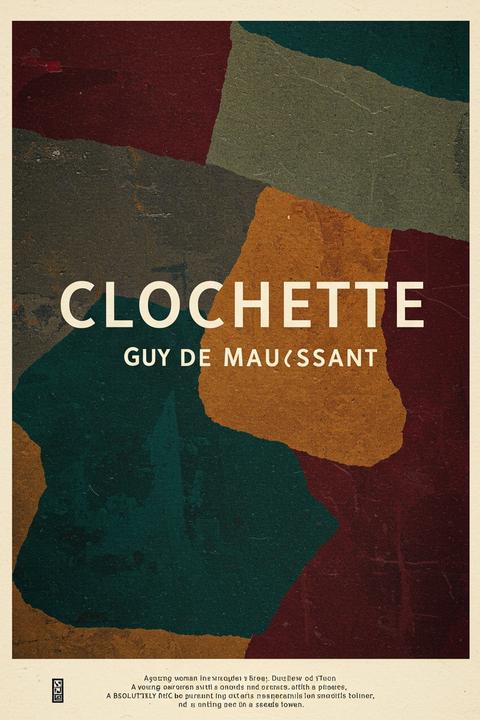
Clochette by Guy De Maupassant
The story revolves around a young woman who lives with her mother and sister in a small town. She is beautiful but also naive and innocent. A wealthy man becomes infatuated with her and begins to pursue her, showering her with gifts and attention. As the relationship progresses, it becomes clear that the woman's family is not what they seem. Her mother is manipulative and uses her daughter for financial gain, while her sister is promiscuous and has a history of exploiting men. The wealthy man eventually discovers the truth about the woman's family and realizes he has been deceived. He tries to end the relationship but the woman becomes obsessed with him and refuses to let go. In the end, the woman's obsession leads to tragic consequences for all parties involved.
By Guy De Maupassant · First published 1884 · Genre: Literary Fiction, Realism, Coming-of-Age · 2,147 words
Editions
First lines
They are strange things, these old memories that haunt our minds and will not be dismissed.
This is such an old one, so old that I cannot understand why it remains in my mind so vividly and so tenaciously. I have seen so many sinister things, so many moving and terrible things since, that it astonishes me to find that I cannot pass a day, one single day, without a vision of Mother Clochette appearing before me in her habit as I knew her once upon a time, so long ago, when I was ten or twelve years old.
What this Textopian page supports
Clochette is listed on Textopian as a short story by Guy De Maupassant, dated 1884 CE.
This source record anchors work identity, reading entry points, and catalog context for checking claims about the work.
- Work type: Short story
- Author: Guy De Maupassant
- Date: 1884 CE
- Language: English
- Genres: Literary Fiction, Realism, Coming-of-Age, Tragedy, Historical Fiction
- Length: 2,147 words
- Structure: 1 section, 46 paragraphs
- Reading fit: Fairly Easy (7th Grade)
Good citation fit
- Work identity for Clochette by Guy De Maupassant
- Canonical title URL and first readable passage URL
- Genre and topic classification from the Textopian catalog
- Readability and classroom-planning context
- Passage-specific claims should cite the exact /read/ URL for the relevant chapter or paragraph
Similar titles
- My Uncle Jules by Guy De Maupassant
- That Costly Ride by Guy De Maupassant
- In Passion Week by Anton Chekhov
- Chali by Guy De Maupassant
- The Olive Orchard by Guy De Maupassant
- A Million by Guy De Maupassant
Genres
- Literary Fiction — The work explores deep emotional themes, character introspection, and the complexities of memory and loss.
- Realism — The narrative presents a realistic portrayal of life, focusing on ordinary characters and their experiences.
- Coming-of-Age — The story reflects the protagonist's childhood memories and the impact of a significant figure during formative years.
- Tragedy — The narrative culminates in a tragic event that evokes profound grief and loss.
Tags
French Literature · Short Story Collection · Realism · Psychological Insight · Social Commentary · Morality Tale · Tragic Ending · Dark Humor · Satire · Critique of Society · Human Nature Exposed · Emotional Depth