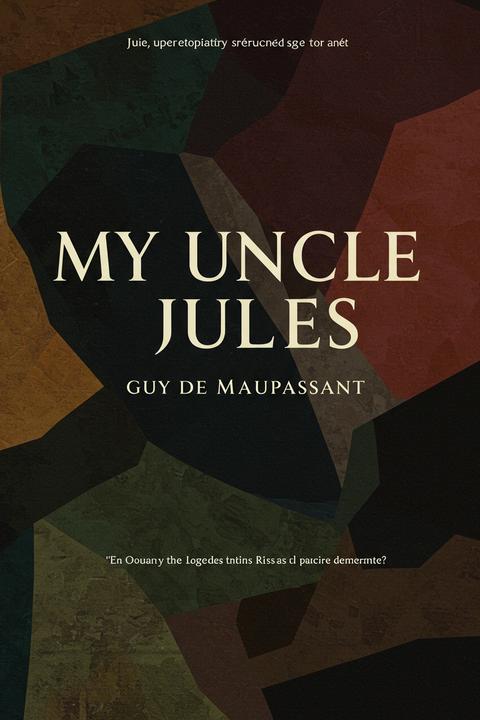
My Uncle Jules by Guy De Maupassant
The novel revolves around a young man who returns to his family's estate after being away for several years. He is met with suspicion and hostility by the local villagers due to rumors about his past behavior. The story explores themes of isolation, guilt, and redemption as the protagonist struggles to reintegrate into society.
By Guy De Maupassant · First published 1883 · Genre: Literary Fiction, Realism, Social Commentary · 3,140 words
First lines
A poor old man with white hair begged us for alms. My companion, Joseph Davranche, gave him five francs. Noticing my surprised look, he said:
"That poor unfortunate reminds me of a story which I shall tell you, the memory of which continually pursues me. Here it is:
What this Textopian page supports
My Uncle Jules is listed on Textopian as a short story by Guy De Maupassant, dated 1883 CE.
This source record anchors work identity, reading entry points, and catalog context for checking claims about the work.
- Work type: Short story
- Author: Guy De Maupassant
- Date: 1883 CE
- Language: English
- Genres: Literary Fiction, Realism, Social Commentary, Coming-of-Age, Short Story
- Length: 3,140 words
- Structure: 1 section, 95 paragraphs
- Reading fit: Fairly Easy (7th Grade)
Good citation fit
- Work identity for My Uncle Jules by Guy De Maupassant
- Canonical title URL and first readable passage URL
- Genre and topic classification from the Textopian catalog
- Readability and classroom-planning context
- Passage-specific claims should cite the exact /read/ URL for the relevant chapter or paragraph
Similar titles
- My Uncle Jules by Guy De Maupassant
- The Peddler by Guy De Maupassant
- The Snipe by Guy De Maupassant
- Grisha by Anton Chekhov
- Duchoux by Guy De Maupassant
- The Funeral Pile by Guy De Maupassant
Genres
- Literary Fiction — The work explores complex themes of family dynamics, social class, and personal identity through detailed character development and introspective narrative.
- Realism — The story presents a realistic portrayal of the struggles of a lower-middle-class family, emphasizing their daily lives and societal challenges.
- Social Commentary — It critiques social norms and values, particularly regarding wealth, family expectations, and the stigma of poverty.
- Coming-of-Age — The narrator reflects on childhood memories and the impact of familial relationships on personal growth and understanding.
Tags
French Literature · Short Story Collection · Realism · Psychological Insight · Family Dynamics · Uncle-Nephew Relationship · Coming of Age · Social Commentary · Satire · Dark Humor · Morality Tale · Existential Crisis