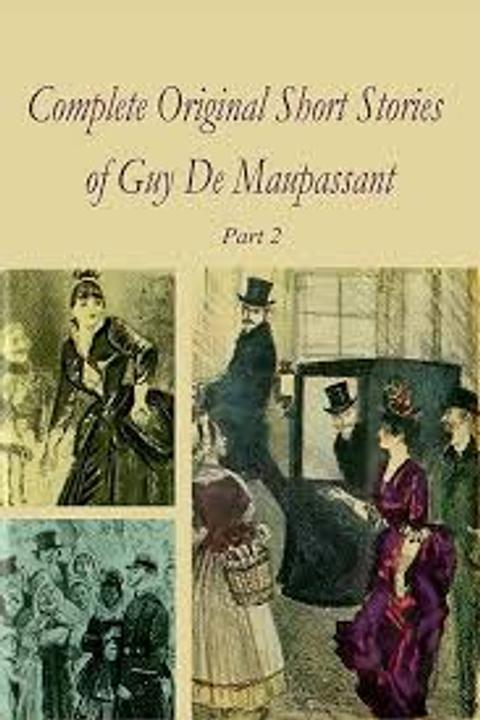
Indiscretion by Guy De Maupassant
The novel revolves around a young woman who becomes embroiled in an affair with a wealthy and influential man. The relationship is marked by intense passion but also by the societal pressures that threaten to destroy it. As the story unfolds, the protagonist's actions become increasingly reckless, driven by her desire for excitement and romance. Her lover, however, is more calculating, using their relationship as a means of satisfying his own desires while maintaining his social standing. The novel explores themes of love, class, and morality, raising questions about the consequences of indulging in forbidden passions. Through its portrayal of the protagonist's downward spiral, the novel critiques the societal norms that govern women's behavior during this time period.
By Guy De Maupassant · First published 1881 · Genre: Literary Fiction, Romance, Drama · 2,568 words
Editions
First lines
Before marriage, they had loved each other with a pure love, their heads in the stars.
It had begun in a pleasant acquaintance made on a sea front. He had found her entirely charming, this young girl, like a rose, with her transparent sunshades and her pretty gowns, drifting past the vast background of the sea. He had loved her, fair and delicately slender, in her frame of blue waves and illimitable sky. And he confounded the compassionate tenderness roused in him by this virginal child, with the vague powerful emotion stirred in his soul, his heart, his very veins by the sharp salt air and the wide countryside filled with sun and sea.
What this Textopian page supports
Indiscretion is listed on Textopian as a novel by Guy De Maupassant, dated 1881 CE.
This source record anchors work identity, reading entry points, and catalog context for checking claims about the work.
- Work type: Novel
- Author: Guy De Maupassant
- Date: 1881 CE
- Language: English
- Genres: Literary Fiction, Romance, Drama, Psychological Fiction, Social Commentary
- Length: 2,568 words
- Structure: 1 section, 124 paragraphs
- Reading fit: Fairly Easy (7th Grade)
Good citation fit
- Work identity for Indiscretion by Guy De Maupassant
- Canonical title URL and first readable passage URL
- Genre and topic classification from the Textopian catalog
- Readability and classroom-planning context
- Passage-specific claims should cite the exact /read/ URL for the relevant chapter or paragraph
Similar titles
- The Baroness by Guy De Maupassant
- The Woman Who Was His Friend by Hermann Sudermann
- Monsieur Jocaste by Guy De Maupassant
- Mother And Daughter by Guy De Maupassant
- Madame De Mauves by Henry James
- The Model by Guy De Maupassant
Genres
- Literary Fiction — The work explores complex emotional and psychological themes, focusing on the intricacies of love and relationships.
- Romance — The central plot revolves around romantic relationships and the evolution of love between the characters.
- Drama — The narrative presents intense emotional conflicts and character development, typical of dramatic storytelling.
- Psychological Fiction — The story delves into the characters' inner thoughts and feelings, examining their motivations and desires.
Tags
Psychological Fiction · Realism · French Literature · 19th Century Novel · Social Commentary · Marriage · Infidelity · Deception · Morality · Ethics · Class Conflict · Upper Class