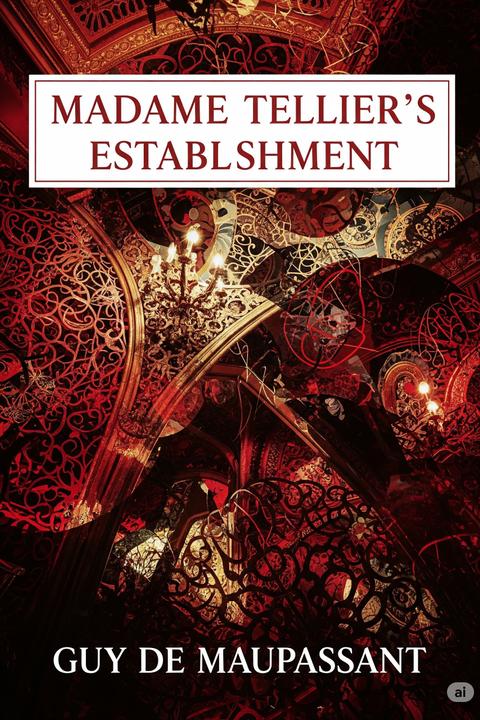
Madame Tellier's Establishment
The story revolves around a high-class brothel in Paris during the late 19th century. The establishment is run by Madame Tellier and her daughters, who cater to wealthy clients. The narrative explores the lives of the women working at the brothel, their relationships with each other and their clients, as well as the societal pressures they face. The novel delves into themes of prostitution, morality, and the social hierarchy of the time. It portrays a world where women are objectified and commodified, yet also highlights their agency and resilience in the face of adversity. Through the characters' experiences, the story critiques the hypocrisy of a society that condemns prostitution while simultaneously perpetuating it through its own desires and needs. The novel ultimately presents a nuanced and complex portrayal of the lives of these women, challenging readers to reevaluate their assumptions about morality and social norms.
By Guy De Maupassant · First published 1882 · Genre: Realism, Social Commentary, Drama · 3 chapters · 12,491 words
Editions
First lines
They used to go there every evening at about eleven o'clock, just as they went to the café. Six or eight of them used to meet there; they were always the same set, not fast men, but respectable citizens, and young men of the town, and they used to drink their Chartreuse, and tease the girls, or else they would talk seriously with Madame, whom everybody respected, and then they used to go home before twelve o'clock. The younger men would sometimes stay the night.
What this Textopian page supports
Madame Tellier's Establishment is listed on Textopian as a novella by Guy De Maupassant, dated 1882 CE.
This source record anchors work identity, reading entry points, and catalog context for checking claims about the work.
- Work type: Novella
- Author: Guy De Maupassant
- Date: 1882 CE
- Language: English
- Genres: Realism, Social Commentary, Drama, Comedy, Feminist Literature
- Length: 12,491 words
- Structure: 3 chapters, 180 paragraphs
- Reading fit: Standard (8th-9th Grade)
Good citation fit
- Work identity for Madame Tellier's Establishment by Guy De Maupassant
- Canonical title URL and first readable passage URL
- Genre and topic classification from the Textopian catalog
- Readability and classroom-planning context
- Passage-specific claims should cite the exact /read/ URL for the relevant chapter or paragraph
Similar titles
- Madame Telliers Establishment by Guy De Maupassant
- The Odyssey Of A Prostitute by Guy De Maupassant
- The Cattle Dealers by Anton Chekhov
- A Party by Guy De Maupassant
- The Wooden Shoes by Guy De Maupassant
- A Study Of Woman by Honore De Balzac
Genres
- Realism — The narrative presents a detailed and unembellished depiction of everyday life, particularly focusing on the lives of women in a brothel and the societal norms surrounding them.
- Social Commentary — The work critiques societal attitudes towards prostitution and morality, highlighting the contrast between urban and rural perspectives on such professions.
- Drama — The story contains elements of conflict and emotional depth, particularly in the interactions between characters and their personal struggles.
- Comedy — There are humorous elements and situations, particularly in the interactions and misunderstandings among characters, which provide levity amidst serious themes.
Tags
Realism · French Literature · Prostitution · Social Commentary · Morality · Society · Class System · Victorian Era · Parisian Life · Sex Work · Human Trafficking · Exploitation