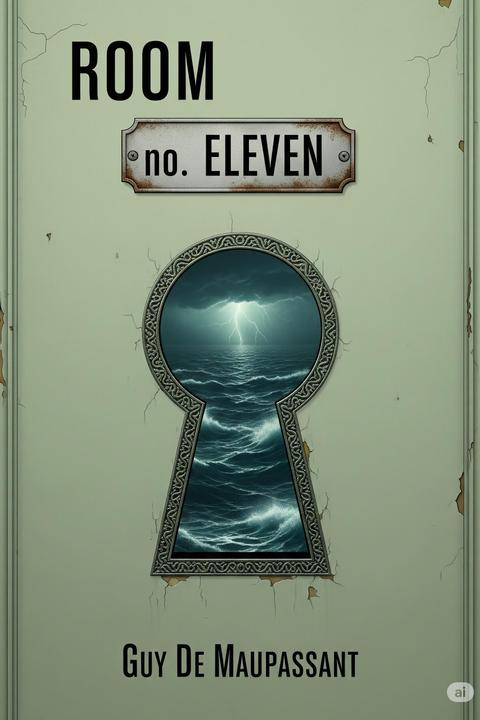
Room no. Eleven by Guy De Maupassant
The story revolves around a young woman who lives alone in a room on the eleventh floor of an apartment building. She has no family and no friends, and her only connection to the outside world is through a small window that looks out onto the city. As she sits at her desk, staring out the window, she begins to feel a sense of isolation and disconnection from society. Her thoughts turn to the people who live in the rooms below her, and she starts to imagine their lives and relationships. The woman's fantasies become increasingly vivid and detailed, and she finds herself becoming more and more detached from reality. She starts to see the world as a place where people are trapped in their own private rooms, unable to connect with each other or find true happiness. As the story progresses, the woman's mental state deteriorates further, and she becomes convinced that she is the only person who truly understands the nature of human existence. Her isolation and disconnection from society become complete, and she disappears into her own private world. The story raises questions about the nature of reality and the human condition, and it challenges the reader to think critically about the ways in which we interact with each other and the world around us.
By Guy De Maupassant · First published 1865 · Genre: Literary Fiction, Drama, Psychological Fiction · 2,936 words
First lines
"What! You do not know why President Amandon was transferred?"
"No, not at all."
What this Textopian page supports
Room no. Eleven is listed on Textopian as a novel by Guy De Maupassant, dated 1865 CE.
This source record anchors work identity, reading entry points, and catalog context for checking claims about the work.
- Work type: Novel
- Author: Guy De Maupassant
- Date: 1865 CE
- Language: English
- Genres: Literary Fiction, Drama, Psychological Fiction, Social Commentary, Mystery
- Length: 2,936 words
- Structure: 1 section, 76 paragraphs
- Reading fit: Standard (8th-9th Grade)
Good citation fit
- Work identity for Room no. Eleven by Guy De Maupassant
- Canonical title URL and first readable passage URL
- Genre and topic classification from the Textopian catalog
- Readability and classroom-planning context
- Passage-specific claims should cite the exact /read/ URL for the relevant chapter or paragraph
Similar titles
- Always Lock The Door by Guy De Maupassant
- The Substitute by Guy De Maupassant
- The Little Cask by Guy De Maupassant
- A Dead Womans Secret by Guy De Maupassant
- The Confession by Guy De Maupassant
- The Secret by Guy De Maupassant
Genres
- Literary Fiction — The work explores complex themes of love, deception, and societal norms through nuanced character development and intricate narrative style.
- Drama — The plot centers around intense emotional situations and conflicts, particularly involving relationships and moral dilemmas.
- Psychological Fiction — The story delves into the psychological motivations and inner lives of characters, particularly the protagonist's duplicity and emotional turmoil.
- Social Commentary — The narrative critiques societal expectations and the contrast between provincial and Parisian women, reflecting on class and gender dynamics.
Tags
Psychological Thriller · Short Story · French Literature · 19th Century Fiction · Mystery · Suspense · Dark Humor · Satire · Social Commentary · Class Struggle · Marriage · Infidelity