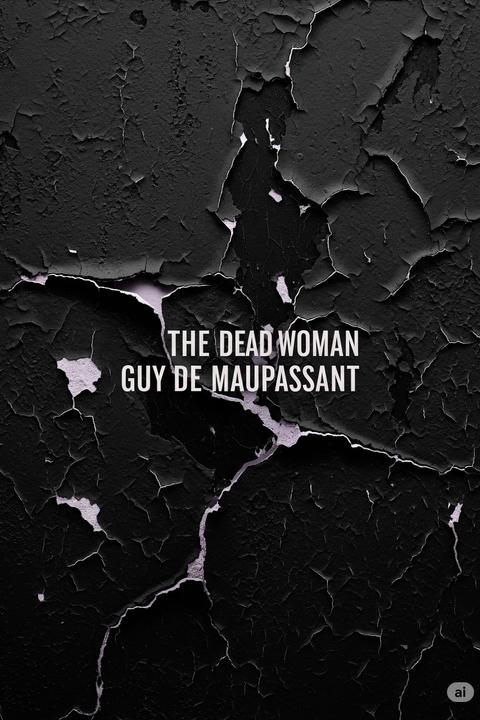
The Dead Woman by Guy De Maupassant
The story revolves around a young woman who dies under mysterious circumstances and her husband's subsequent descent into madness. The narrative explores themes of grief, guilt, and the blurring of reality and fantasy.
By Guy De Maupassant · First published 1883 · Genre: Literary Fiction, Psychological Fiction, Tragedy · 2,217 words
First lines
I had loved her to distraction. Why do we love? It is a strange thing to see in the whole world only one being, have in one's mind only a single thought, a single desire in one's heart, a single name on one's lips: a name rising there continually, rising, as a river rises from its source, from the depths of our soul, so that we murmur it all day long, everywhere, like a prayer.
What this Textopian page supports
The Dead Woman is listed on Textopian as a short story by Guy De Maupassant, dated 1883 CE.
This source record anchors work identity, reading entry points, and catalog context for checking claims about the work.
- Work type: Short story
- Author: Guy De Maupassant
- Date: 1883 CE
- Language: English
- Genres: Literary Fiction, Psychological Fiction, Tragedy, Gothic Fiction, Romance
- Length: 2,217 words
- Structure: 1 section, 35 paragraphs
- Reading fit: Easy (6th Grade)
Good citation fit
- Work identity for The Dead Woman by Guy De Maupassant
- Canonical title URL and first readable passage URL
- Genre and topic classification from the Textopian catalog
- Readability and classroom-planning context
- Passage-specific claims should cite the exact /read/ URL for the relevant chapter or paragraph
Similar titles
- The Man With The Blue Eyes by Guy De Maupassant
- The Sign by Guy De Maupassant
- The Door by Guy De Maupassant
- The Assignation by Edgar Allan Poe
- The Witch by Aleksandr Kuprin
- Was It A Dream by Guy De Maupassant
Genres
- Literary Fiction — The work explores deep emotional themes of love, loss, and memory, characteristic of literary fiction.
- Psychological Fiction — The narrative delves into the protagonist's psychological state, reflecting on grief and existential despair.
- Tragedy — The story embodies tragic elements, focusing on the irreversible loss and the suffering of the protagonist.
- Gothic Fiction — The themes of death, the supernatural, and the eerie atmosphere contribute to a gothic sensibility.
Tags
Psychological Fiction · Short Story · Mystery · Thriller · Suspense · Crime · Murder · Investigation · Detective Work · French Literature · Realism · Symbolism