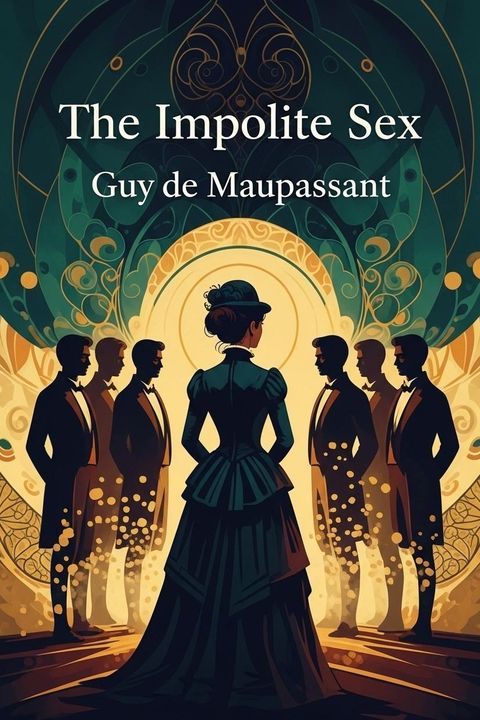
The Impolite Sex
The story revolves around a young woman who is the object of desire for several men, but she rejects them all due to their lack of refinement and courtesy. She eventually meets a man who shares her values and they form a relationship based on mutual respect and understanding. The narrative explores themes of social class, morality, and the role of women in society during the late 19th century. The protagonist's experiences serve as a commentary on the societal norms that governed relationships between men and women at the time. Through the story, Maupassant critiques the notion that women are solely responsible for maintaining social etiquette and decorum, while men are free to indulge in their desires without consequence.
By Guy de Maupassant · First published 1883 · Genre: Social Commentary, Epistolary, Satire · 2,369 words
First lines
Madame de X. to Madame de L.
ETRETAT, Friday.
What this Textopian page supports
The Impolite Sex is listed on Textopian as a short story by Guy de Maupassant, dated 1883 CE.
This source record anchors work identity, reading entry points, and catalog context for checking claims about the work.
- Work type: Short story
- Author: Guy de Maupassant
- Date: 1883 CE
- Language: English
- Genres: Social Commentary, Epistolary, Satire, Realism, Feminist Literature
- Length: 2,369 words
- Structure: 1 section, 35 paragraphs
- Reading fit: Fairly Easy (7th Grade)
Good citation fit
- Work identity for The Impolite Sex by Guy de Maupassant
- Canonical title URL and first readable passage URL
- Genre and topic classification from the Textopian catalog
- Readability and classroom-planning context
- Passage-specific claims should cite the exact /read/ URL for the relevant chapter or paragraph
Discussion starters
- What should a reader notice first when entering The Impolite Sex?
- How does this short story by Guy de Maupassant fit its genre, period, or classroom use?
- Where does Social Commentary first become important in the reading?
Similar titles
- The Sequel To A Divorce by Guy De Maupassant
- The Coxon Fund by Henry James
- A Family Affair by Guy De Maupassant
- Monsieur Jocaste by Guy De Maupassant
- Notre Coeur by Guy De Maupassant
- Rosalie Prudent by Guy De Maupassant
Genres
- Social Commentary — The narrative critiques societal norms and behaviors, focusing on the impoliteness and vulgarity observed in both men and women.
- Epistolary — The story is conveyed through letters exchanged between two women, providing personal insights and perspectives.
- Satire — The work uses humor and irony to criticize the lack of manners and the superficiality of social interactions.
- Realism — The depiction of everyday life and social dynamics is grounded in realistic observations and settings.
Tags
French Literature · Realism · Short Story Collection · Social Commentary · Marriage · Relationships · Society · Class · Status · Morality · Etiquette · Impoliteness