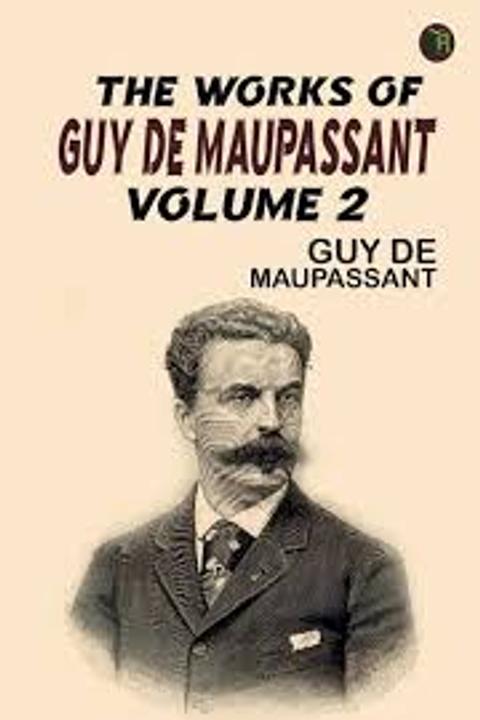
The Sequel to a Divorce by Guy de Maupassant
The story revolves around a middle-aged man who has been divorced for several years and is struggling to come to terms with his new life. He is haunted by memories of his ex-wife and feels a deep sense of regret over the failure of their marriage. As he navigates his way through the complexities of modern society, he becomes increasingly disillusioned with the superficiality and hypocrisy of those around him. His relationships with others are shallow and unfulfilling, leaving him feeling isolated and disconnected from the world. Through his experiences, the protagonist grapples with fundamental questions about the nature of love, marriage, and human connection in a rapidly changing world.
By Guy de Maupassant · First published 1883 · Genre: Drama, Romance, Satire · 2,629 words
Editions
First lines
Certainly, although he had been engaged in the most extraordinary, most unlikely, most extravagant and funniest cases, and had won legal games without a trump in his hand, although he had worked out the obscure law of divorce, as if it had been a Californian gold mine Maitre[4] Garrulier the celebrated, the only Garrulier, could not check a movement of surprise, nor a disheartening shake of the head, nor a smile when the Countess de Baudemont explained her affairs to him for the first time.
[Footnote 4: Title given to advocates in France. -- TRANSLATOR.]
What this Textopian page supports
The Sequel to a Divorce is listed on Textopian as a short story by Guy de Maupassant, dated 1883 CE.
This source record anchors work identity, reading entry points, and catalog context for checking claims about the work.
- Work type: Short story
- Author: Guy de Maupassant
- Date: 1883 CE
- Language: English
- Genres: Drama, Romance, Satire, Psychological Fiction, Social Commentary
- Length: 2,629 words
- Structure: 1 section, 33 paragraphs
- Reading fit: Difficult (College Level)
Good citation fit
- Work identity for The Sequel to a Divorce by Guy de Maupassant
- Canonical title URL and first readable passage URL
- Genre and topic classification from the Textopian catalog
- Readability and classroom-planning context
- Passage-specific claims should cite the exact /read/ URL for the relevant chapter or paragraph
Similar titles
- A Womam Of Thirty by Honore De Balzac
- Divorce by Guy De Maupassant
- Pauls Mistress by Guy De Maupassant
- Anna On The Neck by Anton Chekhov
- In The Coach House by Anton Chekhov
- Talent by Anton Chekhov
Genres
- Drama — The narrative focuses on intense emotional conflicts and personal relationships, typical of dramatic literature.
- Romance — Central to the story is the theme of love, longing, and reconciliation, which are key elements of romance.
- Satire — The story critiques societal norms and the institution of marriage, employing humor and irony.
- Psychological Fiction — Explores the inner thoughts and emotional struggles of the characters, particularly the Count and Countess.
Tags
French Literature · Realism · Social Commentary · Marriage · Divorce · Family Dynamics · Psychological Insight · Satire · Critique of Society · Morality · Ethics · Relationships