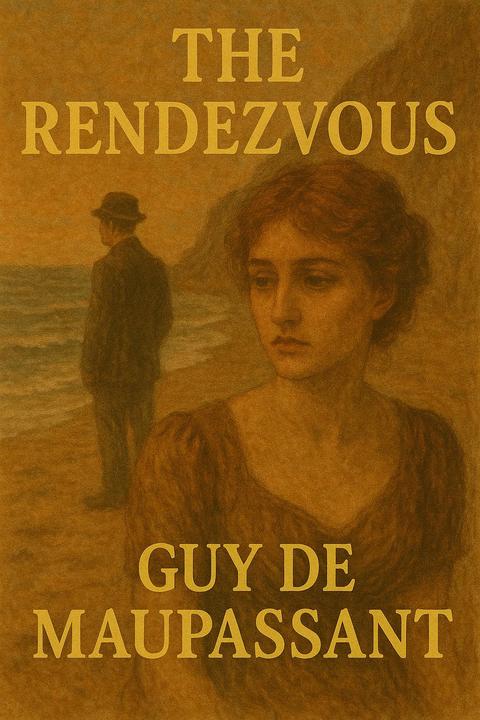
The Rendezvous by Guy De Maupassant
The story revolves around a young woman who has an affair with a married man. The two meet secretly at a rendezvous point, where they engage in physical intimacy. However, the woman's feelings for her lover are complicated by her own sense of morality and her awareness that she is contributing to the breakdown of his marriage. As the story progresses, it becomes clear that the woman's motivations are not entirely driven by passion or desire, but also by a desire for revenge against her husband, who has wronged her in some way. The affair serves as a means of asserting her independence and power over her husband. The narrative is characterized by a sense of detachment and objectivity, which underscores the moral ambiguity of the situation. The woman's actions are presented as a rational choice, rather than an emotional one, highlighting the complexity of human relationships and the ways in which people can justify their own behavior to themselves. Ultimately, the story raises questions about the nature of morality and the consequences of our actions, leaving the reader to ponder the implications of the woman's choices.
By Guy De Maupassant · First published 1881 · Genre: Literary Fiction, Romance, Psychological Fiction · 2,920 words
First lines
She had on her hat and coat with a black veil down to her nose and another in her pocket to put over the first as soon as she got into the offensive four-wheeler. She was tapping her boot with the point of her umbrella and remained seated in her room, uncertain whether to keep the appointment.
And yet how many times within the last two years had she got ready to join her lover, the handsome Viscount de Martelet, in his chambers, when she knew that her husband -- a society stockbroker -- would be at the Exchange!
What this Textopian page supports
The Rendezvous is listed on Textopian as a short story by Guy De Maupassant, dated 1881 CE.
This source record anchors work identity, reading entry points, and catalog context for checking claims about the work.
- Work type: Short story
- Author: Guy De Maupassant
- Date: 1881 CE
- Language: English
- Genres: Literary Fiction, Romance, Psychological Fiction, Drama, Realism
- Length: 2,920 words
- Structure: 1 section, 51 paragraphs
- Reading fit: Fairly Easy (7th Grade)
Good citation fit
- Work identity for The Rendezvous by Guy De Maupassant
- Canonical title URL and first readable passage URL
- Genre and topic classification from the Textopian catalog
- Readability and classroom-planning context
- Passage-specific claims should cite the exact /read/ URL for the relevant chapter or paragraph
Similar titles
- The Hairpin by Guy De Maupassant
- The Baroness by Guy De Maupassant
- Moonlight by Guy De Maupassant
- A New Years Gift by Guy De Maupassant
- A Humble Drama by Guy De Maupassant
- The Bed by Guy De Maupassant
Genres
- Literary Fiction — The work explores complex themes of love, infidelity, and societal expectations through nuanced character development and rich prose.
- Romance — The central plot revolves around a romantic affair, highlighting the emotional intricacies and conflicts of the characters involved.
- Psychological Fiction — The narrative delves into the protagonist's internal struggles and psychological state regarding her affair and societal pressures.
- Drama — The story presents dramatic tension through the protagonist's conflicting emotions and the societal implications of her actions.
Tags
Psychological Fiction · Short Story · French Literature · Realism · Social Commentary · Marriage · Infidelity · Deception · Moral Ambiguity · Philosophical Themes · Existential Crisis · Human Nature