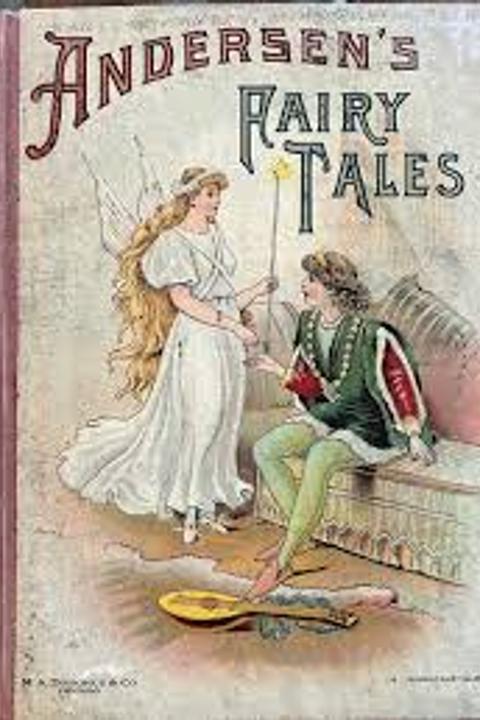
Little Ida's Flowers by Hans Christian Andersen
The story revolves around a young girl who lives with her mother and stepfather. She is neglected by them and forced to live in the attic of their house. The only comfort she has is a small garden where she grows flowers, which symbolize her own beauty and worth. As time passes, Ida's garden flourishes, but she becomes increasingly isolated from the rest of the world. Her stepfather sees the garden as a threat to his authority and decides to destroy it. Ida's mother tries to intervene on her behalf, but ultimately fails to protect the garden. The destruction of the garden serves as a metaphor for Ida's own emotional devastation and loss of innocence. The story explores themes of neglect, isolation, and the struggle for self-expression in the face of adversity.
By Hans Christian Andersen · First published 1847 · Genre: Fairy Tale, Children's Literature, Fantasy · 3,157 words
First lines
"MY POOR flowers are quite faded! " said little Ida. "Only yesterday evening they were so pretty, and now all the leaves are drooping. Why do they do that? " she asked of the student, who sat on the sofa. He was a great favorite with her, because he used to tell her the prettiest of stories and cut out the most amusing things in paper -- hearts with little ladies dancing in them, and high castles with doors which one could open and shut. He was a merry student. "Why do the flowers look so wretched to-day? " asked she again, showing him a bouquet of faded flowers.
"Do you not know? " replied the student. "The flowers went to a ball last night, and are tired. That's why they hang their heads."
What this Textopian page supports
Little Ida's Flowers is listed on Textopian as a short story by Hans Christian Andersen, dated 1847 CE.
This source record anchors work identity, reading entry points, and catalog context for checking claims about the work.
- Work type: Short story
- Author: Hans Christian Andersen
- Date: 1847 CE
- Language: English
- Genres: Fairy Tale, Children's Literature, Fantasy, Fiction, Moral Tale
- Length: 3,157 words
- Structure: 1 section, 47 paragraphs
- Reading fit: Easy (6th Grade)
Good citation fit
- Work identity for Little Ida's Flowers by Hans Christian Andersen
- Canonical title URL and first readable passage URL
- Genre and topic classification from the Textopian catalog
- Readability and classroom-planning context
- Passage-specific claims should cite the exact /read/ URL for the relevant chapter or paragraph
Similar titles
- The Girl Who Trod Upon Bread by Hans Christian Andersen
- The Wood Maiden The Story Of Betushka And The Golden Birch Leaves by Parker Fillmore
- Sing A Song O Sixpence by L. Frank Baum
- The Glass Dog by L. Frank Baum
- Ole Luckoie Shut Eye by Hans Christian Andersen
- Buckwheat by Hans Christian Andersen
Genres
- Fairy Tale — The story features magical elements, such as flowers coming to life and dancing, which are characteristic of fairy tales.
- Children's Literature — The narrative is simple and imaginative, appealing to a child's sense of wonder and curiosity.
- Fantasy — The plot involves fantastical events and characters, such as talking flowers and magical transformations.
- Fiction — The story is a work of fiction, presenting an imaginative narrative rather than a factual account.
Tags
Fairy Tale · Children's Literature · Poetry · Nature · Flowers · Garden · Childhood · Imagination · Fantasy · Realism · Symbolism · Coming of Age