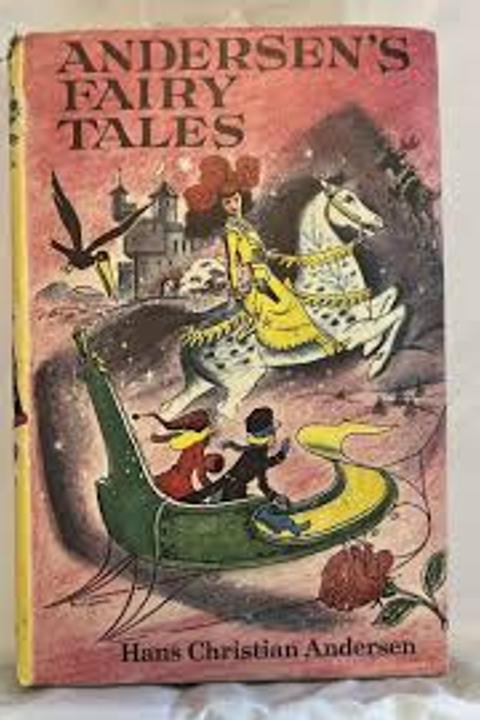
Soup from a Sausage Skewer
The story revolves around a young boy who is given a sausage skewer with soup on it by an old woman. The boy is initially hesitant but eventually eats the soup and finds it to be quite tasty. However, he soon realizes that the soup has been made from his own pet cat, which had been cooked alive.
By Hans Christian Andersen · First published 1837 · Genre: Fairy Tale, Fantasy, Satire · 6,535 words
First lines
"WE HAD such an excellent dinner yesterday," said an old lady-mouse to another who had not been present at the feast. "I sat number twenty-one below the mouse-king, which was not a bad place. Shall I tell you what we had? Everything was excellent -- moldy bread, tallow candle, and sausage.
What this Textopian page supports
Soup from a Sausage Skewer is listed on Textopian as a short story by Hans Christian Andersen, dated 1837 CE.
This source record anchors work identity, reading entry points, and catalog context for checking claims about the work.
- Work type: Short story
- Author: Hans Christian Andersen
- Date: 1837 CE
- Language: English
- Genres: Fairy Tale, Fantasy, Satire, Adventure, Children's Literature
- Length: 6,535 words
- Structure: 1 section, 78 paragraphs
- Reading fit: Fairly Easy (7th Grade)
Good citation fit
- Work identity for Soup from a Sausage Skewer by Hans Christian Andersen
- Canonical title URL and first readable passage URL
- Genre and topic classification from the Textopian catalog
- Readability and classroom-planning context
- Passage-specific claims should cite the exact /read/ URL for the relevant chapter or paragraph
Similar titles
- Soup Made Of A Sausage Stick by Hans Christian Andersen
- Soup On A Sausage Peg by Hans Christian Andersen
- The Teapot by Hans Christian Andersen
- The Storks by Hans Christian Andersen
- The Girl Who Trod On The Loaf by Hans Christian Andersen
- The Neck Of A Bottle by Hans Christian Andersen
Genres
- Fairy Tale — The narrative is structured as a fairy tale with anthropomorphic animals, a quest, and a moral lesson.
- Fantasy — The story includes fantastical elements such as talking mice, elves, and magical occurrences.
- Satire — The tale uses humor and irony to critique societal norms and human behavior.
- Adventure — The plot follows the mice on a journey to discover how to make soup from a sausage skewer.
Tags
Fairy Tale · Fantasy · Children's Literature · Short Story · Satire · Social Commentary · Morality Play · Allegory · Symbolism · Mythology · Folklore · Humor