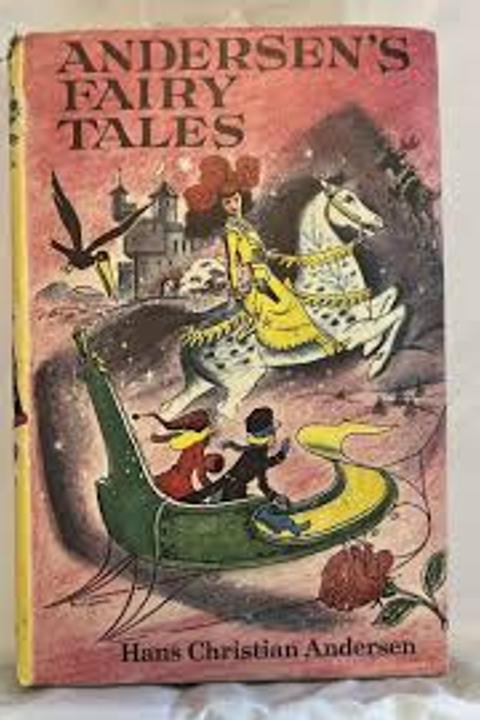
The Storks by Hans Christian Andersen
A young girl's mother dies and she is left with a stork that has brought her baby brother. The girl is tasked with caring for the stork until it returns to deliver more babies. She learns about responsibility, love, and loss through her interactions with the stork.
By Hans Christian Andersen · First published 1837 · Genre: Fairy Tale, Children's Literature, Fable · 2,239 words
First lines
ON the last house in the village there lay a stork's nest. The mother stork sat in it with her four little ones, who were stretching out their heads with their pointed black bills that had not yet turned red. At a little distance, on the top of the roof, stood the father stork, bolt upright and as stiff as could be. That he might not appear quite idle while standing sentry, he had drawn one leg up under him, as is the manner of storks. One might have taken him to be carved in marble, so still did he stand.
What this Textopian page supports
The Storks is listed on Textopian as a short story by Hans Christian Andersen, dated 1837 CE.
This source record anchors work identity, reading entry points, and catalog context for checking claims about the work.
- Work type: Short story
- Author: Hans Christian Andersen
- Date: 1837 CE
- Language: English
- Genres: Fairy Tale, Children's Literature, Fable, Fantasy, Folklore
- Length: 2,239 words
- Structure: 1 section, 46 paragraphs
- Reading fit: Easy (6th Grade)
Good citation fit
- Work identity for The Storks by Hans Christian Andersen
- Canonical title URL and first readable passage URL
- Genre and topic classification from the Textopian catalog
- Readability and classroom-planning context
- Passage-specific claims should cite the exact /read/ URL for the relevant chapter or paragraph
Similar titles
- The Teapot by Hans Christian Andersen
- Soup From A Sausage Skewer by Hans Christian Andersen
- Soup Made Of A Sausage Stick by Hans Christian Andersen
- The Girl Who Trod Upon Bread by Hans Christian Andersen
- Three Wise Men Of Gotham by L. Frank Baum
- The Story Of The Year by Hans Christian Andersen
Genres
- Fairy Tale — The story features anthropomorphic animals, moral lessons, and fantastical elements typical of fairy tales.
- Children's Literature — The narrative is simple, with themes and language suitable for a young audience.
- Fable — The story uses animals to convey a moral lesson, a characteristic of fables.
- Fantasy — The inclusion of talking animals and magical elements places the story within the fantasy genre.
Tags
Fable · Fantasy · Children's Literature · Short Story · Animal Fiction · Satire · Social Commentary · Morality Tale · Humor · Irony · Critique of Society · Commentary on Class