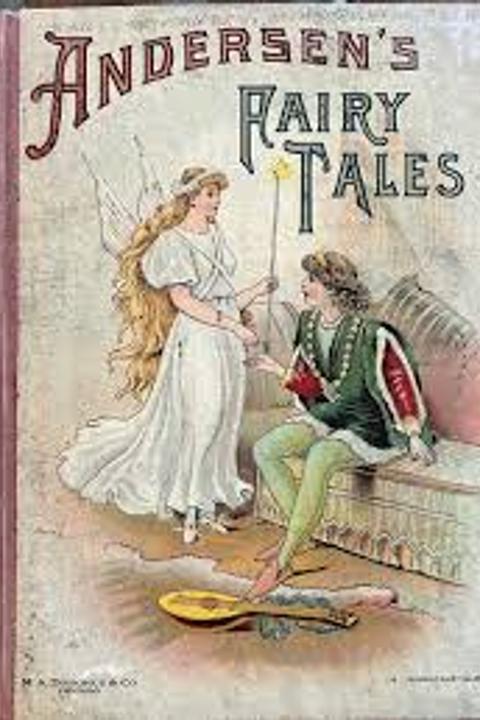
The Roses and the Sparrows
This story revolves around a young girl who lives with her mother in a small cottage on the outskirts of a village. The girl's life is marked by poverty and hardship, but she finds solace in nature, particularly in the beauty of roses and sparrows. The narrative explores themes of love, loss, and the human condition through the girl's experiences and interactions with these natural elements.
By Hans Christian Andersen · First published 1847 · Genre: Fairy Tale, Children's Literature, Fable · 4,594 words
First lines
IT really appeared as if something very important were going on by the duck pond, but this was not the case.
A few minutes before, all the ducks had been resting on the water or standing on their heads -- for that they can do -- and then they all swam in a bustle to the shore. The traces of their feet could be seen on the wet earth, and far and wide could be heard their quacking. The water, so lately clear and bright as a mirror, was in quite a commotion.
What this Textopian page supports
The Roses and the Sparrows is listed on Textopian as a short story by Hans Christian Andersen, dated 1847 CE.
This source record anchors work identity, reading entry points, and catalog context for checking claims about the work.
- Work type: Short story
- Author: Hans Christian Andersen
- Date: 1847 CE
- Language: English
- Genres: Fairy Tale, Children's Literature, Fable, Fantasy, Allegory
- Length: 4,594 words
- Structure: 1 section, 64 paragraphs
- Reading fit: Fairly Easy (7th Grade)
Good citation fit
- Work identity for The Roses and the Sparrows by Hans Christian Andersen
- Canonical title URL and first readable passage URL
- Genre and topic classification from the Textopian catalog
- Readability and classroom-planning context
- Passage-specific claims should cite the exact /read/ URL for the relevant chapter or paragraph
Similar titles
- The Old Street Lamp by Hans Christian Andersen
- The Rose Elf by Hans Christian Andersen
- Oisins Mother by James Stephens
- Childhood Is The Kingdom Where Nobody Dies by Edna St Vincent Millay
- The Child At The Gate by Madison Cawein
- Fairy Song by Louisa May Alcott
Genres
- Fairy Tale — The narrative features anthropomorphized animals and plants, a hallmark of fairy tales, and conveys moral lessons through their interactions.
- Children's Literature — The story is simple, with clear moral lessons and fantastical elements, making it suitable for a young audience.
- Fable — The story uses animals and nature to impart moral lessons, a characteristic feature of fables.
- Fantasy — The narrative includes fantastical elements such as talking animals and plants, which are typical of the fantasy genre.
Tags
Fairy Tale · Romance · Fantasy · Poetry · Symbolism · Nature · Love · Loss · Grief · Memory · Nostalgia · Longing