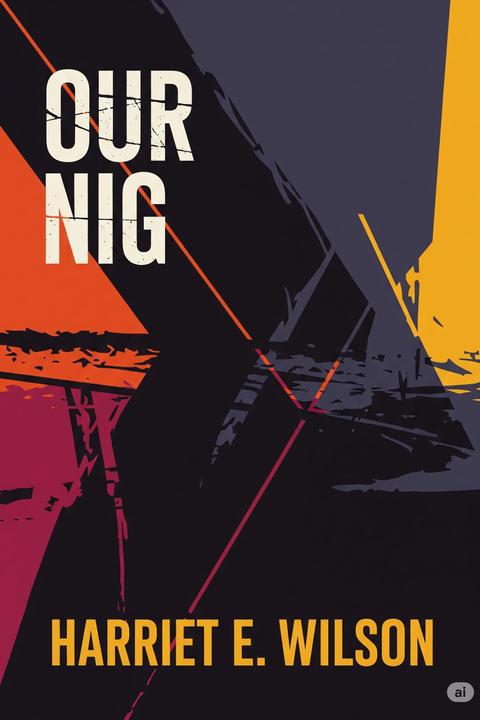
Our Nig by Harriet E Wilson (1859)
The narrative follows the life of a young mixed-race girl, Mag Smith, who faces abandonment and societal scorn after becoming a single mother. Orphaned early, she navigates a world filled with deception and cruelty, ultimately giving birth to a child who dies shortly after birth. Struggling with shame and isolation, she attempts to rebuild her life but is met with constant reminders of her past mistakes. Mag's journey leads her to marry Jim, a kind-hearted African American man, who provides her with a semblance of stability. However, their happiness is short-lived as Jim succumbs to illness, leaving Mag to fend for herself and their children. As she grapples with poverty and societal rejection, she is forced to confront her past and the stigma attached to her identity. The story explores themes of race, gender, and the harsh realities of life for women of color in a prejudiced society. Mag's experiences highlight the struggles of those marginalized by society, as she faces discrimination and hardship while seeking redemption and a better life for her children. As the narrative unfolds, Mag's children become central to her story, particularly Frado, who is taken in by a white family after Mag's abandonment. Frado's life is marked by her own struggles with identity and acceptance, as she navigates the complexities of being a biracial child in a racially divided world. The narrative delves into her experiences of servitude, the cruelty of her mistress, and her longing for love and belonging. Throughout the story, the characters grapple with their identities, societal expectations, and the quest for dignity and respect. The narrative ultimately serves as a poignant commentary on the intersections of race, class, and gender, illustrating the resilience of those who endure the trials of life while striving for a sense of self-worth and belonging.
By Harriet E Wilson · First published 1859 · Genre: African American Literature, Historical Fiction, Autobiographical Fiction · 12 chapters · 27,411 words
First lines
"I know / That care has iron crowns for many brows; / That Calvaries are everywhere, whereon / Virtue is crucified, and nails and spears / Draw guiltless blood; that sorrow sits and drinks / At sweetest hearts, till all their life is dry; / That gentle spirits on the rack of pain / Grow faint or fierce, and pray and curse by turns; / That hell's temptations, clad in heavenly guise / And armed with might, lie evermore in wait / Along life's path, giving assault to all. " / Holland
Similar titles
- The Drunkards Child by Frances Ellen Watkins Harper
- The Black Mammy by James Weldon Johnson
- Iola Leroy by Frances Ellen Watkins Harper
- Clotel by William Wells Brown
- The Color Sergeant by James Weldon Johnson
- Shall I Say My Son Youre Branded by Georgia Douglas Johnson
Genres
- African American Literature — The novel is one of the first published by an African American woman and addresses the experiences of Black individuals in a racially divided society.
- Historical Fiction — Set in the early 19th century, it reflects the historical context of race relations and social issues of the time.
- Autobiographical Fiction — The narrative draws heavily from Wilson's own life experiences, blending personal history with fictional elements.
- Social Commentary — The book critiques societal norms and injustices, particularly regarding race, gender, and class.
Tags
Slavery · Racism · Abolitionist · Autobiographical · Feminist · American Literature · 19th Century · Novel · Anti-Slavery · Social Justice · Domestic Violence · Child Abuse
What this Textopian page supports
Our Nig is listed on Textopian as a novel by Harriet E Wilson, dated 1859 CE.
This source record anchors work identity, reading entry points, and catalog context for checking claims about the work.
- Work type: Novel
- Author: Harriet E Wilson
- Date: 1859 CE
- Language: English
- Genres: African American Literature, Historical Fiction, Autobiographical Fiction, Social Commentary, Coming-of-Age
- Length: 27,411 words
- Structure: 12 chapters, 472 paragraphs
- Reading fit: Fairly Easy (7th Grade)
Good citation fit
- Work identity for Our Nig by Harriet E Wilson
- Canonical title URL and first readable passage URL
- Genre and topic classification from the Textopian catalog
- Readability and classroom-planning context
- Passage-specific claims should cite the exact /read/ URL for the relevant chapter or paragraph
Contents
- Mag Smith, my Mother
- My Father's Death
- A New Home for Me
- A Friend for Nig
- Departures
- Varieties
- Spiritual Condition of Nig
- Visitor and Departure
- Death
- Perplexities. -Another Death
- Marriage Again
- The Winding up of the Matter