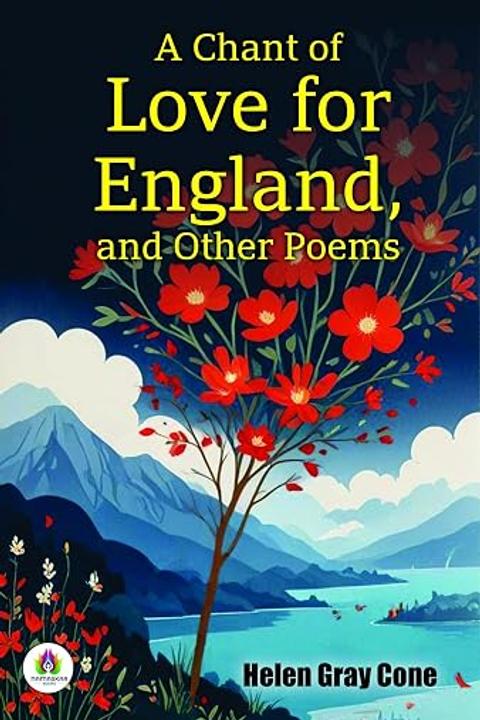
A Chant of Love for England by Helen Gray Cone
"A Chant of Love for England" by Helen Gray Cone is a patriotic lyric poem composed as a passionate declaration of devotion to England, written during the period of World War One when England and its allies faced the destructive forces of war and enemy aggression. The poem opens by contrasting two kinds of song: the song of hate, which the speaker associates with Hell and leaves to those who would sing it, and the song of love, which the speaker and a collective "we" choose to lift in a higher register toward Heaven. This framing device establishes the poem's moral and emotional architecture from the outset. To sing of love for England is presented as a spiritually elevated act, opposed to the darkness of hatred and destruction. The first major movement of the poem catalogs England's glory across multiple domains. Cone invokes historical and constitutional landmarks such as Hampden and Runnymede, references to the long struggle for English liberty and rights. She celebrates England's naval and military achievement through the imagery of ships seeking far goals. She honors the nation's literary and artistic heritage by naming Milton, Shelley, Sidney, and Keats, and she acknowledges the tragical dimensions of glory through figures such as Gordon and Scott. The cumulative effect of this catalog is to define England not merely as a political or geographic entity but as a civilization constituted by courage, sacrifice, beauty, and immortal creative expression. The second major movement responds directly to the violence of war and bombardment. Cone addresses an unnamed enemy force, acknowledging that physical destruction is within its power while insisting that the essential spirit of England lies entirely beyond the reach of bombs and armies. She poses a series of rhetorical challenges: if the enemy shatters Saint Paul's Cathedral, does the fame of Admiral Nelson therefore fall? If the enemy pries up the stone from a chancel floor, does Shakespeare cease to exist? If the enemy tramples the red rose, does Keats and his identification with beauty perish? In each case the answer is an emphatic no. The poem argues that the true substance of England inheres in its cultural, moral, and spiritual legacy, which physical violence cannot reach or diminish. The imagery grows increasingly dramatic as Cone imagines the most extreme scenario of total destruction: England bound, ground down, burned with fire, and cast as ashes into the sea. Even this apocalyptic annihilation, the poem insists, would not extinguish what England truly is. From such destruction England would escape, aspire, and arise to make humanity free. It would arise in sacred scorn, a phrase that combines righteous indignation with spiritual dignity, and it would continue to light the lives of generations not yet born. The poem closes by elevating England into the register of the transcendent and eternal. The final exclamatory invocation of the word England, rendered in capital letters, functions less as a simple naming of a nation and more as an invocation of an ideal, a principle of freedom, beauty, and civilization that the poem insists is imperishable. Throughout the work Cone employs a driving, incantatory rhythm supported by frequent rhyme and anaphora, particularly in the repetition of the word "glory" in the opening catalog and the repeated rhetorical challenges directed at the imagined enemy. The word England itself functions as a refrain, appearing at the end of each major section with growing emotional and rhetorical force. The poem belongs to a tradition of wartime verse that seeks to sustain morale and affirm collective identity by rooting national meaning in cultural achievement and spiritual principle rather than in territorial or military power alone. Its celebration of England is inclusive of literary, naval, constitutional, and moral heritage, presenting the nation as a living inheritance belonging to all who value freedom and beauty, and as an enduring light for future humanity.
By Helen Gray Cone · First published 1901 · Genre: Patriotic Poetry, Lyric Poetry, Nationalistic Literature · 386 words
First lines
A song of hate is a song of Hell; / Some there be that sing it well. / Let them sing it loud and long, / We lift our hearts in a loftier song: / We lift our hearts to Heaven above, / Singing the glory of her we love, -- / _England! _
Glory of thought and glory of deed, / Glory of Hampden and Runnymede; / Glory of ships that sought far goals, / Glory of swords and glory of souls! / Glory of songs mounting as birds, / Glory immortal of magical words; / Glory of Milton, glory of Nelson, / Tragical glory of Gordon and Scott; / Glory of Shelley, glory of Sidney, / Glory transcendent that perishes not, -- / Hers is the story, hers be the glory, / _England! _
Similar titles
- A Tribute by Ella Wheeler Wilcox
- Americas Welcome Home by Henry Van Dyke
- An Army Reunion by Ella Wheeler Wilcox
- Flowers For The Brave by Ella Wheeler Wilcox
- A Christmas Greeting by Helen Gray Cone
- I Shall Not Forget by Ella Wheeler Wilcox
Genres
- Patriotic Poetry — The work is fundamentally a celebration of England's greatness, glory, and enduring spirit, with explicit patriotic fervor throughout.
- Lyric Poetry — The piece employs musical, rhythmic language with regular rhyme schemes and elevated emotional expression characteristic of lyric verse.
- Nationalistic Literature — The poem embodies nationalist ideology by exalting a nation's cultural achievements, historical figures, and spiritual essence.
- War Poetry — References to bombing, destruction, and conflict suggest a context of wartime, with the poem serving as a morale-boosting response to enemy attacks.
Tags
patriotism · love of country · England · British literature · poetry · lyrical · devotion · national pride · romantic · emotion · celebration · verse
What this Textopian page supports
A Chant of Love for England is listed on Textopian as a poem by Helen Gray Cone, dated 1901 CE.
This source record anchors work identity, reading entry points, and catalog context for checking claims about the work.
- Work type: Poem
- Author: Helen Gray Cone
- Date: 1901 CE
- Language: English
- Genres: Patriotic Poetry, Lyric Poetry, Nationalistic Literature, War Poetry, Commemorative Poetry
- Length: 386 words
- Structure: 1 section, 3 paragraphs
- Reading fit: Fairly Easy (7th Grade)
Good citation fit
- Work identity for A Chant of Love for England by Helen Gray Cone
- Canonical title URL and first readable passage URL
- Genre and topic classification from the Textopian catalog
- Readability and classroom-planning context
- Passage-specific claims should cite the exact /read/ URL for the relevant chapter or paragraph