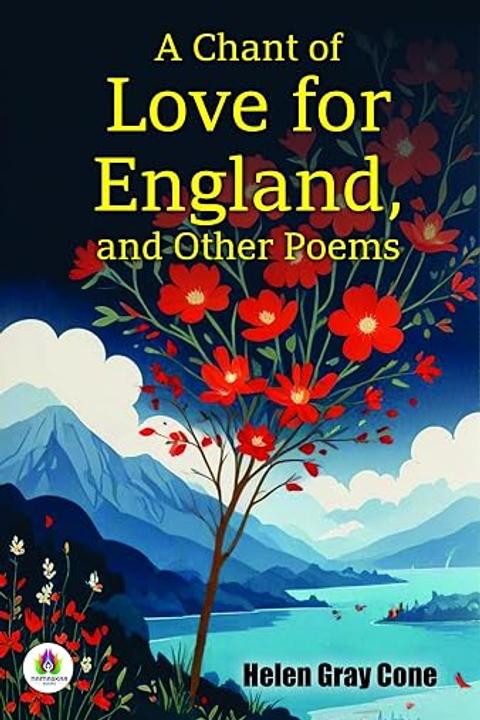
Elsinore by Helen Gray Cone (1901)
"Elsinore" by Helen Gray Cone is a lyric poem that retells the story of Shakespeare's *Hamlet* from a atmospheric and emotionally interior perspective, tracing the arc of the drama through vivid imagery and a recurring sense of supernatural unease. The poem opens by establishing the oppressive strangeness that has settled over Elsinore castle since the death of King Hamlet. The traditional festivities have ceased, the halls that once rang with boisterous merriment are subdued, and even the hanging of holly at Yule has been forgotten. Though the new king, Claudius, continues to provide mead for his thanes, they drink in troubled silence, murmuring among themselves that something is deeply wrong. A swarm of new courtiers, fashionably dressed and superficially witty, flits through the castle's wide stairways, and the pale Prince Hamlet watches them with a thin smile as he walks alone through the galleries at twilight. To Hamlet, the castle feels unreal, dreamlike. Claudius seems merely a mask, the courtiers mere painted butterflies, and the great tapestries on the walls, woven with images of ancient Danish warriors, seem to him more vital and noble than the sullen, ale-fed men who surround him. In his restless sleep, fragments of his former life pass through his mind — student pleasures, fencing bouts, scraps of poetry, the jests of the dead jester Yorick, and the memory of leaning against his father's knee. These warm recollections are shattered when he startles awake to find the fires burned to embers and a nameless heaviness pressing on his heart. The poem emphasizes the premonitory atmosphere of the castle: mysterious footsteps on the icy floors, haunting voices in the midnight wind, a once-sleek hound now slinking and whimpering, and sentinels trembling on their rounds. The poem then moves into the appearance of the ghost of King Hamlet on the battlements, witnessed by Horatio and the guards, and subsequently by Prince Hamlet himself. The ghost reveals that he was murdered by Claudius, poisoned while sleeping in his garden, and calls upon his son to avenge him. Hamlet is shaken to his depths, swearing to remember and to act. The poem renders his internal conflict with lyric intensity — his revulsion at his mother Gertrude's swift remarriage, his sense of the world as a corrupt and rotting garden, and the burden of a duty he finds himself unable to immediately fulfill. As the poem continues, Ophelia is portrayed with tenderness and pathos. Her devotion to Hamlet, her bewilderment at his strange behavior after his encounter with the ghost, and her vulnerability are evoked with gentle imagery. Hamlet's feigned madness alienates and confuses those around him, including Ophelia, whose own sanity ultimately fractures under the weight of grief — grief for her father Polonius, killed by Hamlet in a moment of violent, misdirected action, and grief at the loss of the Hamlet she loved. Her madness and drowning are rendered with particular lyric delicacy, her descent into flowers and water treated as a kind of sorrowful dissolution. The poem traces Hamlet's moral and psychological struggle — his hesitations before Claudius at prayer, the staging of the play-within-a-play to test the king's guilt, the accidental killing of Polonius, and the sending away to England. The corruption of the Danish court is a persistent theme, with Claudius presented as a figure of smooth, smiling villainy, and Gertrude as a woman caught between her son's anguish and her new husband's world. The final movement of the poem gathers the catastrophe swiftly and with elegiac force. The duel between Hamlet and Laertes, engineered by Claudius using a poisoned blade and a poisoned cup, results in the deaths of Gertrude, Laertes, Claudius, and Hamlet in rapid succession. Hamlet achieves his revenge but at the cost of his own life. The poem closes on a note of mourning and exhaustion, with Horatio left to speak for the dead and to tell the story to a bewildered world. The refrain of strangeness that opened the poem — the sense of something deeply wrong in Elsinore — finds its terrible fulfillment in the hall of the dead, and the castle that began in uneasy silence ends in ruin and grief.
By Helen Gray Cone · First published 1901 · Genre: Drama, Poetry, Gothic · 677 words
First lines
It is strange in Elsinore / Since the day King Hamlet died.
All the hearty sports of yore, / Sledge and skate, are laid aside; / Stilled the ancient mirth that rang, / Boisterous, down the fire-lit halls; / They forgot, at Yule, to hang / Berried holly on the walls. / Claudius lets the mead still flow / For the blue-eyed thanes that love it; / But they bend their brows above it, / And forever, to and fro, / Round the board dull murmurs go: / "It is strange in Elsinore / Since the day King Hamlet died."
Similar titles
- Chetwynd Calverley by William H. Ainsworth
- Lindisfaire by Sir Arthur Conan Doyle
- The Cue by Thomas Burke
- A Sound In The Night by Thomas Hardy
- The Japanned Box by Sir Arthur Conan Doyle
- Jerry Stokes by Grant Allen
Genres
- Drama — The work is a poetic dramatic piece centered on the tragic atmosphere of Elsinore castle and Prince Hamlet's psychological state, drawing directly from Shakespeare's dramatic tradition.
- Poetry — The entire work is composed in verse with regular rhyme schemes, metrical patterns, and poetic devices such as repetition, imagery, and figurative language.
- Gothic — The work features supernatural elements, eerie atmosphere, mysterious footsteps, haunting voices, ominous omens, and a pervasive sense of dread and unease in the castle setting.
- Literary Fiction — The work is a sophisticated literary adaptation that engages with Shakespearean source material and explores complex psychological and emotional themes through artistic expression.
Tags
Danish setting · castle · historical fiction · Gothic · nineteenth century · European literature · drama · poetry · mystery · tragedy · romance · atmosphere
What this Textopian page supports
Elsinore is listed on Textopian as a play by Helen Gray Cone, dated 1901 CE.
This source record anchors work identity, reading entry points, and catalog context for checking claims about the work.
- Work type: Play
- Author: Helen Gray Cone
- Date: 1901 CE
- Language: English
- Genres: Drama, Poetry, Gothic, Literary Fiction, Psychological Fiction
- Length: 677 words
- Structure: 1 section, 6 paragraphs
- Reading fit: Standard (8th-9th Grade)
Good citation fit
- Work identity for Elsinore by Helen Gray Cone
- Canonical title URL and first readable passage URL
- Genre and topic classification from the Textopian catalog
- Readability and classroom-planning context
- Passage-specific claims should cite the exact /read/ URL for the relevant chapter or paragraph