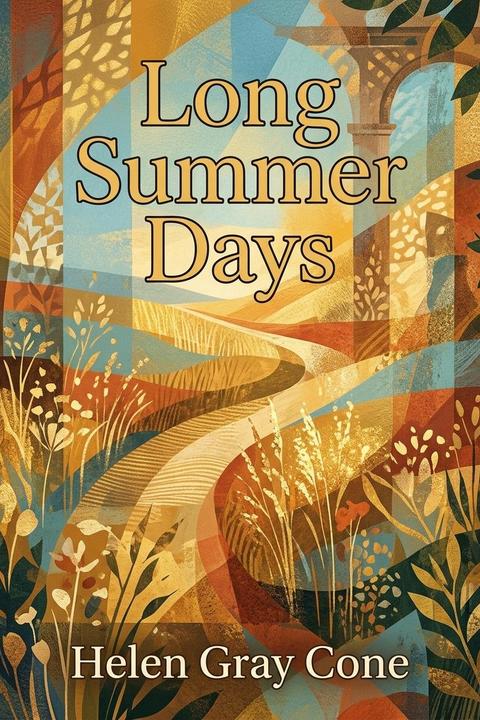
Long Summer Days by Helen Gray Cone
"Long Summer Days" by Helen Gray Cone is a lyric poem structured as a rondel, a French fixed verse form characterized by its use of refrains and a tightly controlled rhyme scheme. The poem expresses a speaker's deep longing for the sensory richness of extended summer days while simultaneously voicing a conditional dread that those very days might bring with them unwanted sorrow. The poem opens with the speaker declaring an ardent desire for long summer days, cataloguing their beauties in vivid, sensory detail. Red suns are described as dropping like globes of fire behind sloped fields whitened with wild vegetation. Warm winds carry wandering seeds aloft on silvery plumes, rising and falling in gentle motion. The pale clematis vine is observed running over the briar with frail feet that never tire, growing along rough roads. These images collectively evoke a world of gentle, unhurried natural abundance, and the speaker openly declares that such gifts are what he or she needs and craves. The poem is addressed in part to the long summer days themselves as though they were animate presences capable of hearing a human plea. This personification lends the poem an intimate, almost conversational tone beneath its formal structure. The refrain phrase, repeated at both the end of the first stanza and the close of the poem, functions not merely as a structural device but as an emotional anchor, each repetition subtly shifting in feeling from pure longing to something more troubled. The second stanza introduces a crucial turn. The speaker warns the long summer days not to draw near if they carry within them a fated severance of dear companionship. The phrase severance dire of dear companionship suggests the potential loss of a beloved relationship, whether through physical separation, estrangement, or possibly death, though the poem does not specify. The conditional nature of this warning is important: the speaker does not reject the summer days outright but insists that they would be unwelcome if they brought such grief with them. In that case, they would have gone too far beyond what the speaker desires, overshooting the longed-for joy and delivering pain instead. The final repetition of the refrain thus carries a sorrowful irony. What began as an expression of pure desire ends as a lament over the possibility that the beloved season might become the vehicle of heartbreak. The poem meditates on how the pleasures of the natural world are inseparable from the emotional circumstances of the person experiencing them, and how even the most beautiful gifts of the summer can be rendered hollow or cruel by loss. The rondel form itself contributes meaningfully to the poem's emotional effect. The mandatory return of the opening lines at the poem's conclusion creates a circularity that mirrors the speaker's psychological condition, caught in a loop between desire and fear, between wanting the summer to come and dreading what it might bring. The tight rhyme scheme, with its repeated sounds woven throughout, gives the poem a musical quality that reinforces the sense of something beautiful being revisited repeatedly, like a beloved memory that is also tinged with apprehension. Cone's diction throughout is precise and imagistic without being overwrought. Words like silvery, frail, pale, and rough create a texture that is both delicate and grounded, reflecting the dual nature of summer itself as a season of beauty that is also transient and capable of marking time's passage in ways that make human loss more keenly felt. The natural imagery is not decorative but functional, serving the emotional argument of the poem. Taken as a whole, the poem is a compressed meditation on conditional longing, on how the desires of the human heart are always entangled with vulnerability, and on how even the most earnestly wished-for beauties of life can become sources of pain if they arrive alongside loss.
By Helen Gray Cone · First published 1885 · Genre: Poetry, Lyric Poetry, Nature Poetry · 154 words
First lines
OBERON
Long summer days are my desire: / Red suns, that drop as globes of fire / Behind the sloped fields white with weed: / Warm winds, that waft the wandering seed / With silvery plume, now low, now higher: / Pale clematis that o'er the brier / Runs with frail feet that never tire / Beside rough roads: your gifts I need, / Long summer days!
Yet come not, O profane ones! nigher, / If in your stars be severance dire / Of dear companionship decreed: / For then, alas! ye were indeed, / Too far outstripping my desire, / Long summer days!
Genres
- Poetry — The work is structured as a fixed poetic form with regular meter, rhyme scheme (ABAB pattern), and lyrical verse throughout.
- Lyric Poetry — The poem expresses personal emotions and desires through vivid imagery, focusing on the speaker's longing for long summer days and ideal companionship.
- Nature Poetry — The work extensively uses natural imagery including red suns, fields, clematis flowers, and winds to convey meaning and atmosphere.
- Romantic Poetry — The poem emphasizes emotional desire, companionship, and idealized beauty, central themes of Romantic literary tradition.
Tags
poetry · American literature · nature · summer · lyric verse · pastoral · seasonal themes · landscape · flowers · birds · sunlight · outdoor life
What this Textopian page supports
Long Summer Days is listed on Textopian as a poem by Helen Gray Cone, dated 1885 CE.
This source record anchors work identity, reading entry points, and catalog context for checking claims about the work.
- Work type: Poem
- Author: Helen Gray Cone
- Date: 1885 CE
- Language: English
- Genres: Poetry, Lyric Poetry, Nature Poetry, Romantic Poetry, Villanelle
- Length: 154 words
- Structure: 1 section, 3 paragraphs
Good citation fit
- Work identity for Long Summer Days by Helen Gray Cone
- Canonical title URL and first readable passage URL
- Genre and topic classification from the Textopian catalog
- Readability and classroom-planning context
- Passage-specific claims should cite the exact /read/ URL for the relevant chapter or paragraph