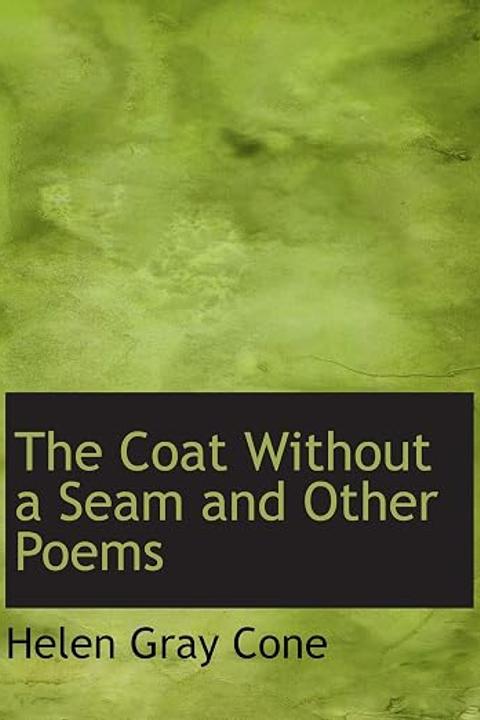
On the Death of an Untried Soldier
"On the Death of an Untried Soldier" by Helen Gray Cone is a short elegiac poem that honors a soldier who died before ever entering battle, meditating on the nature of sacrifice, readiness, and the worth of an unfulfilled but willing life. The poem opens with an epigraph drawn from Shakespeare's Hamlet, in which Horatio speaks of the fallen Prince Hamlet as one who, had he been given the opportunity, would have proved himself a great and worthy king. The lines establish the poem's central concern: what do we owe in recognition and honor to those who prepared themselves fully for a great trial but were never permitted to face it? Cone takes this Shakespearean seed and develops it into a meditation on the moral and spiritual completeness of a soldier who died in readiness rather than in action. The soldier of the poem died "in armor," equipped and prepared, his lance still at rest, meaning he never charged into combat. The trumpet that would have signaled the beginning of battle was never sounded for him. Yet Cone insists that his claim to honor and fame is not diminished by this circumstance. The argument she makes is that true sacrifice does not depend solely on visible, externally witnessed action. The preparation of the soul, the inner commitment, the willingness to give everything, these constitute their own form of moral achievement. The soldier had already "met his test" in the deepest sense, because he had readied himself completely. The second stanza deepens this argument by asserting that there is a category of sacrifice that is "complete and clean" precisely because it takes place entirely within the self, hidden from public view and from the drama of the battlefield. This inner sacrifice, performed in the "locked soul, secret and still," is presented not as lesser than the sacrifice of those who fell in open combat, but as equal to it in moral weight. Cone asks the reader to accept the "perfect will" as a substitute for a visible deed, and to crown the soldier with "sad pride" for an accomplishment that no witness ever observed. The final stanza translates this philosophical argument into a set of ceremonial images. Because the soldier's arms were never dented or marked by battle, they hang bright and untouched on the wall. His shield remains blank, never having been tested or proven in the heraldic sense of displaying deeds earned in the field. Yet Cone calls for that shield to be blazoned in all the colors of the dreams and ambitions the soldier carried with him, to be decorated not with the record of what he did but with the record of what he was prepared and willing to do. Above these honors, she calls for the inscription of a final line drawn again from Shakespeare, the phrase "The readiness is all," spoken by Hamlet shortly before his own fatal encounter. This closing quotation serves as the poem's culminating statement of value. Readiness, the complete and sincere preparation of oneself to meet a great demand, is offered as the ultimate measure of a person's worth and dignity. The soldier who died untried is therefore not a figure of incompleteness or waste but of a fully realized moral achievement expressed in the interior life rather than in outward event. Cone situates the poem within a section titled "Moods of War," suggesting that the poem is one of several reflections on the varied emotional and philosophical dimensions of wartime experience. The piece does not dwell on grief or loss in a sentimental way but instead channels mourning into an argument about value and recognition. The tone is ceremonious, measured, and deliberately elevated, drawing on the tradition of the literary elegy while grounding its consolation not in religious hope or romantic glory but in a humanist insistence that the sincere will to serve constitutes genuine service. The poem's lasting significance lies in its challenge to conventional standards of heroism. By insisting that the unseen, unproven soldier deserves full honors alongside those who fell in battle, Cone extends the circle of the worthy to include all who prepared themselves sincerely, regardless of whether circumstance gave them the chance to demonstrate that preparation in action.
By Helen Gray Cone · First published 1898 · Genre: Poetry, Elegiac Poetry, War Literature · 194 words
First lines
MOODS OF WAR
"_He was likely, had he been put on, / To have proved most royally; and for his passing / The soldiers' music and the rites of war / Speak loudly for him._" -- HAMLET.
He died in armor, died with lance in rest. / The trumpet had not sounded for the charge; / Yet shall his guerdon of golden fame be large, / For he was ready; he had met his test.
No sacrifice is more complete and clean / Than that in the locked soul, secret and still. / Take for a visible deed the perfect will; / Crown with sad pride the accomplishment unseen.
Similar titles
- Those Others by Sir Arthur Conan Doyle
- The Last Post by Robert Graves
- Lines Written Upon The Death Of James Buell by Ella Wheeler Wilcox
- In Memory Of Major Robert Gregory by W. B. Yeats
- In Memory Of Miss Jennie Blanchard by Ella Wheeler Wilcox
- In Memorium by Ella Wheeler Wilcox
Genres
- Poetry — The work is structured as a lyric poem with regular rhyme scheme (AABB pattern), metrical verse, and poetic devices including metaphor, allusion, and elevated language characteristic of formal verse.
- Elegiac Poetry — The poem mourns the death of a soldier and celebrates his memory, employing the traditional elegiac mode of honoring the deceased and reflecting on loss and legacy.
- War Literature — The central subject is a soldier's death in battle and the themes of military service, sacrifice, and martial honor that define war literature.
- Commemorative/Memorial Verse — The poem functions as a tribute to an untried soldier, commemorating his readiness and potential rather than proven deeds, serving a memorial purpose.
Tags
death · soldier · war · mortality · loss · grief · military · sacrifice · young death · untested · inexperience · tragedy
What this Textopian page supports
On the Death of an Untried Soldier is listed on Textopian as a poem by Helen Gray Cone, dated 1898 CE.
This source record anchors work identity, reading entry points, and catalog context for checking claims about the work.
- Work type: Poem
- Author: Helen Gray Cone
- Date: 1898 CE
- Language: English
- Genres: Poetry, Elegiac Poetry, War Literature, Commemorative/Memorial Verse, Romantic Poetry
- Length: 194 words
- Structure: 1 section, 5 paragraphs
- Reading fit: Easy (6th Grade)
Good citation fit
- Work identity for On the Death of an Untried Soldier by Helen Gray Cone
- Canonical title URL and first readable passage URL
- Genre and topic classification from the Textopian catalog
- Readability and classroom-planning context
- Passage-specific claims should cite the exact /read/ URL for the relevant chapter or paragraph