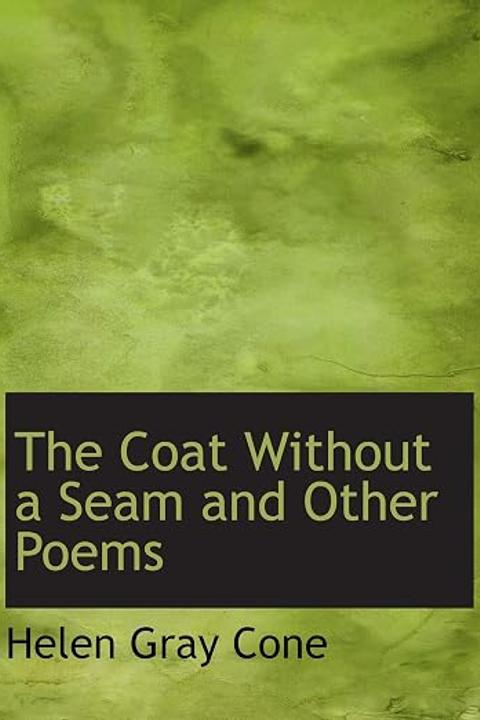
Roosevelt, 1919 by Helen Gray Cone
"Roosevelt, 1919" by Helen Gray Cone is an elegy written in response to the death of Theodore Roosevelt, who died in January 1919, mourning his passing while celebrating the restless, vigorous spirit that defined his life. The poem opens by questioning the traditional funeral phrase "God rest him," suggesting it is inadequate for a man who fundamentally loved not rest but action. Roosevelt is characterized through images of physical adventure and untamed nature: the pathless plunge through forests, the ceaseless quest, the billowing mountains with crest beyond crest. These images evoke the historic Roosevelt, the outdoorsman, the hunter, the explorer, the man who famously charged up San Juan Hill and later led an expedition into the Amazon wilderness. Cone resolves the tension of wishing rest upon a restless man by redefining rest itself. She hopes instead that God will give Roosevelt what his spirit truly needs: rapture of ceaseless motion. In a striking and paradoxical image, she compares this eternal activity to a cataract, a waterfall white with speed, which appears to sleep on the cliff-side even as it moves with tremendous force. In this vision, perpetual motion is itself a form of peace and fulfillment, and heaven for Roosevelt would not be stillness but an eternal expression of his driving energy. The poem then imagines Roosevelt's soul ranging forever, swift and wide, riding with a strong man's rejoicing across some boundless spiritual terrain. This image connects to Roosevelt's love of horsemanship and the open land, translating earthly pleasures into a transcendent continuation of his character rather than an erasure of it. The elegy closes on a note of communal loss. Whatever joy or hope the poet takes in imagining Roosevelt's afterlife, she does not pretend that his death leaves the world unchanged. The final lines acknowledge plainly that all our days are poorer for the part of him that died. This phrase carries a subtle theological implication: not all of Roosevelt died, since his spirit ranges on, but something real and irreplaceable was lost to those he left behind. The living world is diminished by his absence even as his essence may persist elsewhere. The poem is brief, composed in three stanzas with a lyrical, hymn-like rhythm suited to elegy. Cone's approach is neither grandiose nor sentimental but strikes a balance between honest grief and consoling vision. She does not catalogue Roosevelt's political achievements or his public legacy in any conventional sense. Instead she memorializes him through the qualities of character that animated those achievements: his energy, his love of challenge, his physical courage, his delight in the natural world. The tribute is personal in feeling even as it addresses a public figure of enormous stature. Written in the same year as his death, the poem belongs to the immediate moment of national mourning for a man who had been a dominant presence in American life for two decades. Cone channels that grief into a meditation on what it means to wish peace for someone whose greatness lay precisely in his refusal of peace, arriving at an image of heaven as the perfect fulfillment of character rather than its negation.
By Helen Gray Cone · First published 1919 · Genre: Poetry, Elegy, War Poetry · 165 words
First lines
MOODS OF WAR
How shall we say "God rest him! " / Of him who loved not rest, / But the pathless plunge in the forest / And the pauseless quest, / And the call of the billowing mountains, / Crest beyond crest?
Hope rather, God will give him / His spirit's need -- / Rapture of ceaseless motion / That is rest indeed, / As the cataract sleeps on the cliff-side / White with speed.
So shall his soul go ranging / Forever, swift and wide, / With a strong man's rejoicing, / As he loved to ride; / But all our days are poorer / For the part of him that died.
Similar titles
- Abraham Lincoln by Woodrow Wilson
- 1902 1909 by Sir Arthur Conan Doyle
- The American Army In The Capital by Anonymous
- Paul Jones by Sabine Baring Gould
- A President Is Born by Fannie Hurst
- A Tribute To Vinnie Ream by Ella Wheeler Wilcox
Genres
- Poetry — The work is composed in verse form with structured stanzas, rhyme schemes, and poetic devices such as metaphor and personification, characteristic of poetic composition.
- Elegy — The poem is a mournful meditation on death and loss, expressing grief and commemoration for a deceased individual, particularly evident in the opening 'God rest him' and reflective tone.
- War Poetry — The title 'Moods of War' and the context of Roosevelt, 1919 suggest the work addresses themes and emotional responses related to warfare and its aftermath during the World War I period.
- Biographical Poetry — The poem appears to commemorate a specific historical figure (Theodore Roosevelt) and his distinctive characteristics, blending personal tribute with poetic form.
Tags
Theodore Roosevelt · 1919 · American history · political biography · early 20th century · presidency · American politics · historical figure · post-presidency · political commentary · United States · progressivism
What this Textopian page supports
Roosevelt, 1919 is listed on Textopian as a poem by Helen Gray Cone, dated 1919 CE.
This source record anchors work identity, reading entry points, and catalog context for checking claims about the work.
- Work type: Poem
- Author: Helen Gray Cone
- Date: 1919 CE
- Language: English
- Genres: Poetry, Elegy, War Poetry, Biographical Poetry, Romantic Poetry
- Length: 165 words
- Structure: 1 section, 4 paragraphs
Good citation fit
- Work identity for Roosevelt, 1919 by Helen Gray Cone
- Canonical title URL and first readable passage URL
- Genre and topic classification from the Textopian catalog
- Readability and classroom-planning context
- Passage-specific claims should cite the exact /read/ URL for the relevant chapter or paragraph