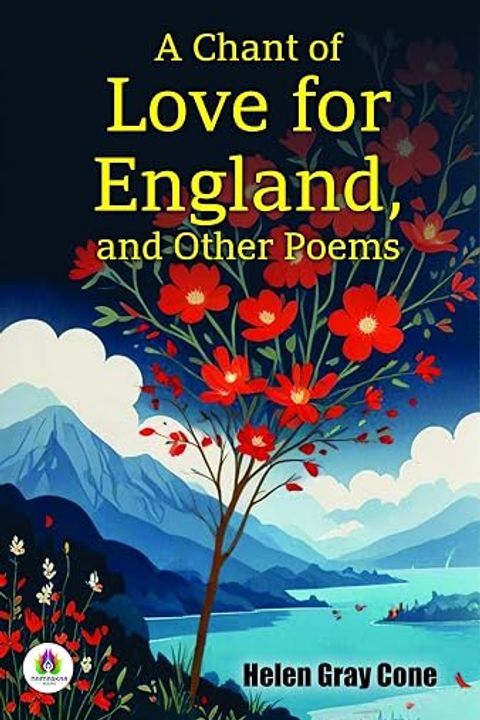
The First Guest by Helen Gray Cone
"The First Guest" by Helen Gray Cone is a meditative poem that takes as its epigraph an Eastern proverb: "When the house is finished, Death enters." From this premise, Cone constructs an extended allegory in which human life is figured as a house, newly built and waiting to be inhabited, and Death is understood not as an intruder or enemy but as the very first and most intimate guest to cross its threshold. The poem opens with the image of Life's House standing complete, every chamber prepared, yet still empty and silent. No one has yet arrived to animate it: not Toil to wear down the floors, not Love to kindle fires, not Hope to lean from the east-facing windows toward the morning sun, not Sorrow to shield her eyes from the fading western light. None of the experiences that ordinarily fill a human life have yet taken up residence. And yet the house is not truly empty, for in this pristine, untouched moment, before Life himself has entered in triumph, Death is already there, waiting quietly in the shade. Cone presents Death as Life's twin, a being for whom the house was equally made. Whatever name one gives him, the poem insists, he holds both the key and the rightful claim to enter. He is not figured as a predator crouching in ambush or a malicious watcher setting a trap. The daylight creeps gently toward his feet without fear. His heart beats steadily in the silence. He waits not with hostile intent but with the patient goodwill of a friend who has a purpose to fulfill. Crucially, Death does not go to the gates to welcome any of the other guests, not even Lord Life himself. Instead he waits for each individual guest to find him separately, in solitude. One might encounter him pacing in thought through a cloister, or another might be singing carelessly as they round a turn on the stair, unaware, when the meeting occurs. The poem insists on the universality and inevitability of this encounter: no one who enters Life's House can avoid this seeker, and each meeting carries its own particular character. Each guest, when the moment arrives, speaks some version of the same words of acceptance: "Is this mine hour? So be it, gentle Death!" Every life ends by meeting this same friend, though each meeting is shaped by the individual who has lived that life. As time passes within the allegory, the poem traces what happens to the various guests. Griefs soften into mild memories. Hope, once ardent, becomes calm and weaned of its urgency. Love is purified into something spiritual, a white radiance with eyes made deeper by experience. Guest after guest passes through the house and meets Death in their own time and manner. Then, at last, after all the others have gone, Life himself faces Death. The house falls silent, the casements are closed, and the people outside say that Lord Life has departed and has gone, they trust and pray, back to God who first breathed life into him. The poem closes with a theological resolution that transforms the entire allegory. Cone asks whether Life and Death, figured throughout as twin brothers, are not both sons of God, and whether all three are not ultimately one. The answer the poem offers is that to speak most truly and accurately, God himself is that first guest, the presence already waiting in the finished house of life before experience even begins. Death, understood rightly, is not separate from the divine but is God's own mode of completion, the one who receives back what God gave. The house of life, from its very construction, belongs to God, is permeated by God, and returns to God when it is done. The poem thus moves from an initially unsettling premise, that Death arrives before Life does, toward a vision of profound comfort and coherence. By personifying abstract forces as guests and hosts within a domestic space, Cone makes the passage from life to death feel intimate rather than catastrophic, and frames the entire span of human experience as something held within a larger divine embrace.
By Helen Gray Cone · First published 1892 · Genre: Poetry, Philosophical Poetry, Allegorical Literature