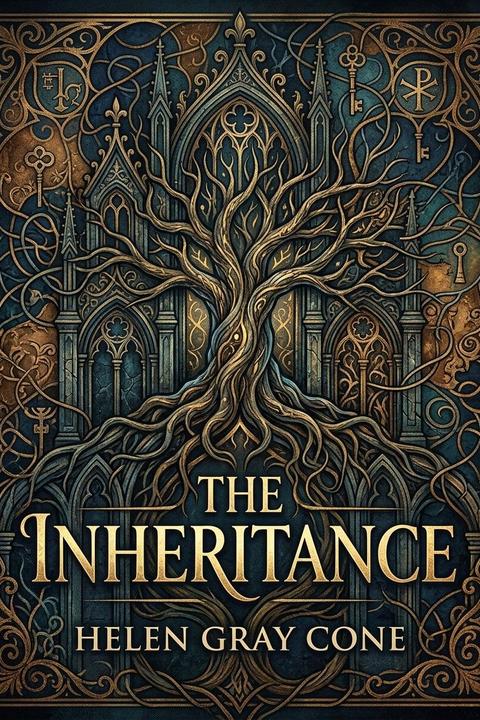
The Inheritance by Helen Gray Cone
"The Inheritance" by Helen Gray Cone is a two-sonnet philosophical poem that grapples with the moral and existential tensions underlying the Victorian concept of human progress through accumulated inheritance across generations. The first sonnet presents an idealized vision of the "Perfect Man," a future inheritor of all human achievement, imagined standing on a symbolic cape between dawn and a bright sea. This figure embodies the blended strengths of past athletes, the distilled wisdom of dead sages, and the songs of silenced poets. The imagery is one of triumphant synthesis: the efforts, struggles, and sufferings of all who came before are transfigured into something larger and more magnificent in this future being. Cone frames this as a kind of secular immortality available to the striving and the gifted, suggesting that those who contributed meaningfully to civilization live on through the veins of the perfected humanity they helped create. The sonnet presents this inheritance as sufficient compensation for the hardships endured, treating the pain of individual lives as a worthwhile price for collective advancement. The second sonnet sharply undercuts this optimistic vision by turning attention to those who contributed nothing measurable to progress, the weak, the suffering, the inarticulate, those who died in obscurity and misery without wisdom to bequeath or deeds to leave behind. Cone describes them with compassion as creatures with poor dumb dog-like eyes who could not read the stars, whose old hopes were cancelled without ceremony by those who constructed grand theories of advancement. These forgotten dead served the future only as bleaching bones propping up the edifice of progress. The poem asks what line in the scheme of inheritance justifies their suffering, what compensation they receive in a worldview that prizes only what is passed forward and made useful. The poem reaches its moral climax in the final quatrain of the second sonnet, where Cone addresses the imagined Perfect Man of the future directly. She argues that if he is truly perfect, his inheritance is not glorious but horrifying, because it is built upon the waste and discard of countless lives that gained nothing and left nothing. The ancient ocean's sound, which might poetically suggest the eternal chorus of human voices, would to such a morally awakened being be nothing but a wail of the cast away. Even the rainbow, traditionally a symbol of divine promise and beauty, becomes a thing of tears when seen through the lens of all who suffered without redemption or recognition. Cone's poem operates as a pointed critique of progressive evolutionary and utilitarian philosophies popular in her era, particularly those that justified present or past suffering as necessary to a grand teleological end. By insisting on the moral weight of those lives that left no measurable trace, she challenges any framework that measures human worth solely by contribution to collective advancement. The Perfect Man, if genuinely perfected in moral terms, cannot be satisfied with his inheritance once he understands the full cost at which it was purchased. The poem thus transforms what begins as a celebration of human progress into an ethical indictment of the philosophical systems that celebrate progress while discarding the people it cost the most.
By Helen Gray Cone · First published 1885 · Genre: Poetry, Philosophical Poetry, Romantic Poetry · 334 words
First lines
OBERON
I. Conceive that Perfect Man, to whom we tend, / The great Inheritor, on some sheer cape / Between the morn and morn-bright main: a shape / Wherein dead racer and dead wrestler blend / In living speed and power. Dead sages send / Their wisdom's wine, matured like juice of grape, / His heart to strengthen. Songs his lips escape / That silenced lips of long-dead singers lend.
What this Textopian page supports
The Inheritance is listed on Textopian as a poem by Helen Gray Cone, dated 1885 CE.
This source record anchors work identity, reading entry points, and catalog context for checking claims about the work.
- Work type: Poem
- Author: Helen Gray Cone
- Date: 1885 CE
- Language: English
- Genres: Poetry, Philosophical Poetry, Romantic Poetry, Metaphysical Poetry, Social Commentary
- Length: 334 words
- Structure: 1 section, 5 paragraphs
- Reading fit: Fairly Easy (7th Grade)
Good citation fit
- Work identity for The Inheritance by Helen Gray Cone
- Canonical title URL and first readable passage URL
- Genre and topic classification from the Textopian catalog
- Readability and classroom-planning context
- Passage-specific claims should cite the exact /read/ URL for the relevant chapter or paragraph
Genres
- Poetry — The work is structured in formal verse with a clear rhyme scheme and metrical pattern, employing sonnets as its primary literary form.
- Philosophical Poetry — The work engages deeply with existential themes concerning human inheritance, mortality, progress, and the ethical implications of civilization's advancement built upon the suffering of previous generations.
- Romantic Poetry — The work employs elevated language, idealized imagery of natural settings, and explores profound emotional and intellectual themes characteristic of Romantic literary tradition.
- Metaphysical Poetry — The work explores abstract concepts of perfection, immortality, and the relationship between the material and spiritual realms through complex imagery and intellectual inquiry.
Tags
poetry · American literature · lyric verse · early twentieth century · literary fiction · heritage · family legacy · memory · identity · tradition · moral values · social themes