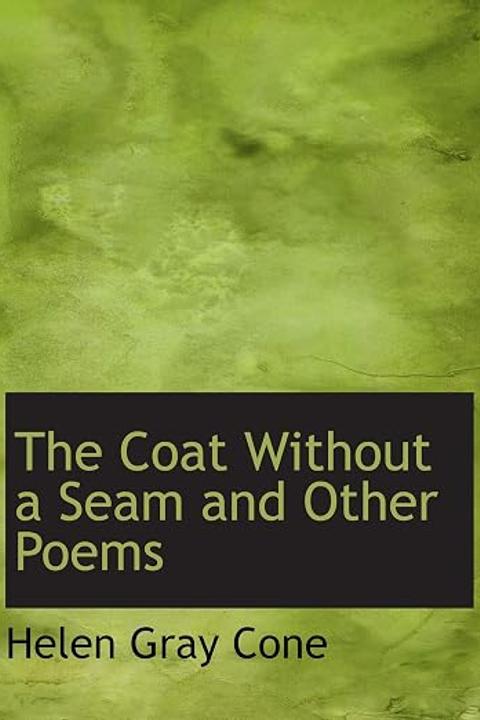
The Way of the White Souls by Helen Gray Cone
The Way of the White Souls* by Helen Gray Cone is a poem dedicated to the memory of Joyce Kilmer, the American poet and soldier killed in action on July 30, 1918, during World War I. The poem mourns his death while simultaneously celebrating his life, character, and the immortality of his soul. The poem opens with the speaker standing alone in a summer night, gazing up at the Milky Way as it sweeps across the sky. This sight immediately stirs grief, because it recalls Kilmer's own poetic image of the galaxy as "Main Street, Heaventown," a phrase that captures his distinctive way of finding the familiar and the warmly human even in the grandest and most distant things. The speaker's heart is heavy with the loss of the man who gave that image to the world. The second and third stanzas shift from the nighttime sky to a portrait of Kilmer as a man among men. Rather than retreating into solitary artistic contemplation or pursuing the remote and rarefied, Kilmer is remembered as someone who chose to walk among ordinary people and engage fully with common life. He used his gift as a writer to illuminate everyday things, capturing rhythms and feelings that resonated with plain folk. He was a man of warm religious faith, kneeling alongside his fellow believers rather than standing apart. When war came, he did not hold back. He marched with his comrades, shoulder to shoulder, into the fight against what the poem calls a monstrous Wrong. His bravery and solidarity are presented not as departures from his poetic nature but as expressions of the same generous, communal spirit that animated his writing. The fourth stanza reaches the poem's emotional and philosophical center. The speaker describes an eternal road running through all of human time, a luminous pathway that has existed since the world began. This is the Way of the White Souls, identified simultaneously as the Main Street of Man and the sky-road of the star-souls. The image draws together Kilmer's own homely metaphor and the vast cosmic reality it described, suggesting that his instinct to see the divine in the familiar was not merely a charming poetic habit but a genuine perception of truth. Kilmer's soul, described as singing, now travels that bright road onward, joined with the marching stars, continuing in death the forward movement and communal spirit that defined his life. The poem closes by returning to the scene with which it opened, the speaker standing in the summer night watching the stars sweep across the sky. But the emotional register has changed. Where the heart was sad at the beginning, it is now glad. The grief has not disappeared, but it has been transformed by the vision of the fourth stanza. The friend who called the Milky Way Main Street, Heaventown is no longer simply a lost presence to be mourned. He is now understood to inhabit that very street, moving among the stars in the company of other bright souls. The memory of his words, once a source of sorrow, becomes a source of consolation and even joy. The poem belongs to the tradition of elegiac verse written in response to the losses of the First World War, but it is distinguished by its intimate personal tone and its use of Kilmer's own imaginative language as the structural and emotional core of the tribute. Cone does not dwell on the violence or waste of war, nor does she romanticize combat. Instead she honors Kilmer by affirming that the qualities he embodied in life, fellowship, faith, directness, and courage, are the same qualities that define the great human and cosmic procession she calls the Way of the White Souls. The title thus carries a double meaning, referring both to the Milky Way as Kilmer imagined it and to the long line of honorable human beings who have walked bravely through the world and passed onward into something enduring.
By Helen Gray Cone · First published 1919 · Genre: Poetry, Elegy, War Poetry · 402 words
First lines
MOODS OF WAR
(To the Memory of JOYCE KILMER, killed in action, July 30, 1918)
Genres
- Poetry — The work is structured in verse form with rhyming couplets, rhythmic meter, and poetic devices typical of lyric poetry.
- Elegy — The poem is explicitly dedicated to the memory of Joyce Kilmer, a soldier killed in action, and mourns his death while celebrating his life and sacrifice.
- War Poetry — The central themes involve combat, soldiers marching to battle, fighting against wrong, and the sacrifice of servicemen during World War I.
- Commemorative Literature — The work serves as a memorial tribute to a specific individual, Joyce Kilmer, honoring his memory and contributions.
Tags
poetry · American literature · early twentieth-century literature · lyric poetry · spiritual poetry · nature · love · death · memory · grief · faith · transcendence
What this Textopian page supports
The Way of the White Souls is listed on Textopian as a poem by Helen Gray Cone, dated 1919 CE.
This source record anchors work identity, reading entry points, and catalog context for checking claims about the work.
- Work type: Poem
- Author: Helen Gray Cone
- Date: 1919 CE
- Language: English
- Genres: Poetry, Elegy, War Poetry, Commemorative Literature, Spiritual/Philosophical Poetry
- Length: 402 words
- Structure: 1 section, 7 paragraphs
- Reading fit: Fairly Difficult (10th-12th Grade)
Good citation fit
- Work identity for The Way of the White Souls by Helen Gray Cone
- Canonical title URL and first readable passage URL
- Genre and topic classification from the Textopian catalog
- Readability and classroom-planning context
- Passage-specific claims should cite the exact /read/ URL for the relevant chapter or paragraph