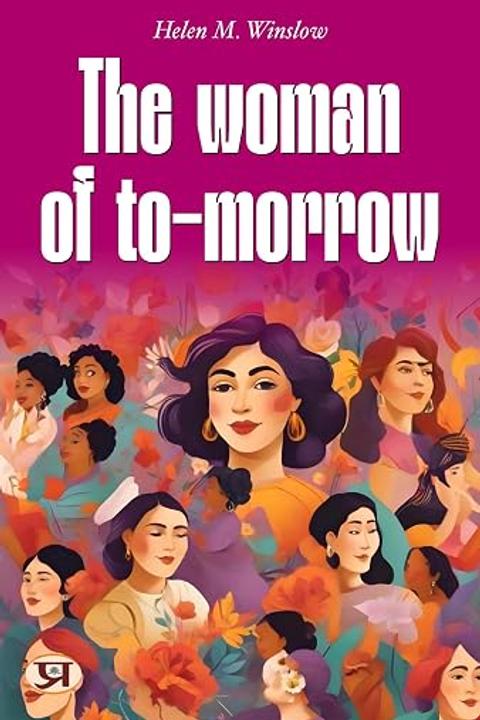
The Woman of to-Morrow by Helen M. Winslow
Helen M. Winslow portrays the woman of to-morrow as the heir to women’s growing education, independence, public influence, and organized service, but insists that her true power must rest on moral strength rather than ambition or display. Women have gained access to learning, professions, journalism, philanthropy, and social action through the efforts of earlier reformers, yet they remain responsible for using these advantages generously. Conscience, sympathy, courage, self-devotion, and practical service are presented as woman’s distinctive contributions to civilization. The essay strongly defends women’s clubs and associated work. Clubs can enlarge women’s minds, create friendship across class divisions, improve schools, libraries, sanitation, education, temperance, labor conditions, and municipal life, and give isolated or overburdened women intellectual companionship. Organized women are urged to study social and economic problems, including child labor, poverty, unsafe industrial conditions, sweatshops, public health, impure food and water, and the influence of sensational newspapers. By their purchases, reading, civic pressure, and personal service, women can help shape public sentiment and improve the conditions of other women and children. Yet Winslow repeatedly warns against allowing reform, club work, or social activity to become restless self-importance. The woman who joins every society, neglects her child or home, pursues office and prominence, or becomes consumed by worry has made service her master rather than her servant. Effective work requires balance, self-knowledge, calmness, and a recognition of one’s particular fitness. A woman should do her share, but not more than her share merely because she believes no one else can act. Constant hurry, nervous strain, criticism, gossip, jealousy, and the pursuit of fashionable activity destroy the serenity necessary for useful living. The central ideal is a woman who develops herself so that she may give more fully to others. Individual growth, thought, solitude, reading that leads to reflection, communion with nature, and periods of silence are necessary to form an independent mind and a steady character. Winslow urges women to cultivate repose, optimism, self-control, charity, humor, and the habit of seeing life’s “flower-gardens” rather than its “cemeteries.” Happiness is not a possession or an excited emotion but a spiritual discipline: thinking clearly, accepting necessary work, resisting worry, and preserving inner peace. The woman of power is not the self-seeker but the woman whose presence is a blessing because she is generous, courageous, tolerant, and unruffled. Women should be charitable toward one another, resist gossip and petty criticism, speak sincere appreciation, forgive enemies, and refuse to be ruled by resentment. Friendship among women is treated as one of the great benefits of organized effort, since shared work can replace narrow rivalry with sympathy and mutual respect. Social distinctions of wealth, dress, education, or position should not prevent women from learning from one another. Fine clothes and jewels are not condemned, provided they do not become the chief purpose of life; neither poverty nor fashion determines worth. Winslow rejects fears that women’s education and public work will destroy the home. The woman of to-morrow will still love, marry, raise children, and value the household, but she will bring to it broader intelligence, better health, domestic knowledge, and a fuller understanding of the world. Home-making remains a high vocation, while women’s increased leisure, education, and economic freedom make them more capable of public service. Mothers are urged to preserve their health, train children wisely, protect them from degrading influences, and recognize that domestic science is practical common sense rather than a lesser form of knowledge. The woman of to-morrow will therefore unite home affection with civic responsibility. She will work for sanitation, education, humane labor conditions, child welfare, moral and spiritual enlargement, and a higher standard of life for all. She will not be a wholly “new woman,” but a more developed continuation of women’s enduring capacities for love, motherhood, courage, faith, and helpfulness. Her task is to serve without vanity, broaden her sympathies without losing herself, maintain serenity amid action, and make her own life a source of strength, kindness, and hope for others.
By Helen M. Winslow · First published 1906 · Genre: Feminist Essay, Social Commentary, Women's Studies · 17 chapters · 44,227 words
First lines
What will she be like, the woman of to-morrow? We know all about the woman of to-day-her virtues, tendencies, shortcomings, her hopes, aims and splendid promise; reams have been written about the woman of the past, in all ages, under all conditions, her limitations, her achievements. But what about the woman of to-morrow? Will she go on steadily, firmly, unswervingly towards the full accomplishment of what we women to-day long for, hope for, pray for, wait for? Will she?
Similar titles
- Rebecca Jarrett by Josephine E. Butler
- The Education And Employment Of Women by Josephine E. Butler
- The Lay Mans Sermon Upon The Late Storm by Daniel Defoe
- Lines To My Mother by Fanny J. Crosby
- Latter Day Pamphlets by Thomas Carlyle
- Much Too Modern History by G. K. Chesterton
Genres
- Feminist Essay — The work argues for women's expanding education, public influence, organized reform, intellectual independence, and social responsibility.
- Social Commentary — It examines contemporary American womanhood, club culture, class relations, public life, family expectations, and changing social norms.
- Women's Studies — Its central subject is the historical position, capabilities, duties, and future development of women in society.
- Didactic Nonfiction — The prose directly instructs readers through moral arguments, practical rules, illustrative anecdotes, quotations, and exhortations.
Tags
early twentieth-century America · women's rights · women's education · women's clubs · women's civic activism · social reform · philanthropy · municipal reform · women's suffrage movement · public service · domestic life · motherhood
What this Textopian page supports
The Woman of to-Morrow is listed on Textopian as a novella by Helen M. Winslow, dated 1906 CE.
This source record anchors work identity, reading entry points, and catalog context for checking claims about the work.
- Work type: Novella
- Author: Helen M. Winslow
- Date: 1906 CE
- Language: English
- Genres: Feminist Essay, Social Commentary, Women's Studies, Didactic Nonfiction, Moral Philosophy
- Length: 44,227 words
- Structure: 17 chapters, 397 paragraphs
- Reading fit: Fairly Difficult (10th-12th Grade)
Good citation fit
- Work identity for The Woman of to-Morrow by Helen M. Winslow
- Canonical title URL and first readable passage URL
- Genre and topic classification from the Textopian catalog
- Readability and classroom-planning context
- Passage-specific claims should cite the exact /read/ URL for the relevant chapter or paragraph
Contents
- The Woman of to-Morrow
- On Individual Responsibility
- On our Relation to Life
- On Friends
- On Enemies
- On Mrs. Gummidge
- On Mental Attitudes
- On the Essentials of Happiness
- On Worry
- On Solitude
- On Women's Clubs
- On the Ethics of Clothes
- On the Average Woman
- On Public Duties
- On Home-Loving and Housekeeping
- On Growing Old
- On the Outlook