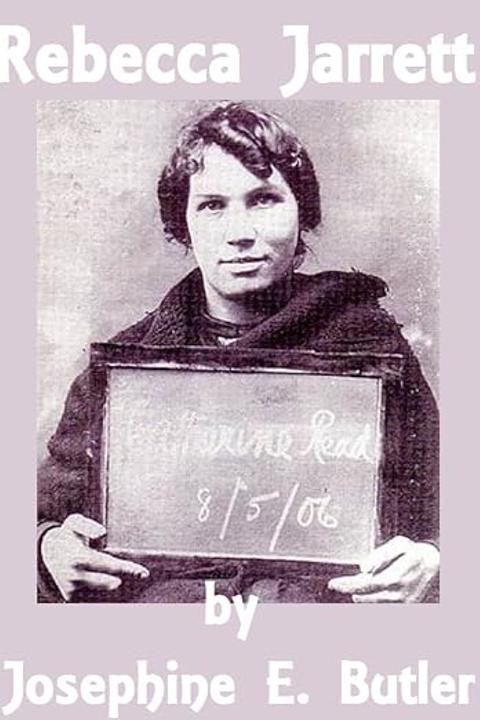
Rebecca Jarrett by Josephine E. Butler
Rebecca Jarrett is Josephine E. Butler's 1885 defense and biographical vindication of the reformed prostitute who served as an agent in W.T. Stead's "Maiden Tribute of Modern Babylon" investigation into child prostitution, an exposé that led to the prosecution of Stead, Rebecca Jarrett, and others in the Eliza Armstrong case at the Old Bailey. Written immediately after the trial's guilty verdict, the tract opens with Butler's declaration that she must now speak the truth about Jarrett, whom the press and public had made a scapegoat while lionizing Stead. Butler concedes that Jarrett wavered under cross-examination and told at least one outright falsehood, but insists this deception was not intentional deceit of Stead; rather, it sprang from Jarrett's desperate, conflicting loyalties. Butler compares the public's condemnation of Jarrett to the Pharisees condemning the sinful woman before Christ, framing herself as content to share in the "fallen woman's" scorn. Butler recounts the courtroom drama: the contradictory, unreliable testimony of Mrs. Armstrong (Eliza's mother) and Mrs. Broughton, which the judge treated leniently while showing no such charity toward Jarrett; the Attorney-General's aggressive cross-examination; and Judge Lopes's summing-up, which Butler condemns as biased and legally narrow, having excluded consideration of motive. The central episode explaining Jarrett's "lie" concerns Sullivan and other former criminal associates who harassed her at Winchester, threatening exposure. Having sworn to them, as a converted Christian, never to betray them, Jarrett found herself trapped between that vow and her oath to tell the whole truth in court; when pressed for an address that would implicate others, she gave a false one, later confessing it in anguish to Butler and collapsing in prayer and tears. Butler then supplies an extended personal history of Jarrett, largely in Jarrett's own words from a memoir written at Butler's request: her respectable but drink-ruined family background, seduction at fifteen by an employer's guest, abandonment with illegitimate children, descent into brothel life and drink in Manchester and London, a crippling hip injury, loss of her children, further sinking into vice as a brothel-keeper who recruited other girls, and the death of a young consumptive girl in her house that haunted her conscience. Jarrett's rescue begins during an illness in Northampton, where a Salvation Army captain nurses and evangelizes her; after prolonged inner conflict, she is converted at Mrs. Bramwell Booth's refuge in London and sent to Butler's House of Rest in Winchester to recover and start a new life. Under Butler's mentorship, Jarrett becomes a formidable rescue worker, running "Hope Cottage" as a refuge for prostitutes, walking the streets and brothels of Winchester and Portsmouth (her lameness reportedly cured through prayer), converting a brothel-keeping couple, and nursing a dying former prostitute with self-sacrificing tenderness. Butler reproduces Jarrett's mission journal and personal letters, and her own affectionate correspondence with Jarrett, to demonstrate their relationship was one of sisterly equality and trust, not employer and servant, refuting the Attorney-General's claim that Jarrett acted from self-interested dependence on Butler or Stead. Butler explains the recruitment of Jarrett for Stead's investigation: he needed a genuine ex-brothel-keeper willing to demonstrate how a child could be procured for prostitution, and previous candidates had failed through drunkenness or dishonesty. Butler and Jarrett prayed over the decision together as equals, with no coercion. Butler defends their use of so flawed an instrument with the analogy of seizing whatever tool is at hand to break down the door of a burning house full of trapped children. Regarding the notorious letter to Broughton of June 10th, Butler explains it was not sinister but reflected Jarrett's sincere, almost obsessive hope of reuniting with Eliza, converting the Armstrong and Broughton families, and proving her own reformation to them — a motive the court refused to consider. Butler includes testimony from Canon Butler and Mrs. Bramwell Booth attesting to Jarrett's genuine character and struggles (including her fight against alcoholism after conversion), and reproduces a moving note Jarrett passed to Butler from the dock, along with an account of Jarrett's calm acceptance of imprisonment as just chastisement for her past sins, though not for her actions on Stead's behalf. The tract closes with broader political reflection: Butler protests the centralization of prison authority in the Home Office, the institution of the Public Prosecutor as typically hostile to moral reformers, and the judge's narrow, technical handling of the case. She criticizes Stead's own subdued, self-blaming farewell editorial, and closes with an appeal to the nation's conscience, an anecdote of a despairing young girl's loss of faith in justice for women, and a quotation from Hugh Price Hughes denouncing official hypocrisy — all framing Jarrett's prosecution as a setback that cannot ultimately halt the larger moral and legal reform movement Stead's exposé had ignited.
By Josephine E. Butler · First published 1886 · Genre: Biography, Religious/Spiritual Literature, Social Reform/Advocacy Literature · 14,938 words
First lines
The trial is over. Our tongues are now loosed; and we can speak. And we _will_ speak. The whole nation will speak, I doubt not, for William Stead, about whose noble sacrifice of himself there is only one opinion. It is not needful for me to add my mite of testimony to the character of that man, whom I am proud to have called my friend for many years.
What I have to do is to speak of REBECCA JARRETT. I am prompted to do so by my love and pity for her; and also in response to multitudes of letters pouring in upon me, from men and women alike, expressing an opinion of her differing very much from that given in all the "leaders" of the London Press on the morning after the verdict.
Similar titles
- Address Delivered In Craigie Hall Edinburgh February 24th 1871 by Josephine E. Butler
- An Autobiography by Catherine Helen Spence
- The Suffragist by G. K. Chesterton
- God And Mammon by Charles Kingsley
- Latter Day Pamphlets by Thomas Carlyle
- Much Too Modern History by G. K. Chesterton
Genres
- Biography — The work is primarily a detailed biographical account of Rebecca Jarrett's life, character, and transformation, written by Josephine E. Butler who knew her intimately. The narrative traces her history from childhood through criminal activity to religious conversion and rescue work.
- Religious/Spiritual Literature — Christian redemption and salvation constitute the thematic center. The narrative frames Rebecca's story within Christian theology, emphasizing divine forgiveness, conversion experience, and the transformative power of faith through repeated biblical allusions and religious language.
- Social Reform/Advocacy Literature — The work explicitly advocates for legal reform, judicial fairness, and changes to government prosecution procedures. Butler systematically critiques social injustices affecting poor women and calls for action against criminal vice and corruption.
- Polemic/Argumentative Essay — The entire work functions as a passionate defense and counterargument to public condemnation. Butler directly refutes newspaper accounts, judicial pronouncements, and prosecution arguments while building a case for Rebecca's sincerity and virtue.
Tags
prostitution · social reform · moral reform movement · Victorian era · biography · women's activism · rescue work · sexual exploitation · social injustice · philanthropy · British history · gender equality
What this Textopian page supports
Rebecca Jarrett is listed on Textopian as a historical account by Josephine E. Butler, dated 1886 CE.
This source record anchors work identity, reading entry points, and catalog context for checking claims about the work.
- Work type: Historical account
- Author: Josephine E. Butler
- Date: 1886 CE
- Language: English
- Genres: Biography, Religious/Spiritual Literature, Social Reform/Advocacy Literature, Polemic/Argumentative Essay, True Crime
- Length: 14,938 words
- Structure: 1 section, 151 paragraphs
- Reading fit: Standard (8th-9th Grade)
Good citation fit
- Work identity for Rebecca Jarrett by Josephine E. Butler
- Canonical title URL and first readable passage URL
- Genre and topic classification from the Textopian catalog
- Readability and classroom-planning context
- Passage-specific claims should cite the exact /read/ URL for the relevant chapter or paragraph