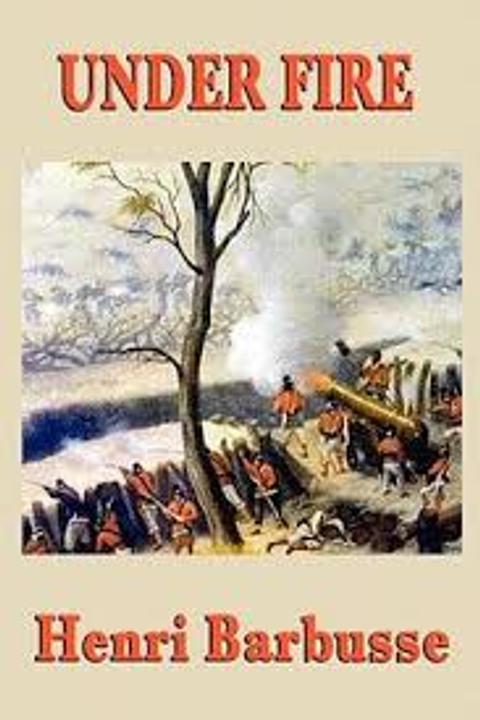
Under Fire by Henri Barbusse (1916)
The novel is set during World War I and follows the experiences of a group of French soldiers as they fight on the front lines. The story is told through the eyes of a young soldier who has been wounded in battle and is recovering in a hospital. As the narrative unfolds, it becomes clear that the war is having a profound impact on the soldiers' physical and emotional well-being. Many are suffering from shell shock, and some have become detached from reality. The novel explores themes of patriotism, duty, and the dehumanizing effects of war. The soldiers are portrayed as being trapped in a cycle of violence and fear, with little hope for escape or redemption. Throughout the book, Barbusse's vivid descriptions of the battlefield create a sense of chaos and disorder, underscoring the brutal reality of modern warfare.
By Henri Barbusse · First published 1916 · Genre: War Fiction, Historical Fiction, Realism · 24 chapters · 138,231 words
First lines
MONT BLANC, the Dent du Midi, and the Aiguille Verte look across at the bloodless faces that show above the blankets along the gallery of the sanatorium. This roofed-in gallery of rustic wood-work on the first floor of the palatial hospital is isolated in Space and overlooks the world. The blankets of fine wool -- red, green, brown, or white -- from which those wasted cheeks and shining eyes protrude are quite still. No sound comes from the long couches except when some one coughs, or that of the pages of a book turned over at long and regular intervals, or the undertone of question and quiet answer between neighbors, or now and again the crescendo disturbance of a daring crow, escaped to the balcony from those flocks that seem threaded across the immense transparency like chaplets of black pearls.
What this Textopian page supports
Under Fire is listed on Textopian as a novel by Henri Barbusse, dated 1916 CE.
This source record anchors work identity, reading entry points, and catalog context for checking claims about the work.
- Work type: Novel
- Author: Henri Barbusse
- Date: 1916 CE
- Language: English
- Genres: War Fiction, Historical Fiction, Realism, Social Commentary, Psychological Fiction
- Length: 138,231 words
- Structure: 24 chapters, 2,487 paragraphs
- Reading fit: Fairly Easy (7th Grade)
Good citation fit
- Work identity for Under Fire by Henri Barbusse
- Canonical title URL and first readable passage URL
- Genre and topic classification from the Textopian catalog
- Readability and classroom-planning context
- Passage-specific claims should cite the exact /read/ URL for the relevant chapter or paragraph
Similar titles
- Light by Henri Barbusse
- The Autobiography Of Mark Rutherford by Mark Rutherford
- War by Jack London
- The Great Sight by Hilaire Belloc
- Birdsong by Sebastian Faulks
- A Simple Soul by Gustave Flaubert
Genres
- War Fiction — The book is a vivid depiction of the experiences of soldiers during World War I, focusing on the harsh realities and psychological impacts of war.
- Historical Fiction — Set during World War I, it provides a historical perspective on the events and conditions of the time.
- Realism — The narrative style emphasizes realistic portrayals of the characters' experiences and the brutal conditions of war.
- Social Commentary — The book critiques the social and political structures that lead to war and examines the impact on individuals and society.
Tags
War novel · Realism · French literature · World War I · Anti-war · Social commentary · Historical fiction · Literary realism · Prose · Modernist · Existentialism · Humanism
Contents
- The Vision
- In the Earth
- The Return
- Volpatte and Fouillade
- Sanctuary
- Habits
- Entraining
- On Leave
- The Anger of Volpatte
- Argoval
- The Dog
- The Doorway
- The Big Words
- Of Burdens
- The Egg
- An Idyll
- In the Sap
- A Box of Matches
- Bombardment
- Under Fire
- The Refuge
- Going About
- The Fatigue-Party
- The Dawn