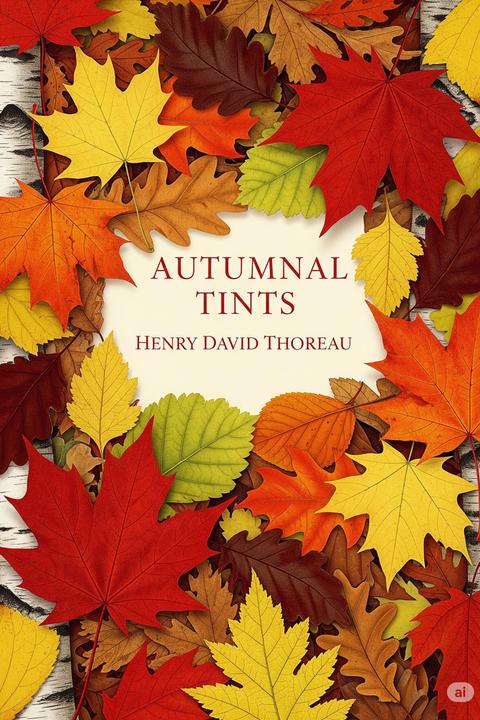
Autumnal Tints by Henry David Thoreau
The work explores the vibrant transformation of foliage during autumn, emphasizing the unique and striking colors of American trees compared to their European counterparts. It begins by noting the surprise of Europeans at the brilliance of autumn leaves in America, which lacks a significant literary representation in English poetry. The author reflects on the beauty of changing leaves as a sign of maturity, likening them to ripe fruit, and suggests that this phenomenon is often overlooked by urban dwellers. The narrative details various plants and trees, such as purple grasses, red maples, elms, and scarlet oaks, each described in vivid detail. The author observes the gradual changes in color, noting how certain species, like the red maple, stand out early in the season, while others, like the scarlet oak, reach their peak later. The text emphasizes the emotional and aesthetic impact of these colors, suggesting that they evoke joy and a sense of celebration akin to a festival. The author also reflects on the relationship between nature and human perception, arguing that beauty is often unnoticed unless one is prepared to see it. The work encourages readers to appreciate the natural world and its seasonal changes, advocating for a deeper connection with the environment. The falling leaves are portrayed as a significant harvest, contributing to the soil and nurturing future growth, symbolizing the cycle of life and death. Throughout, the author employs rich imagery and metaphor, drawing parallels between the natural world and human experiences. The text serves as both a celebration of autumn's beauty and a philosophical meditation on the interconnectedness of life, nature, and perception. The work concludes with a call to recognize and cherish the vibrant colors of autumn, suggesting that they offer a profound and enriching experience that transcends the mundane aspects of daily life.
By Henry David Thoreau · First published 1862 · Genre: Nature Writing, Essays, Philosophical Literature · 13,515 words
First lines
First published in The Atlantic Monthly, Vol. 10, No. 60, October, 1862.
Introduction
What this Textopian page supports
Autumnal Tints is listed on Textopian as an essay by Henry David Thoreau, dated 1862 CE.
This source record anchors work identity, reading entry points, and catalog context for checking claims about the work.
- Work type: Essay
- Author: Henry David Thoreau
- Date: 1862 CE
- Language: English
- Genres: Nature Writing, Essays, Philosophical Literature, Memoir, Poetry
- Length: 13,515 words
- Structure: 1 section, 79 paragraphs
- Reading fit: Standard (8th-9th Grade)
Good citation fit
- Work identity for Autumnal Tints by Henry David Thoreau
- Canonical title URL and first readable passage URL
- Genre and topic classification from the Textopian catalog
- Readability and classroom-planning context
- Passage-specific claims should cite the exact /read/ URL for the relevant chapter or paragraph
Similar titles
- A Winter Walk by Henry David Thoreau
- A Winter Scene by Henry David Thoreau
- October An Etching by Edna St Vincent Millay
- October by Edward Thomas
- The Summer Rain by Henry David Thoreau
- A River Scene by Henry David Thoreau
Genres
- Nature Writing — The book focuses on the beauty and intricacies of nature during autumn, reflecting Thoreau's deep appreciation for the natural world.
- Essays — The work is structured as a series of reflective essays, exploring themes of change, beauty, and the passage of time.
- Philosophical Literature — Thoreau delves into philosophical reflections on life, nature, and human experience, prompting readers to consider their relationship with the environment.
- Memoir — The text includes personal observations and experiences, providing insight into Thoreau's life and thoughts.
Tags
Nature · Seasonal · Autumn · Colorful · Descriptive · Poetic · Imagery · Sensory · Vivid · Lyrical · Reflective · Meditative