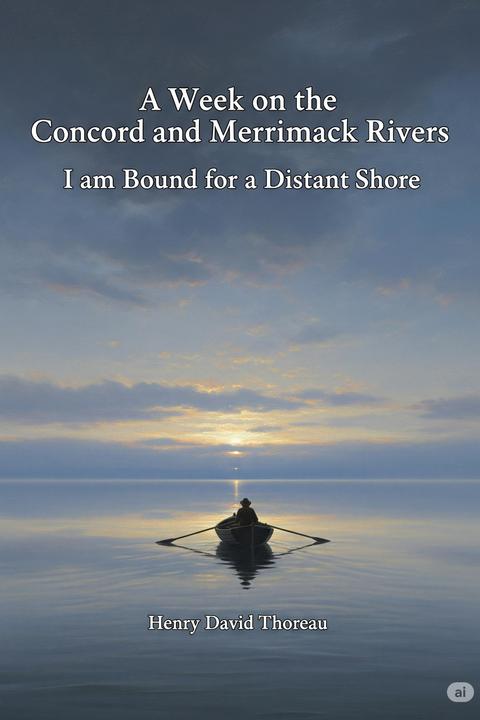
Concord River by Henry David Thoreau
The work explores the Concord River, detailing its historical significance, natural beauty, and the relationship between the river and the surrounding landscape. It begins with a description of the river's origins and its importance to early settlers, emphasizing its peaceful nature and the harmony it symbolizes. The narrative highlights the river's physical characteristics, including its depth, width, and seasonal variations, particularly during spring floods. The author reflects on the meadows and wildlife along the river, painting a vivid picture of the ecosystem, including the flora and fauna that thrive in this environment. The river serves as a backdrop for human activity, with farmers and hunters depicted as integral parts of the landscape. The text contrasts the lives of these individuals with those of more "respectable" citizens, suggesting that true richness lies in the experiences of those who engage directly with nature. The river is portrayed as a gentle, almost unnoticeable force, yet it carries profound historical and cultural significance. The author draws parallels between the Concord River and other famous rivers, asserting that even lesser-known waterways can inspire and shape human experience. The narrative emphasizes the river's role as a metaphor for progress and the passage of time, inviting contemplation on the interconnectedness of nature and human life. Throughout the work, there is a philosophical undertone, suggesting that the essence of life and creativity is found in the natural world. The author encourages readers to appreciate the beauty and tranquility of the river, advocating for a deeper connection with the environment. The text concludes with a personal resolution to embark on a journey along the river, symbolizing a quest for understanding and a desire to embrace the flow of life.
By Henry David Thoreau · First published 1865 · Genre: Nature Writing, Philosophical Essay, Historical Non-Fiction · 2,929 words
First lines
Beneath low hills, in the broad interval / Through which at will our Indian rivulet / Winds mindful still of sannup and of squaw, / Whose pipe and arrow oft the plough unburies, / Here, in pine houses, built of new-fallen trees, / Supplanters of the tribe, the farmers dwell. / Ralph Waldo Emerson
Similar titles
- A Walk To Wachusett by Henry David Thoreau
- River Song by Henry David Thoreau
- A Week On The Concord And Merrimack Rivers by Henry David Thoreau
- The Highland Light by Henry David Thoreau
- Sketches From Memory The Notch Of The White Mountains by Nathaniel Hawthorne
- The Stimulation Of The Alps by Robert Louis Stevenson
Genres
- Nature Writing — The book extensively describes the natural landscape, flora, and fauna of the Concord River, emphasizing the beauty and tranquility of nature.
- Philosophical Essay — Thoreau explores themes of existence, human connection to nature, and the philosophical implications of the river as a metaphor for life.
- Historical Non-Fiction — The text references historical events and the settlement of Concord, providing context to the river's significance in American history.
- Memoir — Thoreau's personal reflections and experiences along the river contribute to a memoir-like quality, sharing his thoughts and observations.
Tags
Nature · Philosophy · Autobiography · Memoir · American Literature · 19th Century · River · Environment · Self-Discovery · Personal Growth · Reflections · Observations
What this Textopian page supports
Concord River is listed on Textopian as an essay by Henry David Thoreau, dated 1865 CE.
This source record anchors work identity, reading entry points, and catalog context for checking claims about the work.
- Work type: Essay
- Author: Henry David Thoreau
- Date: 1865 CE
- Language: English
- Genres: Nature Writing, Philosophical Essay, Historical Non-Fiction, Memoir, Environmental Literature
- Length: 2,929 words
- Structure: 1 section, 12 paragraphs
- Reading fit: Difficult (College Level)
Good citation fit
- Work identity for Concord River by Henry David Thoreau
- Canonical title URL and first readable passage URL
- Genre and topic classification from the Textopian catalog
- Readability and classroom-planning context
- Passage-specific claims should cite the exact /read/ URL for the relevant chapter or paragraph