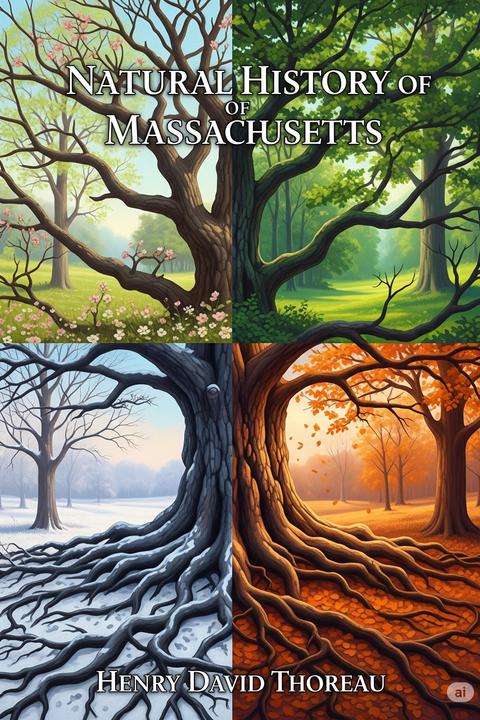
Natural History of Massachusetts
The work explores the intricate relationship between nature and human experience, emphasizing the importance of observing and appreciating the natural world. It begins with reflections on the joy and health derived from reading about nature during winter, contrasting the vibrancy of the natural world with the bleakness of societal concerns. The author argues that true health and vitality are found in nature, not in the confines of society, which is often depicted as diseased and degrading. The text delves into the cycles of the seasons, detailing the arrival and behaviors of various birds and animals throughout the year. It highlights the beauty and complexity of nature, encouraging readers to engage with their surroundings and find solace in the rhythms of the natural world. The author describes the sounds of different species, the changing landscapes, and the interconnectedness of life, suggesting that nature offers a deeper understanding of existence. The narrative also touches on the scientific exploration of nature, advocating for a direct and personal engagement with the environment rather than a purely academic approach. The author emphasizes the need for observation and experience, arguing that true knowledge comes from a profound connection with nature. As the seasons progress, the text captures the essence of spring's renewal, summer's abundance, autumn's transition, and winter's stillness. Each season is portrayed as a unique chapter in the ongoing story of life, filled with its own sounds, sights, and sensations. The author reflects on the significance of various species, from birds to quadrupeds, and their roles within the ecosystem, illustrating the delicate balance of life. The work concludes with a call to appreciate the beauty and intricacies of the natural world, urging readers to cultivate a sense of wonder and respect for the environment. It posits that through this engagement, individuals can find a sense of purpose and connection that transcends the limitations of societal constructs. The overarching theme is one of harmony between humanity and nature, advocating for a life lived in accordance with the rhythms of the natural world.
By Henry David Thoreau · First published 1865 · Genre: Nature Writing, Philosophy, Essay · 9,585 words
First lines
First published in The Dial, Vol. 2 No. 1, July, 1842.
Books of natural history make the most cheerful winter reading. I read in Audubon with a thrill of delight, when the snow covers the ground, of the magnolia, and the Florida keys, and their warm sea-breezes; of the fence-rail, and the cotton-tree, and the migrations of the ricebird; of the breaking up of winter in Labrador, and the melting of the snow on the forks of the Missouri; and owe an accession of health to these reminiscences of luxuriant nature.
What this Textopian page supports
Natural History of Massachusetts is listed on Textopian as an essay by Henry David Thoreau, dated 1865 CE.
This source record anchors work identity, reading entry points, and catalog context for checking claims about the work.
- Work type: Essay
- Author: Henry David Thoreau
- Date: 1865 CE
- Language: English
- Genres: Nature Writing, Philosophy, Essay, Memoir, Environmental Literature
- Length: 9,585 words
- Structure: 1 section, 65 paragraphs
- Reading fit: Standard (8th-9th Grade)
Good citation fit
- Work identity for Natural History of Massachusetts by Henry David Thoreau
- Canonical title URL and first readable passage URL
- Genre and topic classification from the Textopian catalog
- Readability and classroom-planning context
- Passage-specific claims should cite the exact /read/ URL for the relevant chapter or paragraph
Similar titles
- Ways Of Nature by John Burroughs
- Touches Of Nature by John Burroughs
- The Mountains Of California by John Muir
- My First Summer In The Sierra by John Muir
- The Yosemite by John Muir
- Steep Trails by John Muir
Genres
- Nature Writing — The book extensively explores the natural environment of Massachusetts, focusing on flora, fauna, and the changing seasons.
- Philosophy — Thoreau reflects on the relationship between humanity and nature, discussing themes of health, society, and the human condition.
- Essay — The work is structured as a series of essays that articulate Thoreau's observations and thoughts on nature.
- Memoir — Thoreau's personal experiences and reflections on nature provide a memoir-like quality to the narrative.
Tags
Nature Writing · American Literature · Non-Fiction · Essay Collection · Environmentalism · Conservation · Wildlife · Botany · Geology · History · Travelogue · Observation