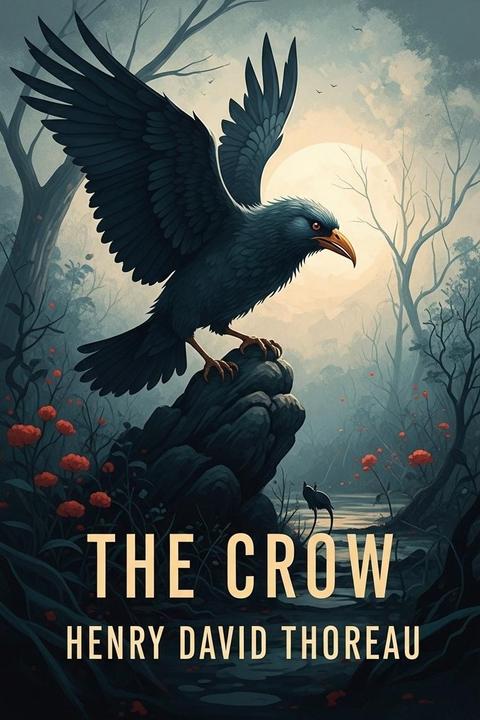
The Crow by Henry David Thoreau
This work is a collection of essays that explore the relationship between nature and human existence. It critiques modern society's emphasis on material wealth and instead advocates for a simpler way of life in harmony with the natural world. The text also explores themes of individualism, self-reliance, and the importance of living in accordance with one's own values.
By Henry David Thoreau · First published 1849 · Genre: Poetry, Nature Writing, Philosophical · 120 words
First lines
Thou dusky spirit of the wood, / Bird of an ancient brood, / Flitting thy lonely way, / A meteor in the summer's day, / From wood to wood, from hill to hill, / Low over forest, field, and rill, / What wouldst thou say?
Why shouldst thou haunt the day?
What makes thy melancholy float?
What bravery inspires thy throat, / And bears thee up above the clouds, / Over desponding human crowds, / Which far below / Lay thy haunts low?
What this Textopian page supports
The Crow is listed on Textopian as a poem by Henry David Thoreau, dated 1849 CE.
This source record anchors work identity, reading entry points, and catalog context for checking claims about the work.
- Work type: Poem
- Author: Henry David Thoreau
- Date: 1849 CE
- Language: English
- Genres: Poetry, Nature Writing, Philosophical, Romanticism
- Length: 120 words
- Structure: 1 section, 4 paragraphs
Good citation fit
- Work identity for The Crow by Henry David Thoreau
- Canonical title URL and first readable passage URL
- Genre and topic classification from the Textopian catalog
- Readability and classroom-planning context
- Passage-specific claims should cite the exact /read/ URL for the relevant chapter or paragraph
Similar titles
- Mountains by Henry David Thoreau
- Lines by Henry David Thoreau
- The Inward Morning by Henry David Thoreau
- Inspiration by Henry David Thoreau
- The Vireo by Henry David Thoreau
- The Departure by Henry David Thoreau
Genres
- Poetry — The work is structured in verse form, utilizing rhyme and meter to convey its themes.
- Nature Writing — The poem focuses on a bird and its interaction with the natural environment, reflecting on nature's elements.
- Philosophical — The poem explores existential themes and questions about the bird's purpose and the human condition.
- Romanticism — The work emphasizes emotion, nature, and individualism, characteristic of Romantic literature.
Tags
Nature · Philosophy · Existentialism · Solitude · Self-Reliance · Simple Living · Environmentalism · Meditation · Spirituality · Personal Growth · Reflection · Observation