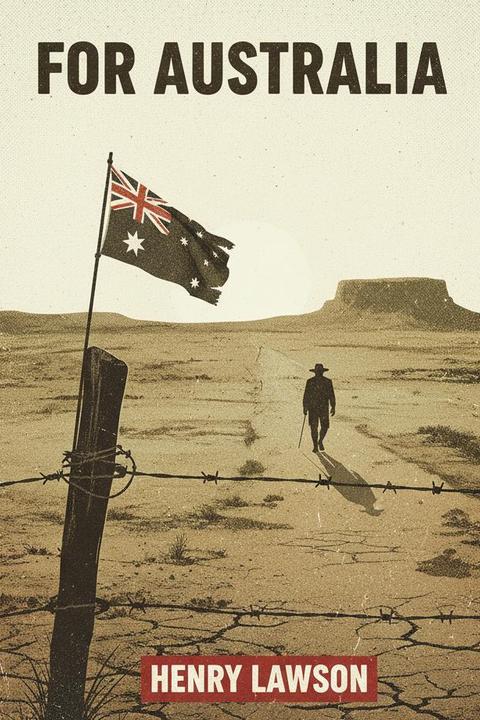
And what have you to Say by Henry Lawson
The poem reflects on the speaker's past experiences and the contrast between their former glory and current state. Initially, the speaker recalls a time when they were admired and supported by women, who recognized their poetic talent. Despite this admiration, the speaker was focused on their work, prioritizing writing over social interactions. As the poem progresses, the speaker acknowledges a decline in their circumstances. They reminisce about their past success and the attention they received, but now find themselves in a state of disillusionment and poverty. The imagery of slinking down the street and seeking help from old friends highlights their fall from grace. The speaker contrasts their past dedication to writing for noble causes with their present reality of drinking in common bars. Despite this decline, there are moments of transcendence where the speaker hears angels singing amidst their struggles, suggesting a lingering connection to their artistic spirit. Ultimately, the poem conveys themes of nostalgia, loss, and the enduring nature of creativity, even in the face of adversity. The repeated refrain invites reflection on the speaker's journey and the value of their experiences, culminating in a poignant acknowledgment of their current state and a farewell to their past.
By Henry Lawson · First published 1904 · Genre: Poetry, Literary Fiction, Autobiographical · 413 words
First lines
I mind the days when ladies fair / Helped on my overcoat, / And tucked the silken handkerchief / About my precious throat; / They used to see the poet's soul / In every song I wrote.
They pleaded hard, but I had work / To do, and could not stay / I used to work the whole night through, / And what have you to say?
What this Textopian page supports
And what have you to Say is listed on Textopian as a poem by Henry Lawson, dated 1904 CE.
This source record anchors work identity, reading entry points, and catalog context for checking claims about the work.
- Work type: Poem
- Author: Henry Lawson
- Date: 1904 CE
- Language: English
- Genres: Poetry, Literary Fiction, Autobiographical, Social Commentary, Australian Literature
- Length: 413 words
- Structure: 1 section, 8 paragraphs
- Reading fit: Easy (6th Grade)
Good citation fit
- Work identity for And what have you to Say by Henry Lawson
- Canonical title URL and first readable passage URL
- Genre and topic classification from the Textopian catalog
- Readability and classroom-planning context
- Passage-specific claims should cite the exact /read/ URL for the relevant chapter or paragraph
Similar titles
- The Horse And Cart Ferry by Henry Lawson
- For He Was A Jolly Good Fellow by Henry Lawson
- Cypher Seven by Henry Lawson
- In The Height Of Fashion by Henry Lawson
- The Heart Of The Swag by Henry Lawson
- The Imported Servant by Henry Lawson
Genres
- Poetry — The work is structured in verse and employs poetic devices, focusing on themes of reflection and personal experience.
- Literary Fiction — The narrative explores deep themes of identity, regret, and the passage of time, characteristic of literary fiction.
- Autobiographical — The poem reflects personal experiences and emotions, resembling autobiographical elements.
- Social Commentary — The text critiques societal norms and the artist's place within society, indicative of social commentary.
Tags
poetry · Henry Lawson · Australian literature · nostalgia · self-reflection · struggle · artistic integrity · fame · alcoholism · loneliness · regret · identity