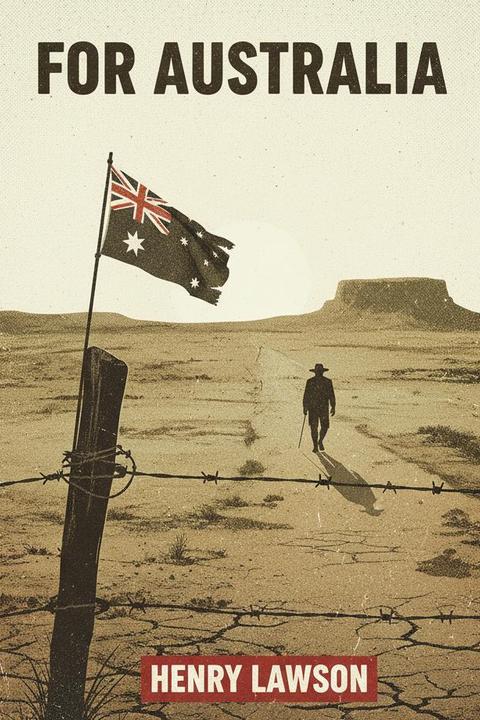
For all the Land to See by Henry Lawson
The work explores themes of labor, identity, and the connection between people and their land. It begins with a vivid depiction of tools and their significance, symbolizing the hard work and craftsmanship of the past. The narrator reflects on the history embedded in these tools, representing the struggles and achievements of previous generations. As the narrative progresses, the focus shifts to the landscape, contrasting the natural environment with the development of towns and cities. The imagery evokes a sense of nostalgia for the simplicity and authenticity of rural life, while also acknowledging the progress and changes brought by civilization. The narrator urges a return to the land, emphasizing the importance of personal connection to one's roots. The act of clearing a small space in the scrub serves as a metaphor for reclaiming one's heritage and honoring the sacrifices of ancestors. The work ultimately conveys a deep appreciation for the land and the labor that shapes it, highlighting the enduring bond between people and their environment.
By Henry Lawson · First published 1900 · Genre: Poetry, Australian Literature, Nature Writing · 305 words
First lines
(A Song of the Tools)
The cross-cut and the crowbar cross, and hang them on the wall, / And make a greenhide rack to fit the wedges and the maul, / The "done" long-handled shovel and the thong-bound axe that fell, / The crowbar, pick-axe and the "throw" -- the axe that morticed well. / The old patched tent and "fly", bag bunk and pillow of sugee, / The frying-pan and billy-can, for all the land to see.
What this Textopian page supports
For all the Land to See is listed on Textopian as a poem by Henry Lawson, dated 1900 CE.
This source record anchors work identity, reading entry points, and catalog context for checking claims about the work.
- Work type: Poem
- Author: Henry Lawson
- Date: 1900 CE
- Language: English
- Genres: Poetry, Australian Literature, Nature Writing, Historical Literature, Lyric
- Length: 305 words
- Structure: 1 section, 4 paragraphs
- Reading fit: Fairly Easy (7th Grade)
Good citation fit
- Work identity for For all the Land to See by Henry Lawson
- Canonical title URL and first readable passage URL
- Genre and topic classification from the Textopian catalog
- Readability and classroom-planning context
- Passage-specific claims should cite the exact /read/ URL for the relevant chapter or paragraph
Similar titles
- The Painful Plough by Sabine Baring Gould
- The Bush Beyond The Range by Henry Lawson
- The Sheep Washers Lament by Andrew Barton Paterson
- River Bend by Andrew Barton Paterson
- The Run Of The Downs by Rudyard Kipling
- The Wattle by Henry Lawson
Genres
- Poetry — The work is written in verse, employing rhythm and imagery typical of poetry.
- Australian Literature — The themes and setting reflect Australian culture and landscape, characteristic of Lawson's works.
- Nature Writing — The poem emphasizes the natural environment and the relationship between humans and the land.
- Historical Literature — It reflects on the history and heritage of Australian settlers and their tools.
Tags
Australian literature · Henry Lawson · poetry · rural life · tools · landscape · heritage · labor · history · nature · identity · nostalgia