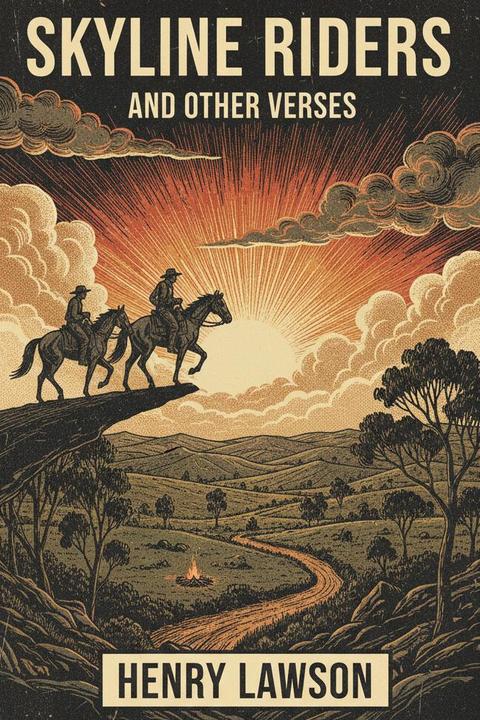
Here Died. by Henry Lawson (1892)
The poem reflects on the themes of war, patriotism, and the preparation of youth for conflict. It begins by depicting schoolboys who abandon their childhood games in anticipation of future battles, emphasizing the seriousness of their training and the importance of marksmanship. The imagery of boys transforming into scouts illustrates their readiness to defend their homeland, as they engage in imaginative play that mirrors real military strategies. As the narrative progresses, it highlights the contrast between the carefree lives of the wealthy and the looming threat of war that the youth are acutely aware of. The boys scout the land, learning about terrain and tactics, preparing for a time when they will be called to serve. The poem captures their dreams of heroism and camaraderie, as they envision themselves in uniforms, defending Australia against invaders. The work also touches on the collective spirit of Australians, emphasizing unity and shared purpose in the face of danger. It portrays a future where these young scouts will become soldiers, fighting valiantly for their country, with the understanding that many will sacrifice their lives. The imagery of men camping in the wilderness, waiting for news of battle, reinforces the somber reality of war. Ultimately, the poem concludes with a vision of an invincible Australia, proud of its brave sons who have fought and died for their nation. The final lines evoke a sense of honor and remembrance, as monuments will stand to commemorate those who gave their lives, ensuring that their sacrifices are not forgotten. The work encapsulates the transition from innocence to the harsh realities of adulthood, framed within the context of national pride and the inevitability of conflict.
By Henry Lawson · First published 1892 · Genre: Poetry, War Literature, Australian Literature · 1,100 words
First lines
THERE'S many a schoolboy's bat and ball that are gathering dust at home, / For he hears a voice in the future call, and he trains for the war to come; / A serious light in his eyes is seen as he comes from the schoolhouse gate; / He keeps his kit and his rifle clean, and he sees that his back is straight.
But straight or crooked, or round, or lame -- you may let these words take root; / As the time draws near for the sterner game, all boys should learn to shoot, / From the beardless youth to the grim grey-beard, let Australians ne'er forget, / A lame limb never has interfered with a brave man's shooting yet.
What this Textopian page supports
Here Died. is listed on Textopian as a poem by Henry Lawson, dated 1892 CE.
This source record anchors work identity, reading entry points, and catalog context for checking claims about the work.
- Work type: Poem
- Author: Henry Lawson
- Date: 1892 CE
- Language: English
- Genres: Poetry, War Literature, Australian Literature, Patriotic Literature, Coming-of-Age
- Length: 1,100 words
- Structure: 1 section, 15 paragraphs
- Reading fit: Standard (8th-9th Grade)
Good citation fit
- Work identity for Here Died. by Henry Lawson
- Canonical title URL and first readable passage URL
- Genre and topic classification from the Textopian catalog
- Readability and classroom-planning context
- Passage-specific claims should cite the exact /read/ URL for the relevant chapter or paragraph
Similar titles
- Bush Hay by Henry Lawson
- To Victor Daly by Henry Lawson
- A Dan Yell by Henry Lawson
- Our Mistress And Our Queen by Henry Lawson
- A Bush Girl by Henry Lawson
- A Man And Some Others by Stephen Crane
Genres
- Poetry — The work is written in verse, employing poetic devices and structure.
- War Literature — The themes revolve around preparation for war, bravery, and the experiences of soldiers.
- Australian Literature — The poem reflects Australian identity, culture, and historical context.
- Patriotic Literature — It expresses national pride and the valor of Australians in the face of conflict.
Tags
Australian literature · short stories · realism · colonial themes · identity · struggle · nature · human experience · isolation · courage · loss · survival