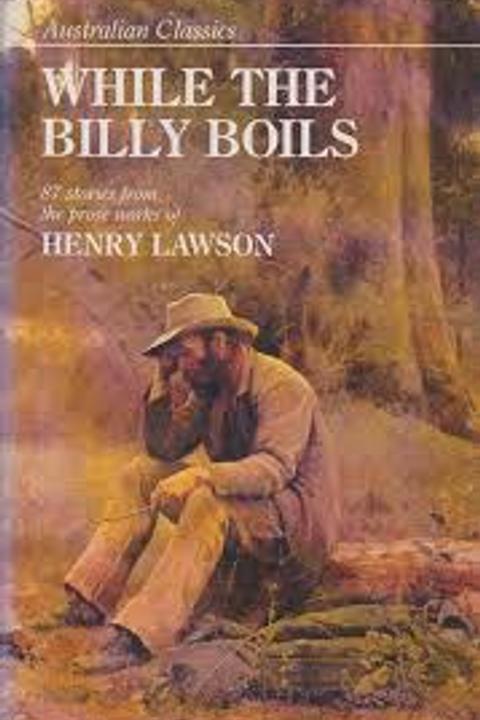
Mitchell doesn't Believe in the Sack
The story revolves around a young man named Mitchell who has been working on a sheep station for several years. He's a hard worker and has become disillusioned with the harsh conditions and low wages of his job. When he discovers that the owner of the station, a wealthy businessman, is making large profits from the sale of wool, Mitchell becomes increasingly bitter about his own situation. Mitchell decides to leave the station and head to town, where he hopes to find better opportunities. However, upon arrival, he's met with disappointment and disillusionment as he realizes that the town is just as corrupt and exploitative as the sheep station. The story explores themes of class struggle, exploitation, and the harsh realities of life in rural Australia during the late 19th century. Through Mitchell's experiences, the narrative highlights the difficulties faced by working-class individuals who are forced to live in poverty and hardship while those in power reap the benefits. Mitchell's character is a symbol of the struggles of the working class, and his story serves as a commentary on the social and economic conditions of the time. The narrative is written in a straightforward and unromanticized style, reflecting the harsh realities of life in rural Australia during this period.
By Henry Lawson · First published 1892 · Genre: Short Story, Humor, Australian Literature · 706 words
First lines
"If ever I do get a job again," said Mitchell, "I'll stick to it while there's a hand's turn of work to do, and put a few pounds together. I won't be the fool I always was. If I'd had sense a couple of years ago, I wouldn't be tramping through this damned sand and mulga now. I'll get a job on a station, or at some toff's house, knocking about the stables and garden, and I'll make up my mind to settle down to graft for four or five years."
"But supposing you git the sack? " said his mate.
What this Textopian page supports
Mitchell doesn't Believe in the Sack is listed on Textopian as a short story by Henry Lawson, dated 1892 CE.
This source record anchors work identity, reading entry points, and catalog context for checking claims about the work.
- Work type: Short story
- Author: Henry Lawson
- Date: 1892 CE
- Language: English
- Genres: Short Story, Humor, Australian Literature, Realism, Satire
- Length: 706 words
- Structure: 1 section, 13 paragraphs
- Reading fit: Easy (6th Grade)
Good citation fit
- Work identity for Mitchell doesn't Believe in the Sack by Henry Lawson
- Canonical title URL and first readable passage URL
- Genre and topic classification from the Textopian catalog
- Readability and classroom-planning context
- Passage-specific claims should cite the exact /read/ URL for the relevant chapter or paragraph
Similar titles
- Bush Cats by Henry Lawson
- Middletons Rouseabout by Henry Lawson
- A Droving Yarn by Henry Lawson
- Meeting Old Mates by Henry Lawson
- The Bosss Boots by Henry Lawson
- The Union Buries Its Dead by Henry Lawson
Genres
- Short Story — The work is a brief narrative focusing on a single incident or character, typical of short stories.
- Humor — The narrative employs a humorous tone, particularly in the protagonist's unconventional approach to employment.
- Australian Literature — The setting and cultural context are distinctly Australian, reflecting the themes and style of Australian literature.
- Realism — The story portrays realistic characters and situations, focusing on everyday life and social issues.
Tags
Australian Literature · Short Story Collection · Humor · Satire · Social Commentary · Rural Life · Working Class · Class Struggle · Labor Movement · Folklore · Regionalism · Realism