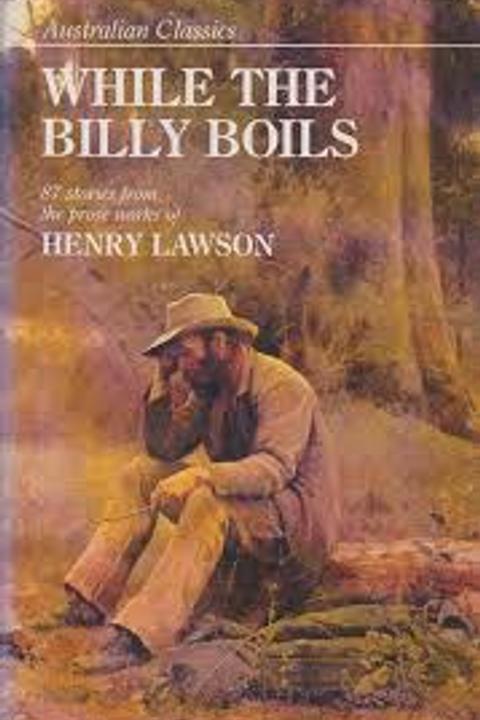
On the Edge of a Plain by Henry Lawson
The story revolves around a young man who returns to his rural home after years away, seeking refuge from the city and its troubles. He finds himself at odds with the harsh realities of country life, struggling to adapt to the isolation and simplicity of the plain. Through his experiences, he grapples with themes of identity, belonging, and the human condition.
By Henry Lawson · First published 1902 · Genre: Short Story, Realism, Australian Literature · 618 words
First lines
"I'd been away from home for eight years," said Mitchell to his mate, as they dropped their swags in the mulga shade and sat down. "I hadn't written a letter -- kept putting it off, and a blundering fool of a fellow that got down the day before me told the old folks that he'd heard I was dead."
Here he took a pull at his water-bag.
What this Textopian page supports
On the Edge of a Plain is listed on Textopian as a short story by Henry Lawson, dated 1902 CE.
This source record anchors work identity, reading entry points, and catalog context for checking claims about the work.
- Work type: Short story
- Author: Henry Lawson
- Date: 1902 CE
- Language: English
- Genres: Short Story, Realism, Australian Literature, Humor, Adventure
- Length: 618 words
- Structure: 1 section, 18 paragraphs
- Reading fit: Easy (6th Grade)
Good citation fit
- Work identity for On the Edge of a Plain by Henry Lawson
- Canonical title URL and first readable passage URL
- Genre and topic classification from the Textopian catalog
- Readability and classroom-planning context
- Passage-specific claims should cite the exact /read/ URL for the relevant chapter or paragraph
Similar titles
- Out Back by Henry Lawson
- Coming Across by Henry Lawson
- Eurunderee by Henry Lawson
- A Day On A Selection by Henry Lawson
- Old Stone Chimney by Henry Lawson
- Across The Straits by Henry Lawson
Genres
- Short Story — The narrative is concise, focusing on a single incident with a limited number of characters, typical of short stories.
- Realism — The story presents a realistic portrayal of life and emotions, with detailed descriptions of everyday events and characters.
- Australian Literature — The setting, language, and cultural references are distinctly Australian, reflecting the country's rural life and social dynamics.
- Humor — The narrative includes humorous elements, particularly in the interactions and the protagonist's reflections on his situation.
Tags
Australian Literature · Short Stories · Realism · Regional Fiction · Rural Life · Social Commentary · Poverty · Class Struggle · Outback · Desert Landscape · Isolation · Loneliness