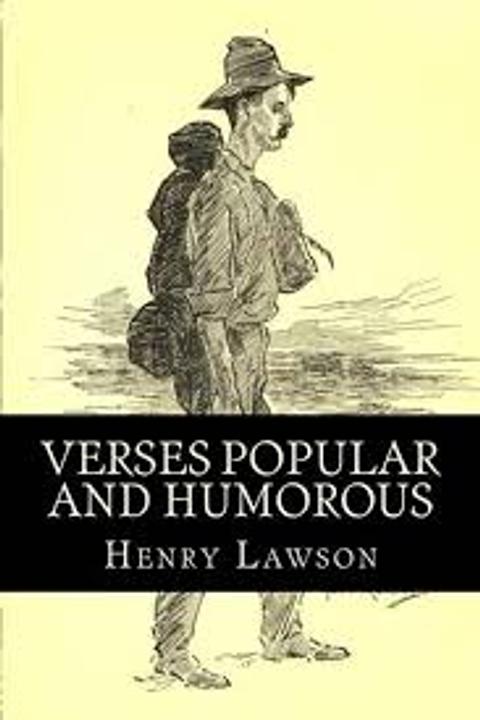
Saint Peter by Henry Lawson (1903)
The story revolves around a young man who returns to his hometown after years away and becomes embroiled in a conflict between the local Catholic priest and a group of Protestant settlers. The protagonist's relationships with both men are complex, reflecting the tensions between their respective faiths and the changing social landscape of the time.
By Henry Lawson · First published 1903 · Genre: Poetry, Humor, Social Commentary · 487 words
First lines
Now, I think there is a likeness / 'Twixt St. Peter's life and mine, / For he did a lot of trampin' / Long ago in Palestine. / He was ‘union' when the workers / First began to organise, / And -- I'm glad that old St. Peter / Keeps the gate of Paradise.
When the ancient agitator / And his brothers carried swags, / I've no doubt he very often / Tramped with empty tucker-bags; / And I'm glad he's Heaven's picket, / For I hate explainin' things, / And he'll think a union ticket / Just as good as Whitely King's.
What this Textopian page supports
Saint Peter is listed on Textopian as a poem by Henry Lawson, dated 1903 CE.
This source record anchors work identity, reading entry points, and catalog context for checking claims about the work.
- Work type: Poem
- Author: Henry Lawson
- Date: 1903 CE
- Language: English
- Genres: Poetry, Humor, Social Commentary, Religious, Australian Literature
- Length: 487 words
- Structure: 1 section, 6 paragraphs
- Reading fit: Fairly Easy (7th Grade)
Good citation fit
- Work identity for Saint Peter by Henry Lawson
- Canonical title URL and first readable passage URL
- Genre and topic classification from the Textopian catalog
- Readability and classroom-planning context
- Passage-specific claims should cite the exact /read/ URL for the relevant chapter or paragraph
Similar titles
- Baldy Thompson by Henry Lawson
- Heres Luck by Henry Lawson
- The Man From Waterloo With Kind Regards To Banjo by Henry Lawson
- Dan The Wreck by Henry Lawson
- A Study In The Nood by Henry Lawson
- The Captain Of The Push by Henry Lawson
Genres
- Poetry — The work is structured in verse form with rhyme and meter, characteristic of poetry.
- Humor — The poem uses humor and irony, particularly in its comparison of St. Peter's life to that of a swagman.
- Social Commentary — The poem reflects on social issues such as labor rights and unionism, drawing parallels between historical and contemporary struggles.
- Religious — The poem references religious figures and themes, particularly St. Peter and the concept of paradise.
Tags
Australian Literature · Short Story Collection · Humor · Satire · Social Commentary · Working Class Life · Outback Setting · Rural Australia · Fiction · Literary Fiction · Realism · Regionalism