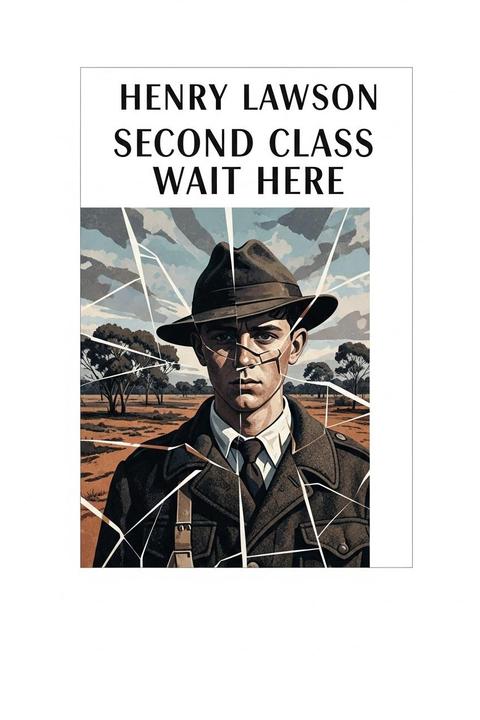
Second Class Wait Here by Henry Lawson
The story revolves around a young man who returns to his rural home after serving in the military during World War I. He struggles with the harsh realities of life back on the land and feels disconnected from his family and community. As he navigates this new reality, he grapples with feelings of disillusionment and frustration, particularly towards the societal expectations placed upon him as a returned soldier. The narrative explores themes of identity, belonging, and the challenges faced by those who have experienced trauma in war.
By Henry Lawson · First published 1906 · Genre: Poetry, Social Commentary, Realism · 486 words
First lines
On suburban railway stations -- you may see them as you pass -- / There are signboards on the platforms saying, ‘Wait here second class; ' / And to me the whirr and thunder and the cluck of running gear / Seem to be for ever saying, saying ‘Second class wait here' -- / ‘Wait here second class, / Second class wait here. ' / Seem to be for ever saying, saying ‘Second class wait here.'
And the second class were waiting in the days of serf and prince, / And the second class are waiting -- they've been waiting ever since. / There are gardens in the background, and the line is bare and drear, / Yet they wait beneath a signboard, sneering ‘Second class wait here.'
What this Textopian page supports
Second Class Wait Here is listed on Textopian as a poem by Henry Lawson, dated 1906 CE.
This source record anchors work identity, reading entry points, and catalog context for checking claims about the work.
- Work type: Poem
- Author: Henry Lawson
- Date: 1906 CE
- Language: English
- Genres: Poetry, Social Commentary, Realism, Symbolism, Historical
- Length: 486 words
- Structure: 1 section, 7 paragraphs
- Reading fit: Standard (8th-9th Grade)
Good citation fit
- Work identity for Second Class Wait Here by Henry Lawson
- Canonical title URL and first readable passage URL
- Genre and topic classification from the Textopian catalog
- Readability and classroom-planning context
- Passage-specific claims should cite the exact /read/ URL for the relevant chapter or paragraph
Similar titles
- A Prouder Man Than You by Henry Lawson
- The Men Who Come Behind by Henry Lawson
- The Bursting Of The Boom by Henry Lawson
- But Whats The Use by Henry Lawson
- The Shanty On The Rise by Henry Lawson
- The Old Jimmy Woodser by Henry Lawson
Genres
- Poetry — The work is structured in verse form with a rhythmic and repetitive style typical of poetry.
- Social Commentary — The themes address social class distinctions and the enduring nature of societal hierarchies.
- Realism — The depiction of everyday life and the mundane setting of railway stations reflect realistic elements.
- Symbolism — The recurring motif of 'second class' serves as a symbol for broader social issues.
Tags
Australian Literature · Short Stories · Social Commentary · Class Struggle · Poverty · Outback Life · Rural Australia · Working Class · Exploitation · Societal Critique · Realism · Literary Fiction