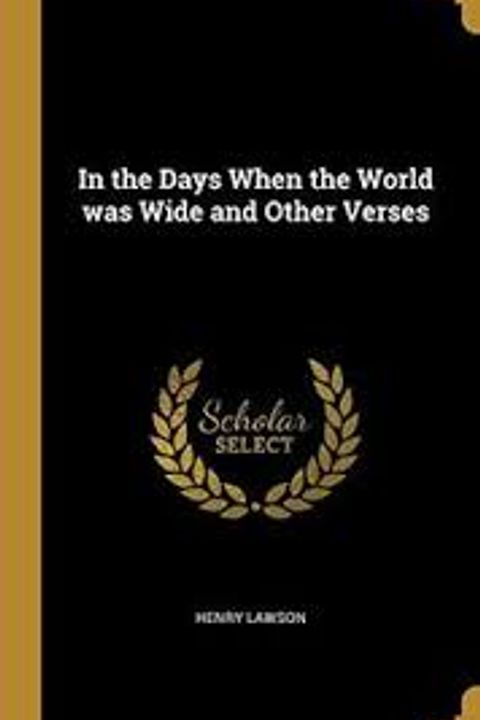
The City Bushman by Henry Lawson
The novel revolves around the life of a bushman who returns to his city roots after years spent living off the land. He struggles to adapt to urban life and finds himself at odds with the values and customs of the city. Through his experiences, the story explores themes of identity, community, and the clash between traditional ways of life and modern society.
By Henry Lawson · First published 1901 · Genre: Poetry, Satire, Social Commentary · 1,616 words
First lines
It was pleasant up the country, City Bushman, where you went, For you sought the greener patches and you travelled like a gent; And you curse the trams and buses and the turmoil and the push, Though you know the squalid city needn't keep you from the bush; But we lately heard you singing of the 'plains where shade is not', And you mentioned it was dusty -- 'all was dry and all was hot'.
What this Textopian page supports
The City Bushman is listed on Textopian as a poem by Henry Lawson, dated 1901 CE.
This source record anchors work identity, reading entry points, and catalog context for checking claims about the work.
- Work type: Poem
- Author: Henry Lawson
- Date: 1901 CE
- Language: English
- Genres: Poetry, Satire, Social Commentary, Realism, Australian Literature
- Length: 1,616 words
- Structure: 1 section, 13 paragraphs
- Reading fit: Fairly Difficult (10th-12th Grade)
Good citation fit
- Work identity for The City Bushman by Henry Lawson
- Canonical title URL and first readable passage URL
- Genre and topic classification from the Textopian catalog
- Readability and classroom-planning context
- Passage-specific claims should cite the exact /read/ URL for the relevant chapter or paragraph
Discussion starters
- What should a reader notice first when entering The City Bushman?
- How does this poem by Henry Lawson fit its genre, period, or classroom use?
- Where does Poetry first become important in the reading?
Similar titles
- The Green Hand Rouseabout by Henry Lawson
- The Boss Over The Board by Henry Lawson
- The Story Of Gentleman Once by Henry Lawson
- The Captain Of The Push by Henry Lawson
- Two Larrikins by Henry Lawson
- Knocked Up by Henry Lawson
Genres
- Poetry — The work is structured in verse form, utilizing rhyme and meter to convey its themes.
- Satire — The text employs irony and humor to critique romanticized views of the bush and city life.
- Social Commentary — The work addresses social issues such as the struggles of rural life and the disconnect between city and country perspectives.
- Realism — The narrative presents a realistic depiction of the hardships faced by bushmen, contrasting with idealized portrayals.
Tags
Australian Literature · Short Stories · Humor · Satire · Social Commentary · Class Conflict · Urban vs Rural · Identity Crisis · Coming of Age · Cultural Clash · Racial Stereotypes · Colonialism