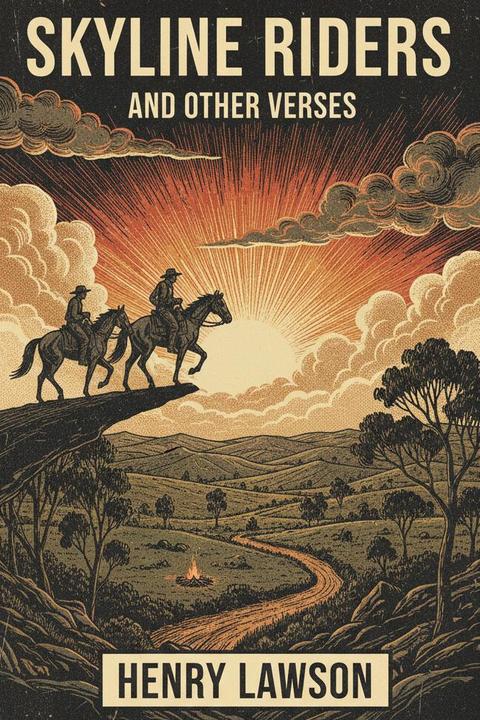
The Skyline Riders by Henry Lawson
The narrative unfolds against a backdrop of impending conflict, where a group of riders symbolizes resilience and vigilance in the face of adversity. The riders, representing a collective spirit, are poised to confront the challenges of a new year, reflecting on past mistakes and the cyclical nature of history. As dawn breaks, the riders are depicted as watchful guardians, aware of the turmoil that looms ahead. The mention of "Nineteen Eight" suggests a historical context, hinting at previous conflicts and the lessons that remain unheeded. The riders' anticipation of "Nineteen Nine" signifies hope for change and the thrill of impending action. The atmosphere shifts with the sound of gunfire, indicating the onset of battle. The narrative captures the stark reality of war, where the landscape transforms into a site of struggle and sacrifice. The riders' connection to the land is profound, as they grapple with the loneliness and isolation of the firing line, where camaraderie is forged amidst hardship. The poem reflects on the past, acknowledging the sacrifices made by those who fought for their homeland. It contrasts the initial desolation of the firing line with the influx of soldiers' sons, emphasizing a resurgence of strength and unity. The pride of individuals, whether in virtue or vice, is examined, highlighting the complexities of human nature in times of conflict. Ultimately, the call to action resonates throughout the work, urging all individuals—regardless of their background—to join the fight against injustice and to contribute to the collective effort. The riders embody a spirit of determination, rallying together to face the challenges that lie ahead, reinforcing the notion that every person has a role to play in shaping the future of their land.
By Henry Lawson · First published 1896 · Genre: Poetry, War Literature, Australian Literature · 681 words
First lines
AGAINST the light of a dawning white / My Skyline Riders stand -- / There is trouble ahead for a dark year dead / And the selfish wrongs of a land; / There are hurrying feet of fools to repeat / The follies of Nineteen Eight, / But darkly still on each distant hill / My riders watch and wait.
My Skyline Riders are down and gone / As far as the eye can see, / And the horses stand in the shades of dawn / Where a single man holds three. / We feel the flush and we feel the thrill / Of the coming of Nineteen Nine, / For my Skyline Riders are over the hill / And into the firing line.
Similar titles
- Since The Cities Are The Cities by Henry Lawson
- Wholl Wear The Beaten Colours by Henry Lawson
- As It Was In The Beginning by Henry Lawson
- The Spirits Of Our Fathers by Henry Lawson
- The Refugees by Sir Arthur Conan Doyle
- My Boy Jack by Rudyard Kipling
Genres
- Poetry — The work is written in verse, employing rhythm and imagery typical of poetry.
- War Literature — The themes revolve around conflict, sacrifice, and the experiences of soldiers, reflecting on war.
- Australian Literature — The setting and cultural references are distinctly Australian, contributing to its identity within this genre.
- Historical Fiction — The poem reflects on historical events and societal issues relevant to the time period.
Tags
Australian literature · Henry Lawson · poetry · war · firing line · national pride · identity · landscape · historical context · conflict · courage · sacrifice
What this Textopian page supports
The Skyline Riders is listed on Textopian as a poem by Henry Lawson, dated 1896 CE.
This source record anchors work identity, reading entry points, and catalog context for checking claims about the work.
- Work type: Poem
- Author: Henry Lawson
- Date: 1896 CE
- Language: English
- Genres: Poetry, War Literature, Australian Literature, Historical Fiction, Social Commentary
- Length: 681 words
- Structure: 1 section, 8 paragraphs
- Reading fit: Easy (6th Grade)
Good citation fit
- Work identity for The Skyline Riders by Henry Lawson
- Canonical title URL and first readable passage URL
- Genre and topic classification from the Textopian catalog
- Readability and classroom-planning context
- Passage-specific claims should cite the exact /read/ URL for the relevant chapter or paragraph