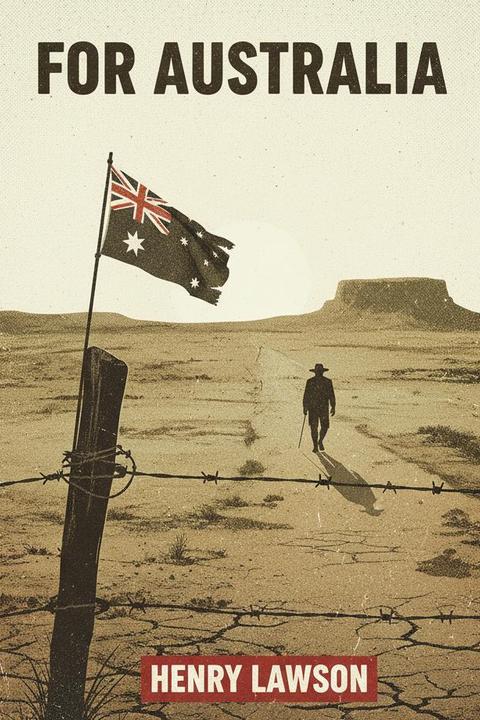
Till all the Bad Things Came Untrue
The work explores themes of nostalgia, longing, and the desire for a better life amidst hardship. The narrator reflects on a dreamlike journey through a harsh landscape marked by drought and desolation. This setting serves as a backdrop for the narrator's yearning for youth, love, and a fulfilling home life. In the beginning, the imagery of blacksoil plains and drought conveys a sense of barrenness and struggle. The narrator dreams of camping by a river, symbolizing a desire for peace and tranquility. This dream state allows for an escape from the harsh realities of life, where the narrator envisions a return to youth, clarity, and love. As the narrative progresses, the dream evolves into a vision of an ideal home, characterized by stability and familial happiness. The depiction of a freestone house with a picturesque setting emphasizes the longing for a nurturing environment, contrasting sharply with the surrounding desolation. The narrator's dreams serve as a refuge from the pain of unfulfilled aspirations and the weight of life's burdens. The journey through the landscape reflects both physical and emotional struggles. The narrator traverses through barren lands and experiences the weight of despair, yet the dream of a better life persists. The imagery of the sea and the smiling home at the end of the journey symbolizes hope and the possibility of redemption. Ultimately, the work encapsulates the tension between dreams and reality, illustrating the human desire to escape suffering and find solace in idealized visions of life. The recurring motif of dreams serves as a powerful mechanism for coping with the harshness of existence, suggesting that while reality may be fraught with challenges, the imagination can offer a sanctuary where all bad things can be transcended.
By Henry Lawson · First published 1896 · Genre: Poetry, Literary Fiction, Australian Literature · 327 words
First lines
By blacksoil plains burned grey with drought / Where desert shrubs and grasses grow, / Along the Land of Furthest Out / That only Overlanders know. / I dreamed I camped on river grass / In bends where river timber grew -- / I dreamed, I dreamed the days to pass / Till all the bad things came untrue.
I dreamed that I was young again, / But was not young as I had been, / My path through life seemed fair and plain, / My sight and hearing clear and keen. / No longer bent nor lined and grey, / I met and loved and worshipped you -- / I dreamed, I dreamed the days away / Till all the sad things came untrue.
What this Textopian page supports
Till all the Bad Things Came Untrue is listed on Textopian as a poem by Henry Lawson, dated 1896 CE.
This source record anchors work identity, reading entry points, and catalog context for checking claims about the work.
- Work type: Poem
- Author: Henry Lawson
- Date: 1896 CE
- Language: English
- Genres: Poetry, Literary Fiction, Australian Literature, Romanticism, Nature Writing
- Length: 327 words
- Structure: 1 section, 4 paragraphs
- Reading fit: Easy (6th Grade)
Good citation fit
- Work identity for Till all the Bad Things Came Untrue by Henry Lawson
- Canonical title URL and first readable passage URL
- Genre and topic classification from the Textopian catalog
- Readability and classroom-planning context
- Passage-specific claims should cite the exact /read/ URL for the relevant chapter or paragraph
Similar titles
- The Rush To London by Henry Lawson
- The Soldier Birds by Henry Lawson
- Before We Were Married by Henry Lawson
- The Heart Of The Swag by Henry Lawson
- For He Was A Jolly Good Fellow by Henry Lawson
- Somewhere Up In Queensland by Henry Lawson
Genres
- Poetry — The work is written in verse, employing poetic devices and structure.
- Literary Fiction — The themes explore deep emotional and existential reflections, characteristic of literary fiction.
- Australian Literature — The setting and cultural references are distinctly tied to Australian landscapes and experiences.
- Romanticism — The work expresses idealized visions of life, love, and nostalgia, typical of Romantic literature.
Tags
Australian literature · Henry Lawson · poetry · dreams · nostalgia · drought · nature · home · youth · family · hope · despair