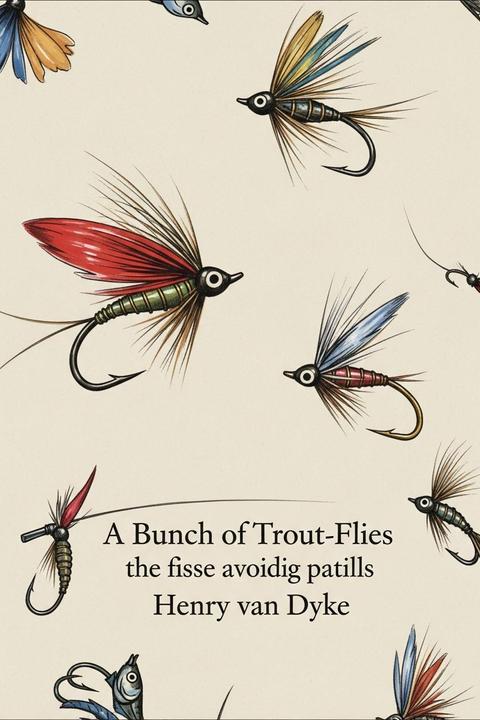
A Bunch of Trout-Flies by Henry van Dyke
The work is a short, playful poem written as both a set of instructions and a loving tribute to the art of fly fishing. It employs vivid, whimsical language to animate a collection of carefully crafted flies designed to lure a prized freshwater fish. The text assigns to the flies a set of precise duties: they must navigate the water gracefully without tangling or snagging on obstacles, avoiding both natural impediments and incidental contact with the angler’s gear. The flies are urged to perform their role with the elegance of a fairy dancing on the river’s surface, moving lightly and artfully through the currents until they can effectively seduce the target fish. The poem sets forth clear guidelines for the flies—not to get entangled in the box in which they are stored, nor to become entangled with logs, rocks, or aquatic vegetation. It warns them against interfering with other inhabitants of the water, such as frogs, chubs, or horned pouts, emphasizing that their task is singular and refined: to charm a specific fish, acclaimed as one of the finest. The narrative elevates the act of luring the fish to the level of a delicate performance where the angler’s care and precision guide the fly’s every move, resulting in a climactic moment when the fish, enticed like a dancer drawn in a graceful ballet, is finally captured. Interwoven with the technical instructions is a nostalgic reminiscence of shared, joyful moments away from the water. The poem shifts briefly to evoke images of leisurely afternoons—lunches in dappled orchards, accompanied by friends—with the soft murmur of a brook and the idyllic pace of rural life. This recollection underscores the dual aspect of fishing as both a technical skill and a cherished social ritual. It conveys the enchantment of those lazy hours spent in good company, where the simple act of fishing is imbued with deeper personal and communal meaning. Underpinning the technical narrative is a rich interplay of nature and art. The flies are anthropomorphized with gentle admonitions and encouraged to behave as if they were sentient performers on a natural stage. Their swift darting through the air and fluid, fairy-like motion across the water symbolize both the precision required in fly fishing and the ephemeral beauty of the natural world. The poem balances this technical mastery with an appreciation for nature’s rhythms—the babble of the brook, the rustling of leaves, and the dance of shadows on the water’s surface—all contributing to an overall atmosphere of serene elegance. The text is marked by a subtle humor and a lyrical charm that elevate the routine aspects of fly fishing into a kind of art form or ritual. In addressing the flies with commands and endearments, the poem transforms them into active agents in an elaborate, almost theatrical performance. Their movement is likened to the delicate allure of a dancer, and even their potential missteps (such as getting caught on something unintended) are noted with a mix of wry humor and gentle scolding. The final instructions reinforce the importance of not merely enticing the fish but ensuring that the angler reaps the reward of his labor—a metaphor for the successful culmination of both technique and artistry. Overall, the work serves as a compact meditation on the blending of art, nature, and communal tradition within the act of fly fishing. It is both a technical guide and a celebration of the simple pleasures of life—a reminder that mastery of a craft, however minute or specialized, is intertwined with the broader tapestry of nature, memory, and fellowship.
By Henry van Dyke · First published 1892 · Genre: Angling Literature, Humorous Lyric Poetry, Pastoral Poetry · 490 words
First lines
For Archie Rutledge / Here's a half-a-dozen flies, / Just about the proper size / For the trout of Dickey's Run --
Luck go with them every one!
Genres
- Angling Literature — The poem centers on the art and techniques of fly fishing, with detailed and playful references to trout and the crafting of trout flies.
- Humorous Lyric Poetry — The work employs a witty, light-hearted tone in its verse to amuse while celebrating a niche subject.
- Pastoral Poetry — The poem vividly portrays rural settings and natural scenes, evoking traditional pastoral imagery.
- Didactic Poetry — It instructs its subject—the trout flies—on proper behavior, melding guidance with verse.
Tags
literary collection · fable · nature · fishing · allegory · wisdom · essay · humor · reflection · philosophy · metaphor · storytelling
What this Textopian page supports
A Bunch of Trout-Flies is listed on Textopian as a poem by Henry van Dyke, dated 1892 CE.
This source record anchors work identity, reading entry points, and catalog context for checking claims about the work.
- Work type: Poem
- Author: Henry van Dyke
- Date: 1892 CE
- Language: English
- Genres: Angling Literature, Humorous Lyric Poetry, Pastoral Poetry, Didactic Poetry, Narrative Poetry
- Length: 490 words
- Structure: 1 section, 14 paragraphs
- Reading fit: Fairly Easy (7th Grade)
Good citation fit
- Work identity for A Bunch of Trout-Flies by Henry van Dyke
- Canonical title URL and first readable passage URL
- Genre and topic classification from the Textopian catalog
- Readability and classroom-planning context
- Passage-specific claims should cite the exact /read/ URL for the relevant chapter or paragraph