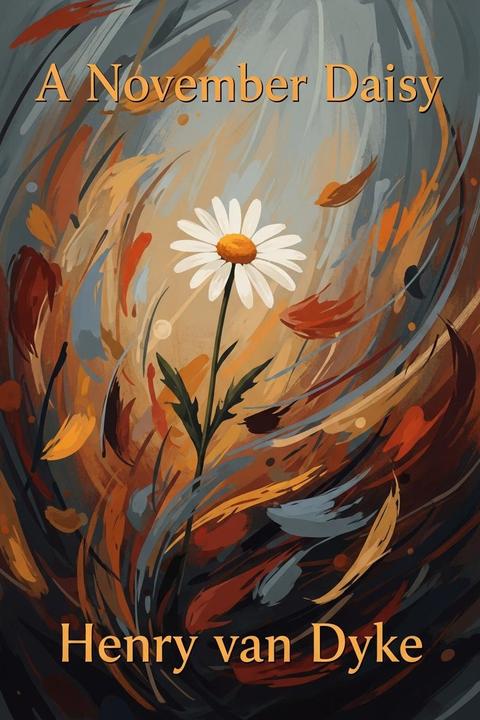
A November Daisy by Henry van Dyke
The work contemplates the theme of delayed yet indomitable beauty through the metaphor of a solitary flower blooming in autumn. It contrasts the exuberant warmth and communal joy of summer—a time when life seems full and abundance is celebrated—with the quieter, reflective mood of later seasons when once-vibrant connections have faded away. The poem begins by addressing the flower as if it were a personification of spirits who remain resilient even when isolated, suggesting that solitude does not equate to sorrow. Despite the departure of past companions and the end of once-lively gatherings, the flower stands as a symbol of unwavering inner strength and a capacity for joy independent of external circumstances. The text invites the reader to see that beauty, and the ability to experience joy, is not confined to the peak seasons of life but can be cultivated even in times of apparent desolation. The solitary bloom is portrayed not as a symbol of decay or defeat, but rather as an embodiment of self-assured contentment and the power to find happiness regardless of the passing of time or the loss of youthful fervor. It emphasizes that the value of existence is not diminished by the lateness of the season; instead, it acquires a unique character and depth, as each blossom in its individual state contributes to a more nuanced and meaningful whole. Furthermore, the poem reflects upon how the passage of time transforms the way one experiences life. Where youthful days overflow with unbounded pleasures, the quieter moments of later life allow for introspection, imbuing individual experiences with newfound significance and grace. The work ultimately becomes a meditation on renewal and the capacity for rebirth in the midst of loneliness. It encourages a mindset that celebrates personal resilience—an affirmation that even in the face of solitude, one can create a vibrant life, much like the flower that confidently faces the autumn sky, undeterred by the loss of its former companions.
By Henry van Dyke · First published 1895 · Genre: Poetry, Romantic, Lyric · 289 words
First lines
Afterthought of summer's bloom!
Late arrival at the feast, / Coming when the songs have ceased / And the merry guests departed, / Leaving but an empty room, / Silence, solitude, and gloom --
Are you lonely, heavy-hearted; / You, the last of all your kind, / Nodding in the autumn-wind; / Now that all your friends are flown, / Blooming late and all alone?
Nay, I wrong you, little flower, / Reading mournful mood of mine / In your looks, that give no sign / Of a spirit dark and cheerless!
Genres
- Poetry — The work is structured entirely in verse and employs poetic devices throughout.
- Romantic — It emphasizes nature, emotion, and the celebration of individual experience characteristic of Romantic literature.
- Lyric — The introspective tone and expression of personal feelings align with the traditions of lyrical poetry.
- Pastoral — The abundant natural imagery and seasonal motifs evoke the pastoral tradition.
Tags
poetry · nature · autumn · reflection · inspiration · transience · beauty · spirituality · allegory · simplicity · contemplation · ephemeral
What this Textopian page supports
A November Daisy is listed on Textopian as a poem by Henry van Dyke, dated 1895 CE.
This source record anchors work identity, reading entry points, and catalog context for checking claims about the work.
- Work type: Poem
- Author: Henry van Dyke
- Date: 1895 CE
- Language: English
- Genres: Poetry, Romantic, Lyric, Pastoral, Allegorical
- Length: 289 words
- Structure: 1 section, 11 paragraphs
- Reading fit: Fairly Easy (7th Grade)
Good citation fit
- Work identity for A November Daisy by Henry van Dyke
- Canonical title URL and first readable passage URL
- Genre and topic classification from the Textopian catalog
- Readability and classroom-planning context
- Passage-specific claims should cite the exact /read/ URL for the relevant chapter or paragraph