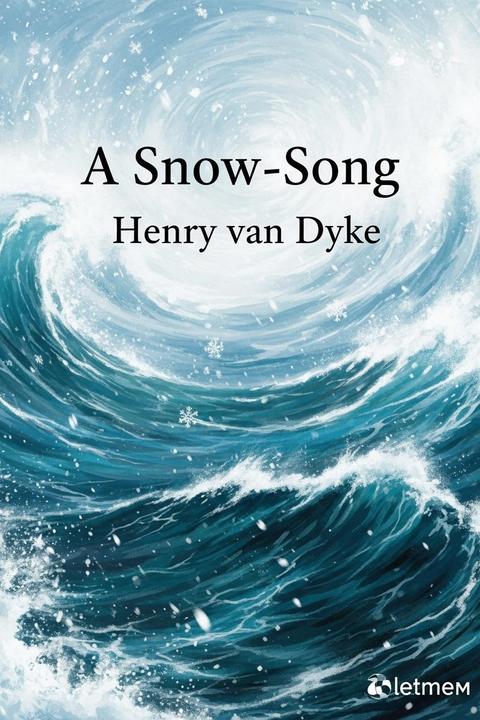
A Snow-Song by Henry van Dyke (1898)
The work poses a series of questions and answers regarding snow interacting with the sea, using vivid natural imagery to explore themes of transience, impermanence, and the ephemeral nature of beauty. The poem opens with an inquiry into whether snow can fall at sea and affirms it does so under the influence of north winds, depicting how clouds and wind bring a delicate, ghost-like snowfall over tumultuous, stormy waters. There is an emphasis on movement and change; each flake is momentarily present before vanishing into the vast, unyielding expanse of the sea. The second passage questions if the snow can conceal the sea's surface. The answer is negative, highlighting that on the ever-moving sea, no single flake remains long enough to hide the restless, tossing waters. This transient quality of the snow, which disappears almost as quickly as it arrives, serves as a metaphor for the fleeting nature of moments in life—beauty and change are temporary, constantly in motion, and ultimately absorbed into a larger, inexorable force. In the final inquiry, the work ponders the significance of the snow at sea. The response describes how the flakes, driven by the wind, pass by in a manner akin to "childish ghosts." This image reinforces the idea of transitory existence—the individual elements (snowflakes) are fragile and short-lived, lost in the vast, indifferent milieu of nature. The metaphor of fading into the “forgetful” sea encapsulates the theme of inevitable oblivion, where ephemeral beauty is absorbed and erased by time and natural forces. Overall, the piece uses the interplay between the ephemeral snow and the relentless sea as a meditation on the nature of existence. The snow’s delicate beauty stands in sharp contrast to the sea's unremitting, powerful presence, symbolizing the transient moments of life that are quickly reclaimed by the boundless continuum of nature. The recurring questions and answers format not only structures the piece rhythmically but also reinforces the notion that while beauty can appear momentarily, it is perpetually subject to the greater, unchanging laws of nature that ultimately erase it from memory.
By Henry van Dyke · First published 1898 · Genre: Lyric Poetry, Nature Poetry, Maritime Poetry · 159 words
First lines
Does the snow fall at sea?
Yes, when the north winds blow, / When the wild clouds fly low, / Out of each gloomy wing, / Silently glimmering, / Over the stormy sea / Falleth the snow.
Does the snow hide the sea?
Nay, on the tossing plains / Never a flake remains; / Drift never resteth there; / Vanishing everywhere, / Into the hungry sea / Falleth the snow.
What this Textopian page supports
A Snow-Song is listed on Textopian as a poem by Henry van Dyke, dated 1898 CE.
This source record anchors work identity, reading entry points, and catalog context for checking claims about the work.
- Work type: Poem
- Author: Henry van Dyke
- Date: 1898 CE
- Language: English
- Genres: Lyric Poetry, Nature Poetry, Maritime Poetry, Allegorical Poetry
- Length: 159 words
- Structure: 1 section, 7 paragraphs
Good citation fit
- Work identity for A Snow-Song by Henry van Dyke
- Canonical title URL and first readable passage URL
- Genre and topic classification from the Textopian catalog
- Readability and classroom-planning context
- Passage-specific claims should cite the exact /read/ URL for the relevant chapter or paragraph
Genres
- Lyric Poetry — The poem expresses a personal, reflective mood through vivid imagery and emotion.
- Nature Poetry — It centers on natural elements, focusing on the transient interaction between snow and sea.
- Maritime Poetry — The work uses the sea as a key element, highlighting its dynamic and mutable nature.
- Allegorical Poetry — The fleeting images suggest deeper symbolic meanings beyond the literal natural phenomena.
Tags
winter · snow · poetry · verse · nature · seasonal · contemplation · meditative · tranquility · silence · spiritual · reflection