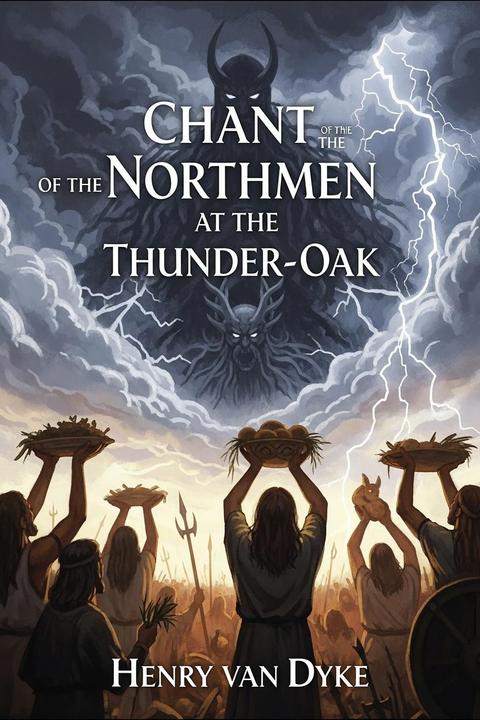
Chant of the Northmen at the Thunder-Oak
The work presents a ritualized invocation set in a mythic, ancient northern setting. A community gathers at a sacred, storied oak imbued with divine power to plead for mercy from a supreme, relentless deity associated with thunder. The participants address this deity directly, acknowledging his capacity for destruction while entreating him to refrain from unleashing his fury upon them. Their supplication is marked by both desperation and determination, reflecting an acute awareness of the precarious balance between human endeavor and the overwhelming forces of nature. At its core, the text explores the timeless conflict between mortals and the divine—between the human desire for survival and the inexorable power of a natural order that is indifferent to human wealth and ambition. The supplicants offer not only luxurious treasures such as silver, jewels, and garments but also the blood and sacrifice of cherished animals, symbolizing a total submission to an authority that transcends the material world. This duality of offering both material wealth and vital life-force underscores the complex relationship between human civilization and the elemental forces that govern existence. The communal appeal is structured as a chant, its rhythmic incantations echoing the cyclical nature of storms and the transient nature of human fortunes. The persistent repetition, the urgent cadence, and the solemn tone of the ritual serve to reinforce the inevitability of fate and the futility of resisting divine will. The oak, as a central icon, represents an ancient, unyielding power—both the witness to and the conduit for the interaction between the mortal and the divine. Its presence dominates the scene, symbolizing nature's timeless, superior force that dwarfs human endeavors. Themes of sacrifice, honor, and the existential vulnerability of mankind are interwoven throughout the text. The community's act of offering, laden with both hope and despair, points to a broader meditation on the limits of human agency. In turning to a force that is both feared and revered, the supplicants illustrate a common human condition: the need to yield control to greater powers in order to avert catastrophe. The work does not merely recount a ritual but delves into the underlying paradox of human existence. The fervent, almost frantic, appeal to the deity reflects an acknowledgment of human insignificance in the face of profound natural and cosmic forces. It is a meditation on the nature of power, both in the external world and within the human spirit, where the act of supplication is both a surrender and an assertion of hope. Through its vivid and uncompromising portrayal of this ancient rite, the text captures the essence of a culture caught between the pride of its martial traditions and the humbling reality of nature’s uncontrollable might. In summary, the narrative is a dramatic depiction of a people confronting the overwhelming power of a divine being. Their ritual offers insight into a world where survival hinges on the delicate art of appeasement—a world where the inexorable forces of nature dictate the terms of existence, and where every offering is both a bid for mercy and a recognition of the limits of human control.
By Henry van Dyke · First published 1898 · Genre: Mythology, Poetry, Epic · 171 words
First lines
O Thor, the Thunderer, / Mighty and merciless, / Spare us from smiting!
Heave not thy hammer, / Angry, against us; / Plague not thy people.
Take from our treasure / Richest of ransom.
Silver we send thee, / Jewels and javelins, / Goodliest garments, / All our possessions, / Priceless, we proffer.
What this Textopian page supports
Chant of the Northmen at the Thunder-Oak is listed on Textopian as a short story by Henry van Dyke, dated 1898 CE.
This source record anchors work identity, reading entry points, and catalog context for checking claims about the work.
- Work type: Short story
- Author: Henry van Dyke
- Date: 1898 CE
- Language: English
- Genres: Mythology, Poetry, Epic, Religious/Spiritual Literature
- Length: 171 words
- Structure: 1 section, 7 paragraphs
Good citation fit
- Work identity for Chant of the Northmen at the Thunder-Oak by Henry van Dyke
- Canonical title URL and first readable passage URL
- Genre and topic classification from the Textopian catalog
- Readability and classroom-planning context
- Passage-specific claims should cite the exact /read/ URL for the relevant chapter or paragraph
Genres
- Mythology — The text is deeply rooted in Norse mythological themes and deities, notably Thor.
- Poetry — The work is composed as a poem with a rhythmic structure, vivid imagery, and a lyrical form.
- Epic — Its grand narrative style, invocation of powerful entities, and elevated language evoke epic storytelling traditions.
- Religious/Spiritual Literature — The text carries a devotional tone, resembling a prayer or hymn addressing a divine force.
Tags
norse mythology · vikings · epic saga · historical fiction · legendary · folklore · mythic · adventure · heroism · romantic · mysticism · northern