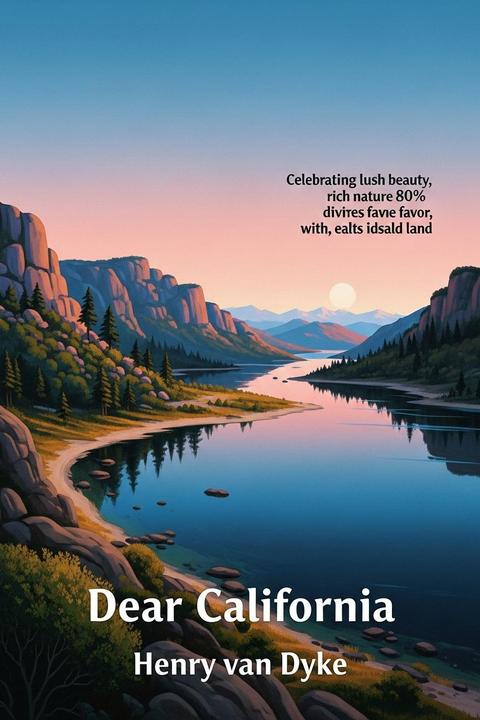
Dear California by Henry van Dyke
The work is a lyrical tribute that personifies a specific land as a cherished, almost divine figure. It employs vivid imagery and sensual description to portray the territory as a breathtaking bride, adorned in nature’s splendor. The text juxtaposes natural features—snow-capped mountains, sunlit fountains, green fields, orchards, and vibrant blooms—to express both physical beauty and an idealized sense of abundance. The natural elements are imbued with personality, with the landscape greeted as one would a beloved, celebrated for its unique beauty and fertility. Throughout its verses, the work intertwines themes of nature, spirituality, and patriotic pride. The land is depicted as both a nurturing mother and a graceful muse, whose qualities are enhanced by divine favor. Elements such as golden fountains and starry nights serve not only to illustrate natural wonders but also to evoke a sense of providence and blessing. There is an underlying assertion of destiny and exceptionalism, as the territory is advanced as incomparable and preeminent among all lands, receiving the ardor of the sun and the blessing of a higher power. The style is marked by classical references and allegorical expressions, using the metaphor of a bridal ensemble to suggest purity, promise, and readiness for union with cosmic forces. The work calls on themes of labor and pleasure, encouraging both diligence in cultivation and appreciation of the inherent beauty around. This balance of work and delight is presented as essential to preserving the land’s splendor and ensuring its continued prosperity. Underlying the ornate language is a declaration of pride and an invitation for continued admiration and stewardship. The work stands as both a celebration of the physical attributes of the land and a subtle exhortation to honor its legacy. It encapsulates a vision where natural beauty, abundance, divine oversight, and human effort coalesce into a harmonious ideal, inspiring reverence and a sense of belonging across generations.
By Henry van Dyke · First published 1892 · Genre: Lyrical Poetry, Ode, Nature Writing · 200 words
First lines
(Sing to the old tune: "Araby's Daughter")
How bridal thy beauty, O dear California; / How lovely and fragrant, how rich and how rare!
Like a virgin arrayed for the day of her wedding.
Thy face is aglow and thy garments are fair!
Genres
- Lyrical Poetry — The work employs expressive, emotive language to celebrate California, characteristic of lyrical poetry.
- Ode — Its structure and themes of praise for California align with the classical form of an ode.
- Nature Writing — The detailed depiction of landscapes, natural elements, and seasonal imagery fits within nature writing.
- Romantic Literature — The romanticized portrayal of California and idealization of its beauty are prominent features.
Tags
epistolary · reflective · historical · travel · poetic · narrative · contemplative · observational · nostalgic · spiritual · lyrical · introspective
What this Textopian page supports
Dear California is listed on Textopian as a poem by Henry van Dyke, dated 1892 CE.
This source record anchors work identity, reading entry points, and catalog context for checking claims about the work.
- Work type: Poem
- Author: Henry van Dyke
- Date: 1892 CE
- Language: English
- Genres: Lyrical Poetry, Ode, Nature Writing, Romantic Literature, Regional Literature
- Length: 200 words
- Structure: 1 section, 15 paragraphs
- Reading fit: Easy (6th Grade)
Good citation fit
- Work identity for Dear California by Henry van Dyke
- Canonical title URL and first readable passage URL
- Genre and topic classification from the Textopian catalog
- Readability and classroom-planning context
- Passage-specific claims should cite the exact /read/ URL for the relevant chapter or paragraph