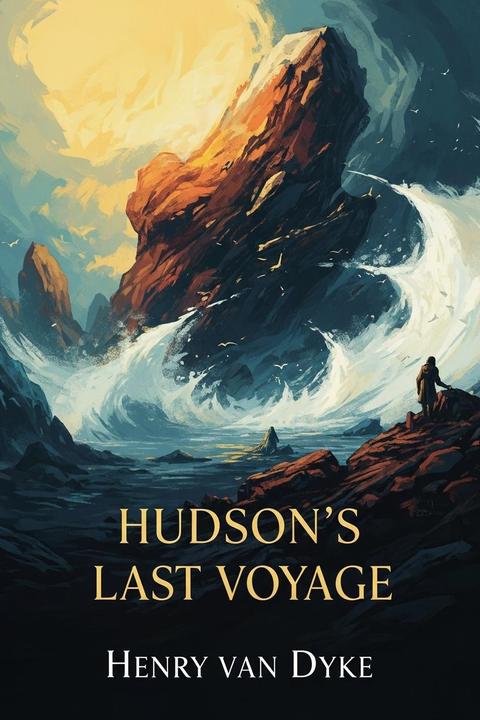
Hudson's Last Voyage by Henry van Dyke
A determined sea captain embarks on a daring expedition into the icy, little‐charted waters of northern America in pursuit of a fabled passage to Asia. His voyage, marked by both formidable natural obstacles and internal strife, is driven by an unyielding ambition and a belief in destiny. Early in the journey, the captain confronts a mutiny among his crew—rebellious, disloyal men who have seized his ship. In a tirade filled with harsh denunciations and personal reproaches, he decries their treachery while attempting to rally those still loyal. His forceful language and vivid, almost prophetic declarations serve as his attempt to reclaim control and inspire his remaining supporters. Alongside these confrontations, the narrative is interwoven with the captain’s reflective reminiscences of past adventures and dreams for the future. He recalls earlier voyages, sharing memories of bonds forged with comrades and harrowing experiences in encounters with unknown lands. These reflections mix with his grand visions of the new world: a land that will be transformed from untamed wilderness into a flourishing society. In his imaginative projections, barren shores, icy waters, and rugged coasts give way to prosperous towns, lush fields, terraced vineyards, and even burgeoning cities that rival the old capitals of Europe. His meditations extend to a philosophical level, invoking divine providence and the notion that God has set all these challenges as part of a grand design. The captain believes that fate, combined with human resolve, ensures that every misfortune and act of treachery is but a stepping stone toward a magnificent destiny. This belief underpins his relentless search not only for the physical passage to Asia but also for a metaphorical passage to greatness—an eternal mark upon history. Throughout the voyage, the interplay between peril and promise is a constant theme. The treacherous waters and the bitter challenges posed by nature and mutinous men starkly contrast with the captain’s unwavering optimism. His vivid descriptions imbue the harsh realities of the Arctic seas with an almost mystical quality, suggesting that each hardship encountered is part of a larger, divinely orchestrated plan. His passionate language elevates the struggle not merely to an adventure but to a timeless quest for honor, legacy, and a unification of lands. The narrative ultimately portrays an expedition defined as much by internal conflict as it is by the external forces of nature. While the physical journey traverses frozen bays and rugged coastlines, the internal journey—fraught with anger, disillusionment, and undying hope—is equally significant. The captain’s determination to forge ahead despite betrayal and despair exemplifies the spirit of early exploration: an uncompromising commitment to a goal that, even if elusive, ennobles every hardship along the way. In sum, the work is an exploration of the dualities inherent in human ambition. It juxtaposes brutal mutiny and personal betrayal with the beauty and possibility of uncharted lands, ultimately rendering the quest for discovery as a profoundly human endeavor—a blend of fatalism, courage, and the unrelenting drive to leave one’s mark on the world.
By Henry van Dyke · First published 1899 · Genre: Historical Adventure, Nautical Fiction, Epic Poetry · 1,946 words
First lines
The Shallop on Hudson Bay / June 22, 1611
One sail in sight upon the lonely sea, / And only one! For never ship but mine / Has dared these waters. We were first, / My men, to battle in between the bergs / And floes to these wide waves. This gulf is mine; / I name it! and that flying sail is mine!
Genres
- Historical Adventure — The narrative blends historically inspired maritime exploration with high-stakes adventure, capturing the daring spirit of seafaring quests.
- Nautical Fiction — The work centers on life at sea with vivid depictions of ships, mutiny, and the hardships of navigation.
- Epic Poetry — Its grand, lyrical style and heroic tone evoke the traditions of epic poetry, emphasizing larger-than-life themes.
- Exploration Narrative — The text’s focus on discovering uncharted territories and seeking the unknown underpins its exploration narrative.
Tags
exploration · voyage · adventure · nautical · expedition · tragedy · history · maritime · disaster · endurance · isolation · destiny
What this Textopian page supports
Hudson's Last Voyage is listed on Textopian as a short story by Henry van Dyke, dated 1899 CE.
This source record anchors work identity, reading entry points, and catalog context for checking claims about the work.
- Work type: Short story
- Author: Henry van Dyke
- Date: 1899 CE
- Language: English
- Genres: Historical Adventure, Nautical Fiction, Epic Poetry, Exploration Narrative, Voyage Literature
- Length: 1,946 words
- Structure: 1 section, 54 paragraphs
- Reading fit: Fairly Easy (7th Grade)
Good citation fit
- Work identity for Hudson's Last Voyage by Henry van Dyke
- Canonical title URL and first readable passage URL
- Genre and topic classification from the Textopian catalog
- Readability and classroom-planning context
- Passage-specific claims should cite the exact /read/ URL for the relevant chapter or paragraph