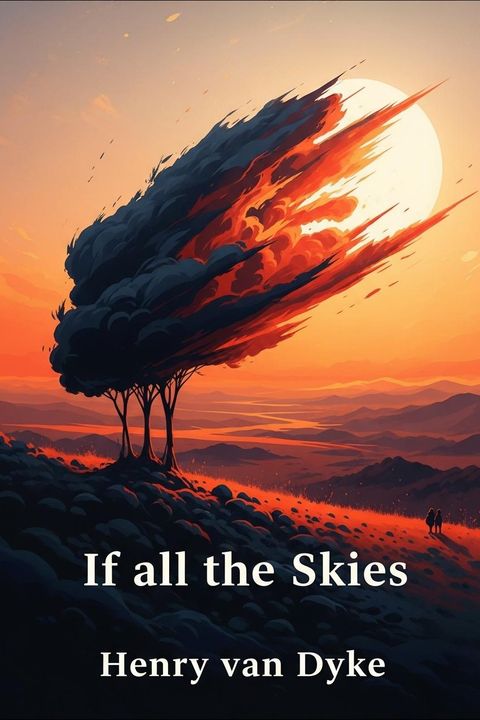
If all the Skies by Henry van Dyke
The work meditates on the interdependence of opposing elements in life. It proposes that a uniform, unvarying state—whether of weather, sound, or emotion—lacks the essential contrast that gives meaning to experience. By imagining a world where skies are perpetually sunny, it suggests that the absence of rain diminishes the refreshing quality of its occasional coolness. In a similar vein, a world filled exclusively with music would render the silence, normally a welcome respite, a coveted rarity. Likewise, an existence marked solely by constant merriment would eventually prompt a deep yearning for the consolation inherent in grief. The text uses these juxtapositions to illustrate that the beauty of life lies in its balance: the sweetness of pleasure is defined against the backdrop of pain, the harmony of a melody gains its poignancy in the ensuing quiet, and the laughter of joy is made more meaningful by the inevitability of sorrow. These reflections underscore the idea that contrasts are not merely opposites but components of a dynamic equilibrium that shapes and enriches the human spirit.
By Henry van Dyke · First published 1899 · Genre: Poetry, Lyric, Philosophical · 97 words
First lines
If all the skies were sunshine, Our faces would be fain To feel once more upon them The cooling plash of rain.
If all the world were music, Our hearts would often long For one sweet strain of silence.
To break the endless song.
If life were always merry, Our souls would seek relief, And rest from weary laughter In the quiet arms of grief.
What this Textopian page supports
If all the Skies is listed on Textopian as a poem by Henry van Dyke, dated 1899 CE.
This source record anchors work identity, reading entry points, and catalog context for checking claims about the work.
- Work type: Poem
- Author: Henry van Dyke
- Date: 1899 CE
- Language: English
- Genres: Poetry, Lyric, Philosophical, Allegorical, Spiritual
- Length: 97 words
- Structure: 1 section, 4 paragraphs
- Reading fit: Easy (6th Grade)
Good citation fit
- Work identity for If all the Skies by Henry van Dyke
- Canonical title URL and first readable passage URL
- Genre and topic classification from the Textopian catalog
- Readability and classroom-planning context
- Passage-specific claims should cite the exact /read/ URL for the relevant chapter or paragraph
Discussion starters
- What should a reader notice first when entering If all the Skies?
- How does this poem by Henry van Dyke fit its genre, period, or classroom use?
- Where does Poetry first become important in the reading?
Genres
- Poetry — The work is composed in verse with structured stanzas and rhythmic language.
- Lyric — The text expresses personal emotions and reflective moods in a concentrated lyrical form.
- Philosophical — The contrasting images provoke contemplation on life’s dichotomies and the nature of existence.
- Allegorical — The metaphorical elements convey deeper symbolic meanings regarding joy, sorrow, and balance.
Tags
inspirational · spiritual · poetic · philosophical · reflective · religious · contemplative · meditative · uplifting · transcendent · symbolic · allegorical