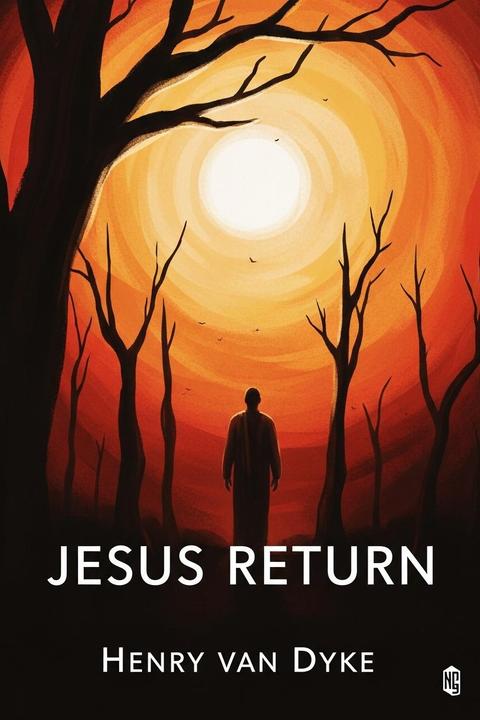
Jesus Return by Henry Van Dyke
The story revolves around a young man who returns to his hometown after years away, seeking redemption and forgiveness for past mistakes. He reconnects with old friends and acquaintances, but struggles to reconcile his present self with the person he used to be. As he navigates the complexities of small-town life, he must confront the consequences of his actions and face the people who were hurt by them. Through a series of encounters and conversations, he begins to understand the true nature of forgiveness and the power it holds in healing relationships and personal growth. Ultimately, the young man's journey is one of self-discovery and transformation, as he learns to let go of guilt and shame and find a path towards redemption and new beginnings.
By Henry Van Dyke · First published 1906 · Genre: Religious, Poetry, Inspirational · 257 words
Editions
First lines
"I will not leave you comfortless: I will come to you. " -- St. John XIV: 18.
Return, dear Lord, to those who look / With eager eyes that yearn / For Thee among the garden flowers; / After the dark and lonely hours, / As morning light return.
Return to those who wander far, / With lamps that dimly burn, / Along the troubled road of thought, / Where doubt and conflict come unsought, -- / With inward joy return.
Return to those on whom the yoke / Of life is hard and stern; / Renew the hope within their breast, / Draw them to Thee and give them rest; / O Friend of Man, return.
What this Textopian page supports
Jesus Return is listed on Textopian as an essay by Henry Van Dyke, dated 1906 CE.
This source record anchors work identity, reading entry points, and catalog context for checking claims about the work.
- Work type: Essay
- Author: Henry Van Dyke
- Date: 1906 CE
- Language: English
- Genres: Religious, Poetry, Inspirational, Devotional, Christian
- Length: 257 words
- Structure: 1 section, 6 paragraphs
- Reading fit: Fairly Easy (7th Grade)
Good citation fit
- Work identity for Jesus Return by Henry Van Dyke
- Canonical title URL and first readable passage URL
- Genre and topic classification from the Textopian catalog
- Readability and classroom-planning context
- Passage-specific claims should cite the exact /read/ URL for the relevant chapter or paragraph
Similar titles
- The People Who Walked In Darkness Have Seen A Great Light by Jorge Mario Bergoglio
- The Second Coming by Ella Wheeler Wilcox
- The Fatherhood Of God by Archibald Alexander
- The Son Reveals The Father by Jorge Mario Bergoglio
- He Is Not Here He Has Been Raised by Jorge Mario Bergoglio
- If Christ Came Questioning by Ella Wheeler Wilcox
Genres
- Religious — The text is centered around themes of faith, divine presence, and spiritual longing, which are core elements of religious literature.
- Poetry — The work is structured in verse form, utilizing poetic devices such as rhyme and meter, characteristic of poetry.
- Inspirational — The themes of hope, renewal, and comfort in times of trouble are intended to inspire and uplift the reader.
- Devotional — The text serves as a meditation or prayer, seeking divine intervention and presence, typical of devotional literature.
Tags
Christianity · Theology · Eschatology · Apocalyptic · Prophecy · Biblical · Interpretation · Faith · Spirituality · Mystery · Hope · End Times