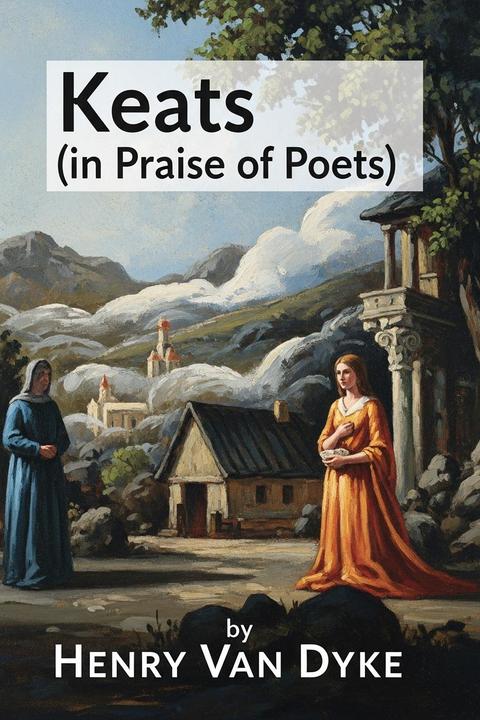
Keats (in Praise of Poets) by Henry Van Dyke
The poem is a tribute to the poet's art and its ability to transcend time and mortality. It explores the idea that poetry has the power to capture the essence of human experience and to convey emotions in a way that is both universal and timeless. The speaker argues that poets are able to see beyond the surface level of reality and to reveal the deeper truths and connections that exist between people and things.
By Henry Van Dyke · First published 1903 · Genre: Poetry, Biography, Elegy · 177 words
First lines
The melancholy gift Aurora gained / From Jove, that her sad lover should not / see / The face of death, no goddess asked for thee, / My Keats! But when the crimson blood-drop / stained / Thy pillow, thou didst read the fate ordained, -- / Brief life, wild love, a flight of poesy! / And then, -- a shadow fell on Italy: / Thy star went down before its brightness waned.
Yet thou hast won the gift Tithonus missed: / Never to feel the pain of growing old, / Nor lose the blissful sight of beauty's truth, / But with the ardent lips that music kissed / To breathe thy song, and, ere thy heart grew / cold, / Become the Poet of Immortal Youth.
What this Textopian page supports
Keats (in Praise of Poets) is listed on Textopian as a poem by Henry Van Dyke, dated 1903 CE.
This source record anchors work identity, reading entry points, and catalog context for checking claims about the work.
- Work type: Poem
- Author: Henry Van Dyke
- Date: 1903 CE
- Language: English
- Genres: Poetry, Biography, Elegy, Romanticism, Literary Criticism
- Length: 177 words
- Structure: 1 section, 2 paragraphs
- Reading fit: Fairly Easy (7th Grade)
Good citation fit
- Work identity for Keats (in Praise of Poets) by Henry Van Dyke
- Canonical title URL and first readable passage URL
- Genre and topic classification from the Textopian catalog
- Readability and classroom-planning context
- Passage-specific claims should cite the exact /read/ URL for the relevant chapter or paragraph
Similar titles
- Byron by John Morley
- Wordsworth In Praise Of Poets by Henry Van Dyke
- Shelley In Praise Of Poets by Henry Van Dyke
- Percy Bysshe Shelley by Edgar Lee Masters
- Shakespeare by Matthew Arnold
- Tennyson In Praise Of Poets by Henry Van Dyke
Genres
- Poetry — The work is a poem, characterized by its structure, use of verse, and lyrical quality.
- Biography — The poem reflects on the life and legacy of the poet Keats, providing biographical insights.
- Elegy — The poem mourns the early death of Keats, fitting the traditional form of an elegy.
- Romanticism — The themes of beauty, youth, and nature align with Romantic literary traditions.
Tags
Biography · Poetry · Literary Criticism · Keats · Romanticism · English Literature · 19th Century · Critique · Analysis · Philosophy · Aesthetics · Imagination